
The main objective of sanitary pruning is to reduce the inoculum present in the orchard by removing dead, diseased, or dying wood.
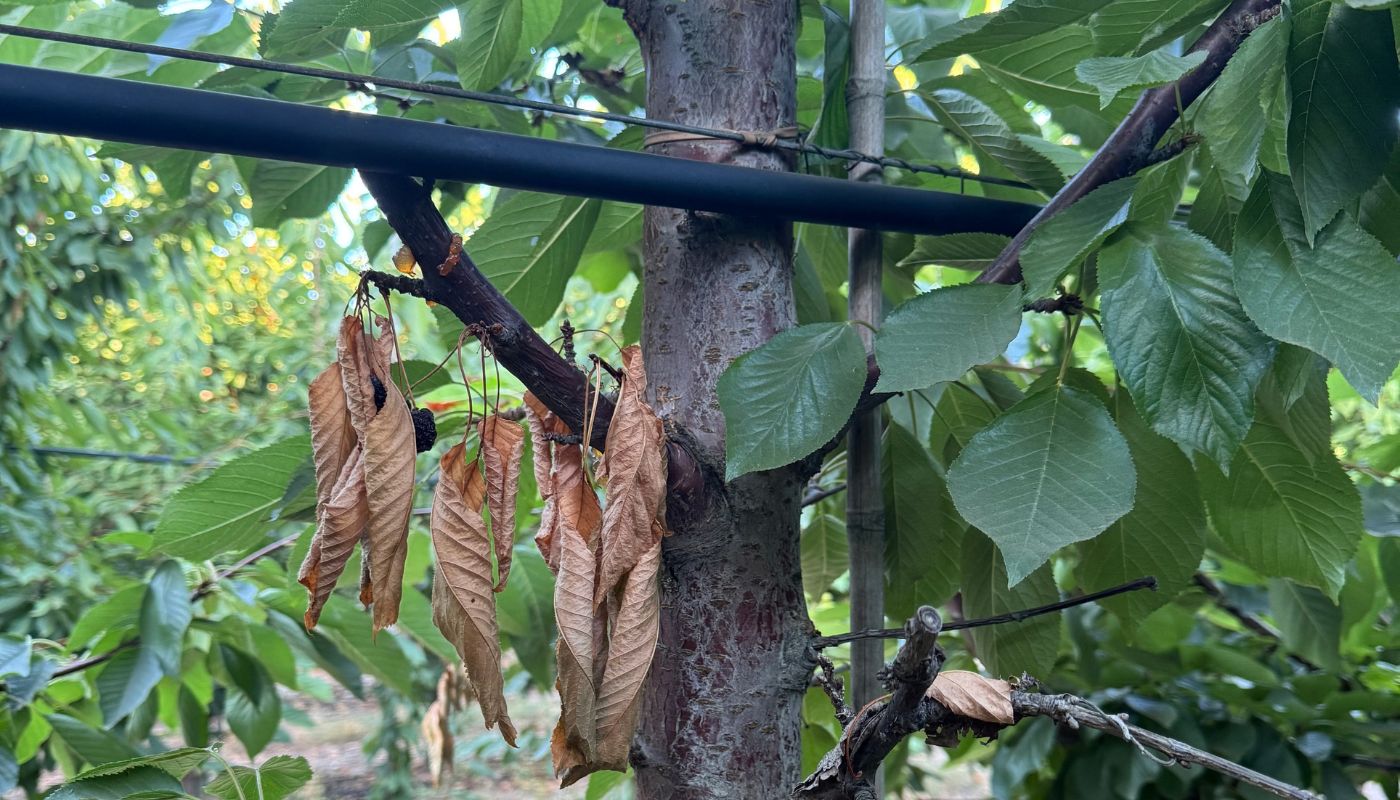
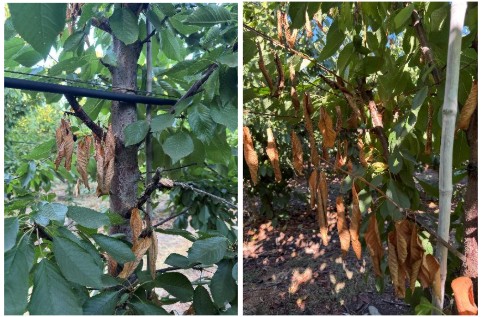
In the field, this material is primarily recognized as “dry” tissue, often accompanied by gum exudation in the affected area, as well as wood necrosis in branches and, in some cases, in the trunk (Figure 1).
Wood death can be explained by bacterial diseases, such as bacterial canker caused by Pseudomonas syringae. However, a significant portion of this damage is also related to wood-decay fungi, including Cytospora sp., Calosphaeria sp., and Chondrostereum purpureum, among others.
Figure 1: Target material for performing “sanitary pruning”.
When should sanitary pruning be performed?
From an operational standpoint, the recommendation is to carry out this task as soon as possible after harvest, ideally immediately after the harvest is complete, with March as the deadline. The reason for considering March a critical date is the increase in conditions more favorable for these types of diseases: higher relative humidity, associated with the decrease in summer temperatures.
The question naturally arises: why not perform it before harvest? Mainly for operational reasons and because, in many cases, the symptoms are not yet clearly visible, especially when the dried material or affected structures are not readily apparent.
Importance of Proper Execution
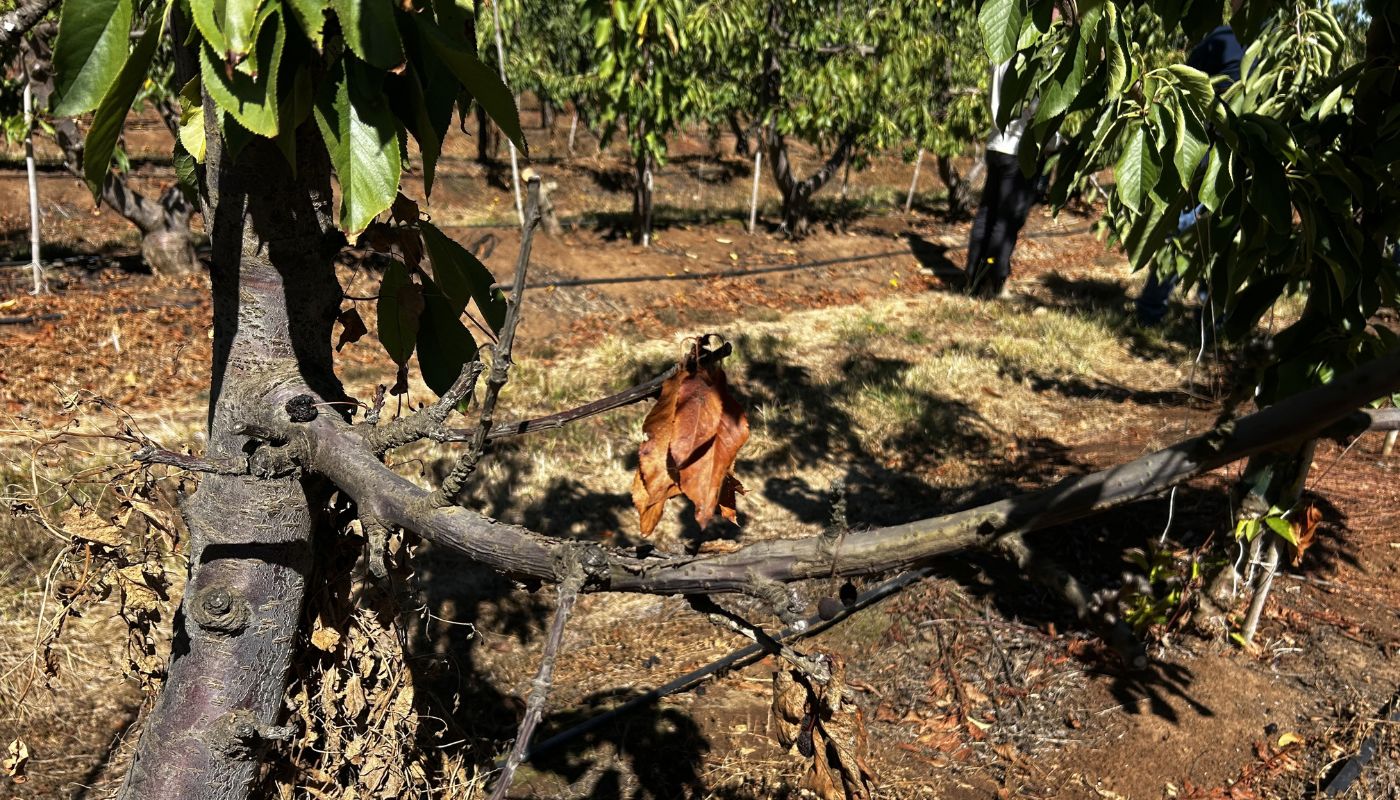
The effectiveness of sanitary pruning depends largely on doing it correctly from the start. In this sense, constant supervision during execution is crucial for achieving a good result. The goal is not simply to cut for the sake of cutting, but to eliminate all material that could act as a potential source of inoculum, reducing the pressure of these diseases for the following season.
The cut should be “surgical.” In the case of dry tissue, it should be cut down to healthy tissue, ensuring that no dark spots are visible on the wood. Once the cut has been made, it should be followed by the application of fungicide paste, commonly called “pruning paste,” which serves a protective and healing function, helping to safeguard the different cuts.
It is important to note that the cut should be painted immediately after cutting, as part of the same process. While sanitary pruning is an important tool in orchard management, it’s always necessary to evaluate the main sources or causes of high disease pressure. Orchards can coexist with certain levels of these pathogens, but this occurs more effectively when plants are well-nourished and watered, and kept under minimal stress.
Common Errors and Critical Control Points
Among the most frequent errors—and where, as producers, we must pay special attention—is, first and foremost, the need for meticulousness when performing the task. No plants should be left behind with material that can act as inoculum and subsequently spread to healthy tissue. Along the same lines, it is essential to emphasize the cutting criterion: cut only when healthy tissue is encountered.
Another critical point is the timing of the painting. This should be done immediately, not at the end of the day. If it is postponed, the risk of leaving cuts unprotected increases, and traceability and control over the work performed are lost. Painting at the time of application ensures a more consistent standard and result.
Additionally, the removal of infected material from the orchard is a very important aspect. In practice, there is a bad habit of leaving these remnants in the same plot. This represents a risk, since many of these pathogens can survive even in dry wood. Therefore, removing this material is crucial to achieving the main objective: reducing the inoculum load within the orchard. Ideally, it should be removed at the end of the pruning session, or even better, as the work progresses, to avoid accumulations in the field. And a key point: summer pruning should not be mixed with sanitary pruning. They are completely different tasks. In some orchards, seeking greater efficiency, both activities are attempted in the same pass; however, this can be a serious mistake, considering that the cuts can contribute to further spreading pathogens associated with wood diseases.
Impact on Orchard Production and Lifespan
Removing dead branches does not imply a real loss of production, since that branch is already lost from a productive standpoint. On the contrary, this practice helps protect the orchard’s lifespan by reducing inoculum and allowing the plant to recover its productive structure over time, thus contributing to long-term productivity.
Finally, it is important to emphasize that, in addition to sanitary pruning, efforts should be made to keep the orchard as stress-free as possible. A stressed plant is more prone to the rapid spread of diseases. This is complemented by the need to keep preventative programs up to date as part of comprehensive orchard management.