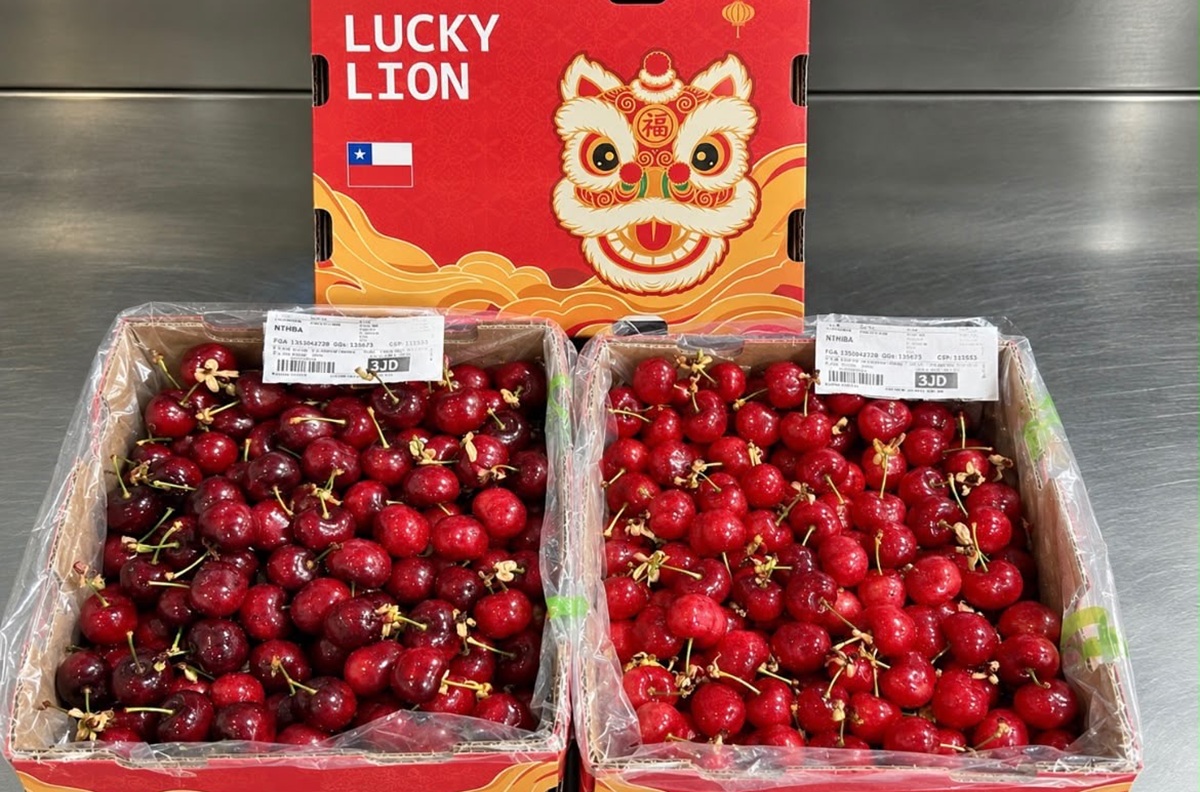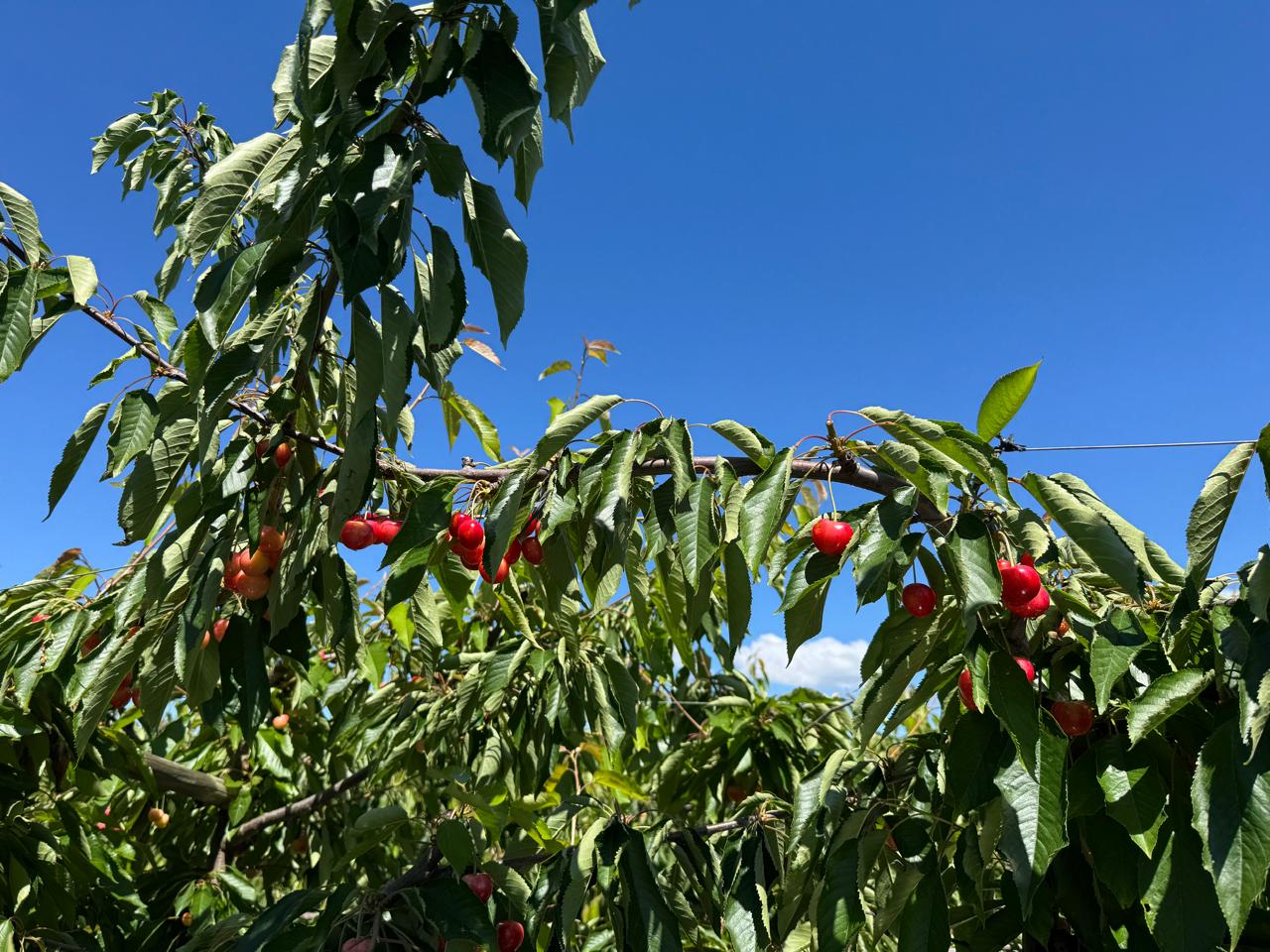

“We are facing a challenging season. A mild winter, followed by heatwaves and low humidity, has resulted in a harvest that is 50% smaller. Furthermore, supply has already peaked, yet demand in Europe typically doesn’t pick up until December,” explains Annamijn de Jong.
Dutoit is South Africa’s largest cherry producer, with 300 hectares under cultivation. Half of the production is sold on the domestic market through various channels, including the company’s own “Cherry Time” shop in the town of Ceres, where cherries are highly popular during the South African summer.
A significant portion of exports is destined for the British market, which primarily absorbs smaller-sized cherries. Other shipments go to the Middle East and Asia, while the remainder arrives in Rotterdam.
“We export our cherries throughout Europe, with Germany being our largest market. This is mainly because our cherries meet the MRL (Maximum Residue Limit) requirements set by German retailers—a standard that Chilean cherries often fail to meet,” notes Annamijn. Over the years, demand for South African cherries in Europe has grown. “That said, the bulk of sales occurs in December. After Christmas, demand usually drops off quite quickly.”
Final Arrivals Expected by Late December
Due to the early start, the cherry season will also conclude sooner. “Normally, we are able to continue distributing product throughout January, but that won’t be possible this year. We expect the final shipments to arrive by the end of December,” says Annamijn. “Shipments sent by sea usually arrive just before Christmas, but this year we have decided to rely 100% on air freight. At the moment, prices remain above €15/kg, though they are expected to decrease as cherries from Chile and Argentina arrive over the coming weeks. Retail prices remain fairly stable, hovering around €10–11.”
Because the season started early, there has been a great deal of work to handle at the packing facility. “Last week, quite unexpectedly, we received 800 tons of cherries,” says Annamijn. The cherries are distributed in a wide variety of formats—such as trays, bags, or in bulk—“but trends seem to increasingly favor pre-packaged products.”
The cherries are packed partly in Ceres and partly in the Netherlands, as small-format packaging slows down the process too much in Ceres. “For now, packing here is done manually, but our goal is to continue growing in terms of volume; eventually, we intend to mechanize the packing of retail orders as well.”
In South Africa, Dutoit grows Zaiger cherry varieties. According to Annamijn, preferences vary by country: “The UK primarily takes smaller sizes; in Southern Europe, a dark color and large size are more highly valued; while the German retail sector accepts cherries that are redder in color.” In her view, the defining characteristic of cherries is that things rarely go as expected—”which forces you to react quickly, though that is also part of the charm of this product.”
Stone fruit
In addition to cherries, Dutoit also produces its own stone fruit in South Africa. “We hold a 25% share of South African nectarine exports. We enjoy a very strong position, especially during the late season, which runs from December to the end of March,” explains Annamijn. In addition to nectarines, Dutoit also grows plums in South Africa, though on a smaller scale than nectarines.
Annamijn expresses some concern regarding the outlook for the upcoming nectarine season. “Many nectarines have been planted in South Africa, as well as in Chile, for the Asian market. At the moment, South Africa cannot export to the Middle East due to the war, and the situation in Asia is not very stable either. Consequently, we expect an abundant supply in Europe and the UK this year, as the volume that would normally go to the Middle East and Asia will end up here instead.” Last season, access to the Chinese market was granted for nectarines, but it came with a requirement for cold treatment—a process that the fruit does not handle well at all. “With plums, things are much simpler.”
Source: Fresh Plaza