
The academic and specialist in integrated weed management maintains that acting early and combining a good diagnosis with appropriate tools will be key to avoiding problems during the growing season.
—Is winter an important time for weed management in cherry orchards?
In cherry orchards, as in any fruit orchard, weed management during the winter months is essential to reduce the population of existing weed seeds. Furthermore, weed management with pre-emergence herbicides allows us to control a wide range of weeds for relatively long periods (persistence), which directly impacts the management of tasks to be carried out in the orchard.
– What scenario do you foresee this season regarding weed emergence after this winter’s rains?
Due to the early rains in the central region (April-May), many winter weeds emerged, many of which died due to the high temperatures. However, the recent rains completely alter the scenario, as they will trigger the emergence of weeds that were dormant. If appropriate control measures are not taken, there will be many weed problems in orchards this year.
– Before defining a control strategy, what assessment should the grower perform in the orchard?
First, monitor the weeds in each section of the orchard to choose the most appropriate strategy for each area. Monitoring allows us to make decisions such as which species to prioritize for control. Which one poses the greatest competition? Which one causes allelopathy? Which one is a host for pests and/or diseases? etc. With this information, I can choose the most suitable control system. Implementing it is another matter. For the latter, I need to understand how each control system works and what the real possibilities are for its implementation. For example, if the decision is mechanical control, do I have enough machinery available at the appropriate times for controlling each species? If the decision is chemical management, are there products on the market that are registered for use in Chile and accepted in other markets? What is the cost of implementing each control system? How many times do I need to enter the orchard to achieve adequate control?
– What information does knowing the species present and their stage of development provide when planning applications?
The ability to choose the best weed control alternative. It’s important to emphasize that when I refer to control, I mean that at least 80% of the weeds capable of causing problems will not.
– What are the differences between controlling newly emerged weeds and controlling them when they are fully developed?
Once weeds have developed, they have already caused the damage of reduced orchard productivity (interference). Therefore, controlling them at that stage is not very effective.
– What role do residual herbicides play during this time of year, and what are their main advantages?
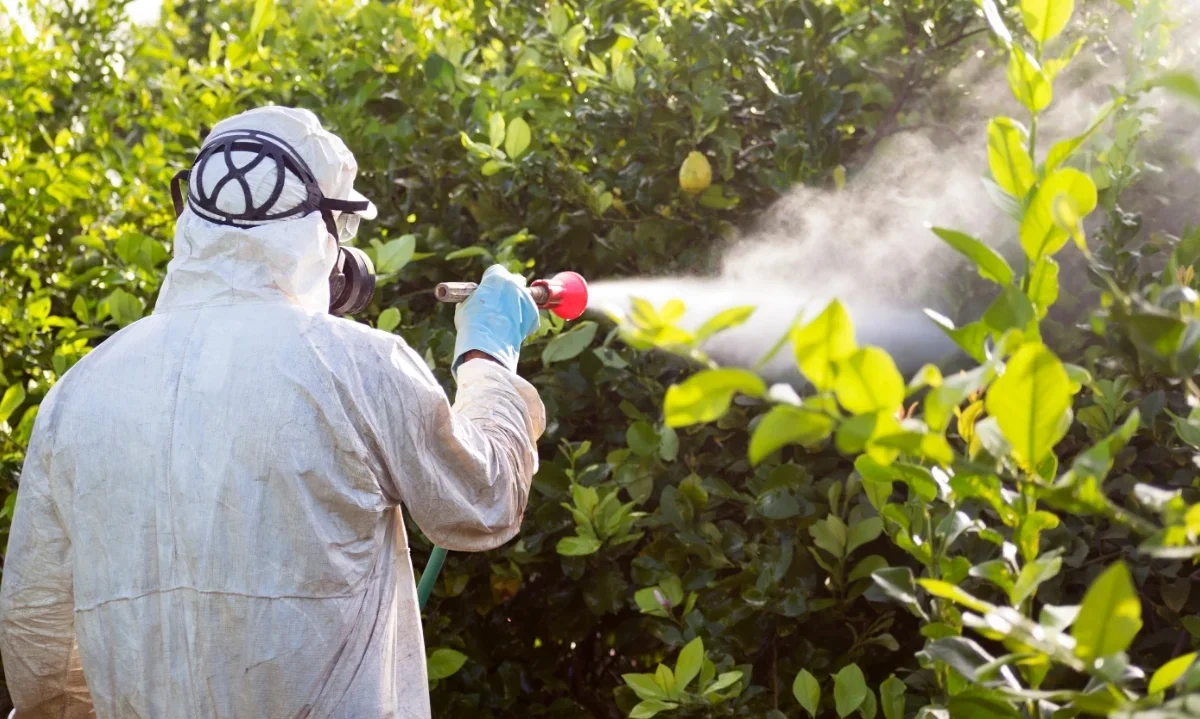
We are no longer talking about residual herbicides, but rather soil-applied or soil-active herbicides. They are undoubtedly one of the most powerful tools for reducing the population of existing annual weeds, since these weeds do not all germinate at the same time. One of the characteristics of annual weeds is that they germinate at different times; some germinate today, others tomorrow, and so on. Therefore, mechanical control would have to be carried out weekly to prevent the interference caused by the weeds, and that is quite costly.
– How do soil type, organic matter, and rainfall influence the behavior of herbicides?
Obviously, since these are herbicides applied to the soil, their persistence and mobility depend on the factors mentioned, but knowing the type of soil, its organic matter and the effective adsorption coefficient of the herbicide, as well as the rooting depth of the rootstock, its application is quite safe.
– Are there any weed species that are currently a particular concern in cherry orchards?
Generally, all weeds are problematic for different reasons. They can compete for water, light, or nutrients, they can cause allelopathy, or they may be hosts for pests and diseases that affect cherry trees. However, nowadays, growers consider those weeds that are not controlled by commonly used herbicides, such as Conyza, Willowherb, and Carrot, among others, to be “dangerous.”
– Looking ahead to the next season, how does good weed control in winter impact orchard development during spring and summer?
If the presence of annual weeds is reduced, the control of perennial species will be more timely and efficient.