
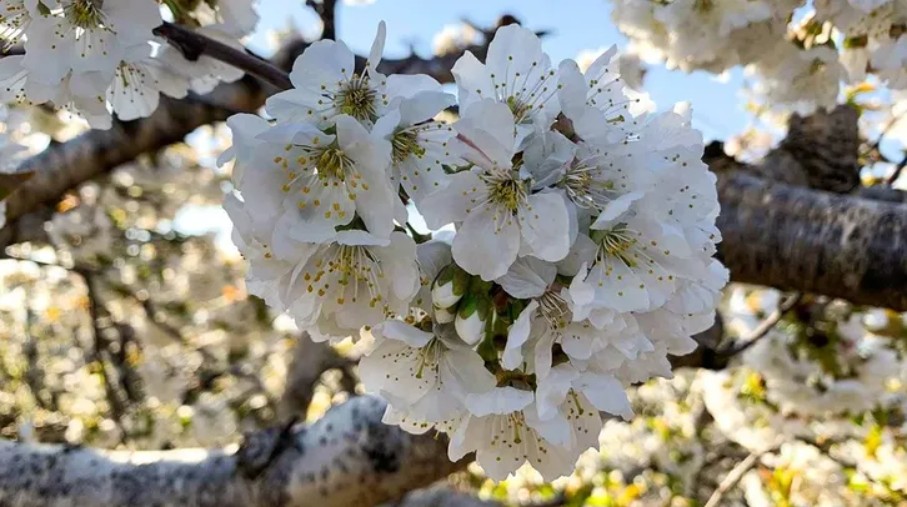
The agricultural landscape of northern Argentina is changing rapidly. A few days ago, the temperate valleys of Jujuy province were awash in a white and pink hue unexpected for this time of year: the ultra-early cherry blossom season has officially begun.
This early phenological phenomenon, far from being a detrimental climatic anomaly, represents the culmination of an ambitious scientific and commercial project that aims to position the province as the supplier of the first fresh cherries in all of South America.
While traditional growing areas—such as the Patagonian valleys or the Cuyo region—are still experiencing winter dormancy, the microclimate of the El Carmen department, and specifically the town of Monterrico, has allowed for a break from the usual agricultural calendar. The blossoming of the flowers in the middle of August marks the beginning of the fruit’s rapid growth cycle, which is expected to ripen into commercially viable harvests by the end of September.
A key alliance between science and the private sector
This achievement is the result of a collaborative effort that has been under rigorous observation for several seasons. The trial is being conducted in a young experimental plot composed of 2,000 plants of different low-chill varieties. Behind this phenological development is a strategic alliance between the Mendoza-based company Güizzo Frutas Frescas S.A. (specializing in early stone fruit), local producer Oscar Machuca at his eponymous farm, and the scientific support of the Faculty of Agricultural Sciences at the National University of Jujuy (UNJu), under the technical direction of Dr. Viviana Curzel.
Historically, the cherry tree has been considered a fruit tree exclusive to the cold, seasonal climates of the south. However, the introduction of licensed varieties from demanding international breeding programs—such as the Minnie Royal, Royal Lee, and Royal Lynn lines developed by Zaiger Genetics—has demonstrated outstanding adaptation to the conditions of Northwest Argentina.
These cultivars require few chill hours during Jujuy’s short winter to break dormancy and initiate rapid spring budbreak.
A strategic commercial window for the Southern Hemisphere
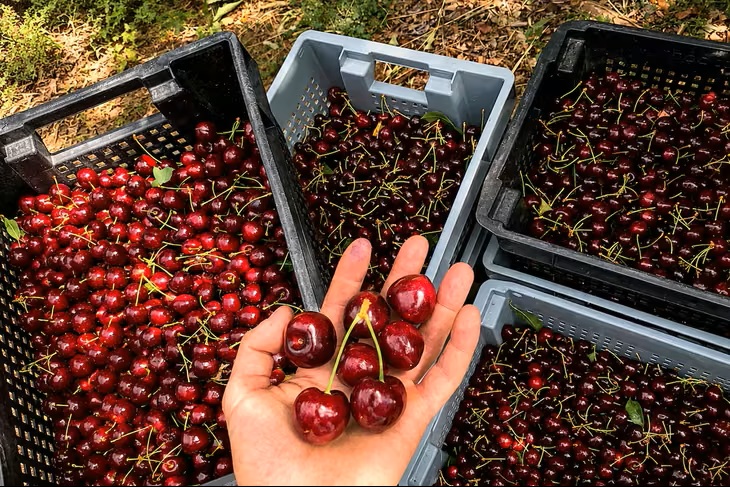
The true value of the flowering observed last week lies in the timing factor. The speed of the cherry tree’s biological cycle in Jujuy allows the fruit to go from blossom to packing-ready in approximately 45 days. At this rate, specialists estimate that the first harvest will occur during week 40 of the agricultural calendar (late September).
This represents an unprecedented commercial advantage:
- Absolute first: It is more than fifteen days ahead of the traditionally earlier areas of Mendoza (Argentina) or Ovalle (Chile).
- Record prices: By entering international markets when there is no global supply of fresh cherries, the Jujuy product qualifies for exclusive direct air freight to high-demand markets such as the European Union, the Far East, and the Middle East.
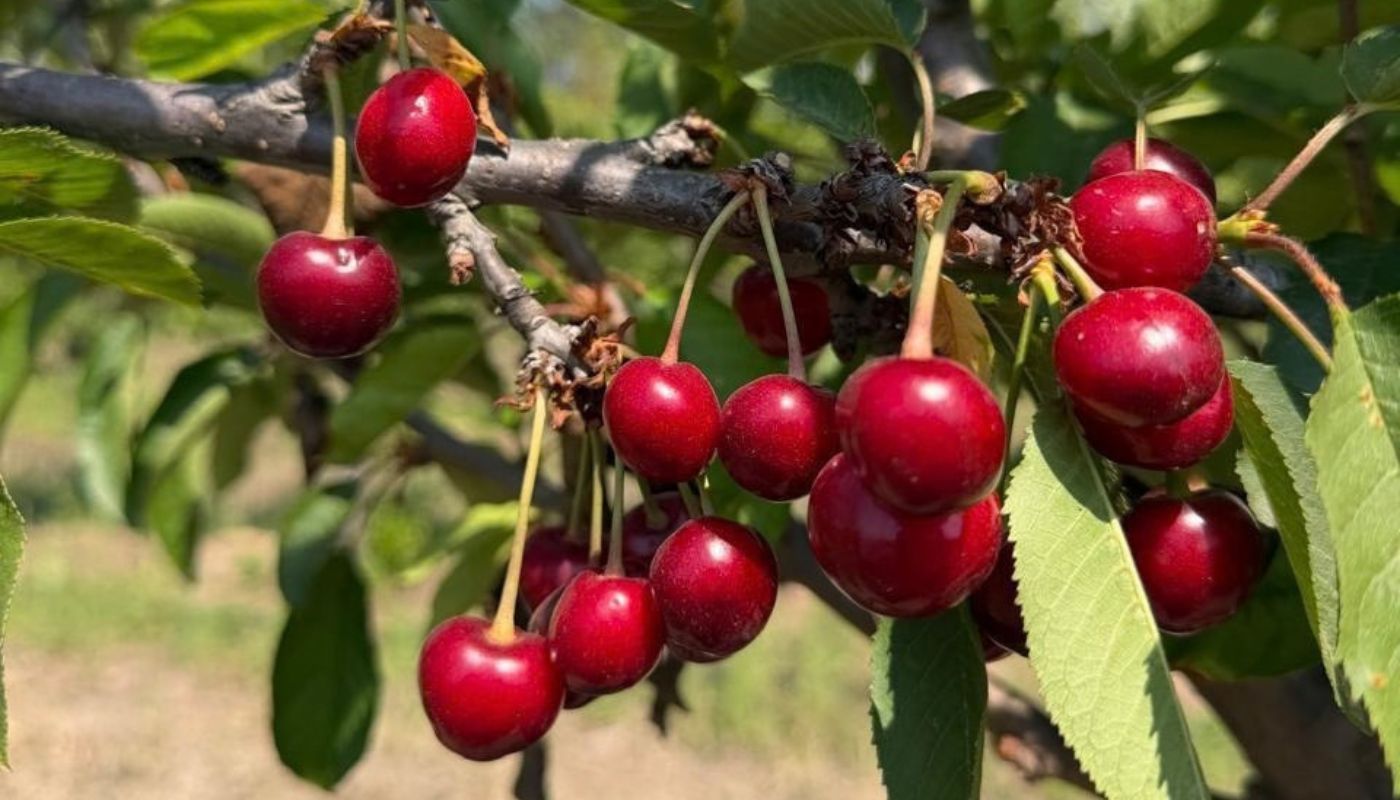
- Guaranteed quality: Previous tests have recorded exceptionally high sugar levels—reaching parameters of up to 25 to 29 degrees Brix—along with intense colors and firm textures in accordance with premium export standards.
Challenges of precision agronomic management
Despite the prevailing enthusiasm among northern producers, extra-early cultivation in non-traditional areas requires highly precise technical management. The monsoon rainfall characteristic of the Jujuy valleys occurs mainly concentrated in the summer months (January and February).
This protects the September harvest from the dreaded rains that crack the fruit, but it requires engineers to apply strict control of the tree’s vegetative and root vigor during the wet summer period.
Dr. Viviana Curzel and engineer Nicolás Güizzo have repeatedly emphasized that nutritional monitoring, dormancy control through management practices, and drip irrigation are essential for ensuring uniform flowering of the cherry trees as soon as the low temperatures of June and July end. The sight of the cherry blossoms in Monterrico is no longer merely a visual curiosity but a potential economic driver.
If the results of this cycle are consolidated, Jujuy will have demonstrated that applied genetic innovation and local knowledge are tools capable of overcoming the limitations of traditional fruit-growing regions.
Source: Más Producción