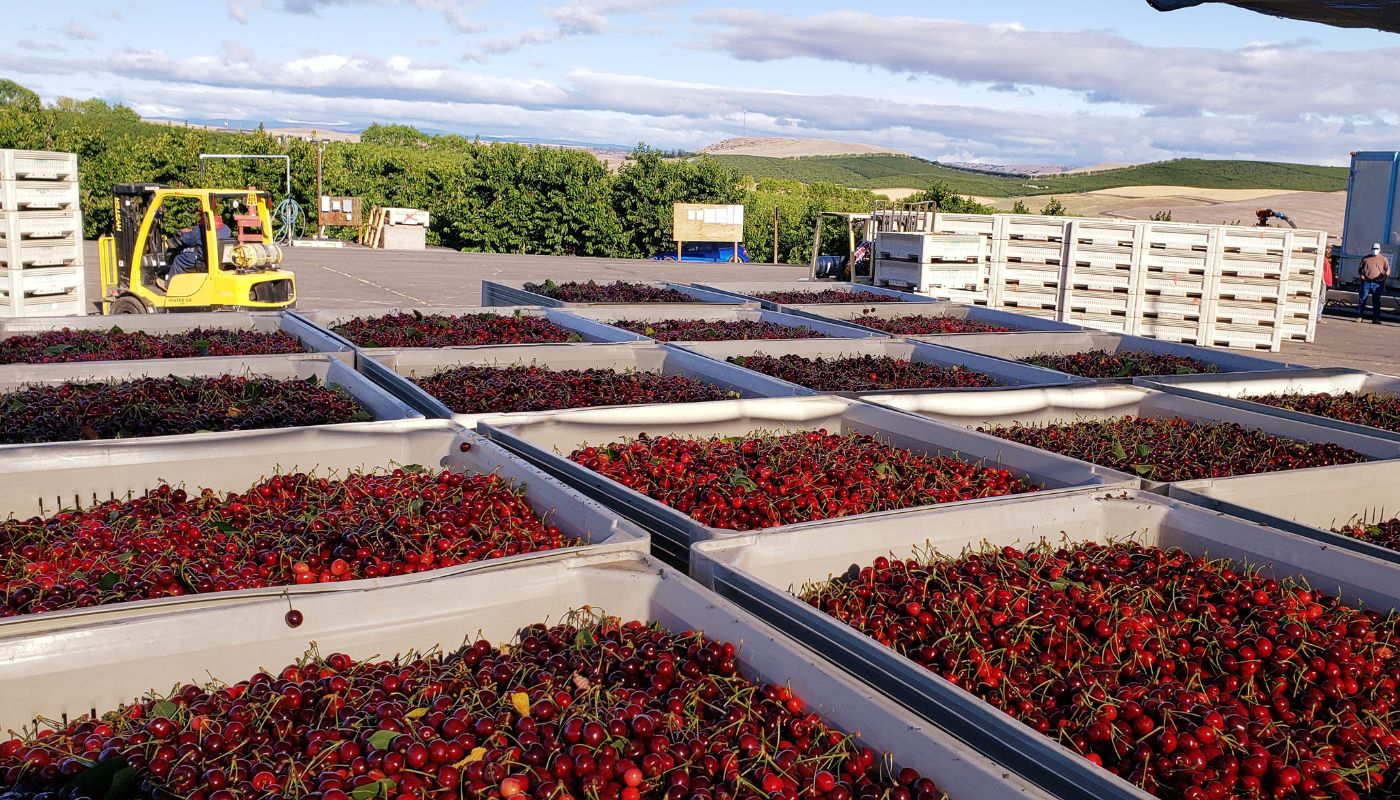

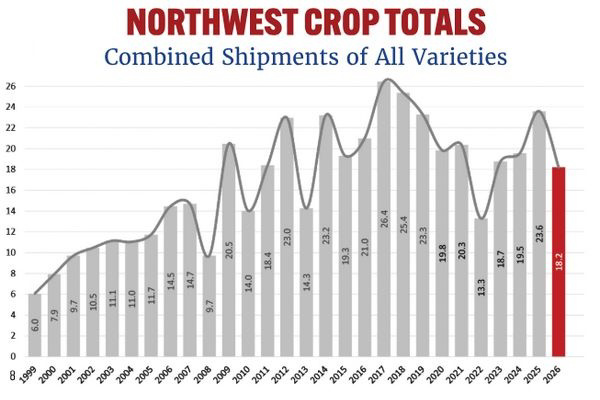
Pre-season estimates projected a Northwest harvest of between 18.4 and 19.2 million boxes. However, frost, wind, and rain reduced the final volume to 18.2 million boxes. Despite the lower production, overall fruit quality and packing yields remained strong.
Shifts in shipping patterns
A notable trend in recent seasons has been the increasing concentration of Northwest cherry shipments during the early part of the season. Over the past two years, more than 2.4 million boxes were shipped within the first 14 days—an increase of approximately 71 percent compared to five years ago.
This shift is altering the timing of retail promotions, as large volumes are now available earlier in the commercial window. The industry is placing greater emphasis on aligning promotional activities with peak supply periods, rather than relying primarily on traditional promotions tied to specific holidays.
The California cherry season also influenced market conditions. Production totaled 5.55 million 8.2-kilogram-equivalent boxes, with only 11,836 boxes packed in June. The final shipment from the state was recorded on June 3, and the volume for that month was approximately 965,000 boxes lower than in the previous season.
Although California’s production was significantly lower, its cherries remained on the market longer than anticipated, creating additional competition for shelf space and consumer demand.
Lower production on the West Coast
Combined cherry production from the Northwest and California reached 23.2 million boxes in 2026, representing a significant reduction in West Coast supply. This followed three consecutive seasons in which the combined production had reached 28 million boxes.
The smaller harvest created a different supply environment, although the increasing concentration of shipments from the Northwest early in the season continued to pose challenges for commercial and promotional planning.
Looking ahead to 2027, the industry is focusing on closer coordination between harvest forecasts, promotional calendars, and retail pricing. Maintaining attractive displays, removing older fruit, and sustaining promotions throughout the entire season are considered key factors in encouraging repeat purchases.
With Northwest cherry supplies becoming increasingly concentrated at the start of the season, aligning retail activity with actual shipment volumes will remain a critical consideration for producers and marketers.
Source: Fresh Plaza