
From northern Patagonia, with his sights set on the challenges ahead, Carlos Enríquez, director of Vista Alegre, speaks about the 2024/25 season with the composure of someone who has weathered more than one difficult fruit season.
While recounting a recent frost of three degrees below zero that forced him to go out in the early morning to inspect the orchards, he reflects on the current state of the fruit sector: “There is little fruit. I’m not saying this dramatically, but realistically. If we’re talking about a 15% decrease, it’s probably more.”
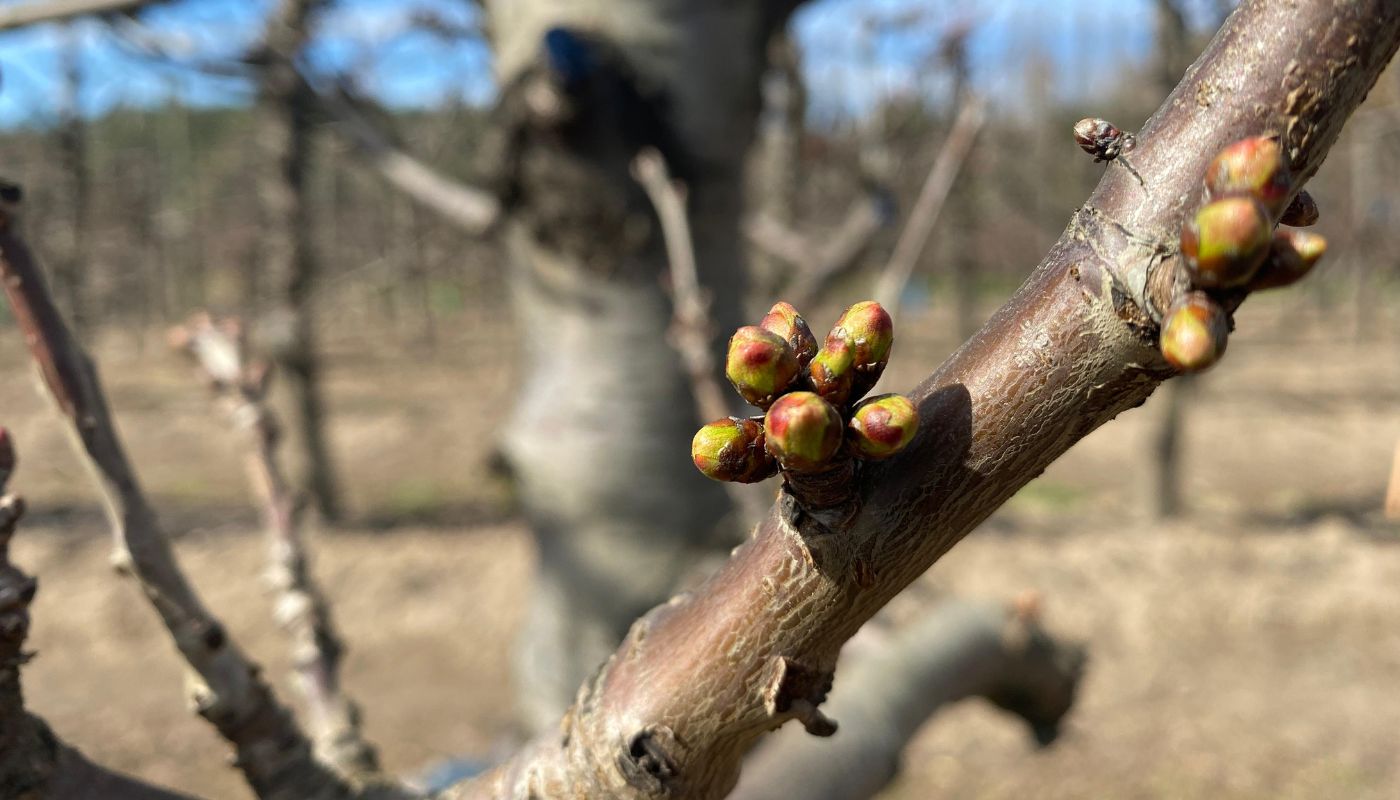
The last few weeks in the Upper Valley and Middle Valley have been marked by adverse weather conditions. Enríquez recounts that the frosts were severe and affected flowering and fruit set. “At four in the morning, we were out in the orchard with the guys checking how the frost protection system was working. The truth is, the outlook isn’t very encouraging,” he says.
According to his estimates, the minimum production loss will be around 15%, although he warns that the final figures could be higher. “People always say there’s less fruit, and then reality confirms it. I don’t see it as a catastrophe, but rather as a sign to remain cautious,” he asserts.
Enríquez adds that this decrease won’t be fully compensated for by the size of the fruit: “It’s not like we’re going to have 10% less fruit and 10% larger fruit. It’s not enough to balance the total weight.”
Exports: “The key is maintaining quality”
Vista Alegre plans to begin the harvest on November 10, with the first shipments destined for both China and the United States. The company maintains its strategy of diversifying its export destinations to take advantage of the early export window offered by the region.
“Our goal is to have a presence in both Neuquén and Río Negro, as well as other markets, from the start of the season. We are early producers, and that gives us a competitive advantage. When Chile starts entering the market strongly in January, we already have a large part of our production sold,” he explains.
According to Enríquez’s calculations, 70% of the production from Neuquén and Río Negro is exported before the end of the year, a factor that allows them to avoid the pressure from the large Chilean volumes that flood Asian markets starting in January. “This anticipation is key. It decouples us from the peak Chilean supply and positions us for a better price,” he maintains.
Chile: Excess volume, lack of coordination, and risk of collapse
The conversation naturally turns to the regional outlook. The situation in Chile, the world’s leading cherry exporter, is a constant source of concern for the entire industry.
“In Chile, there are more than 350 exporters. This creates tremendous fragmentation. Each one does its own thing, often without coordination or quality agreements, and that ends up damaging the entire market,” he warns.
The businessman recalls that after the poor results of last season—marked by oversupply, logistical delays, and low-quality fruit—there was a consensus on the need to streamline the business. “There was a lot of talk, even at the Global Cherry Summit, about limiting volumes, improving standards, and avoiding sending fruit that doesn’t meet premium requirements. But so far, none of that has translated into action,” he laments.
Enríquez fears that if this trend continues, cherries could become a commodity, losing their status as a high-end product. “When you lower prices two years in a row, you can’t raise them again. The market doesn’t forgive. If consumers receive fruit without sugar or that’s not suitable for consumption, they’ll switch to another product, and that’s it,” he reflects.
External factors and the chinese calendar
The businessman also emphasizes the importance of the Chinese New Year, which this year falls on February 17, a slightly later date than in previous seasons. “That gives us a little more breathing room, because it allows us to extend the sales period and better distribute shipments. But if the harvest isn’t high quality, the calendar’s help is useless,” he warns.
Despite the challenges in the neighboring country, Enríquez believes Argentina can take advantage of the situation: “There are more and more Chinese buyers interested in our fruit. Argentine cherries have a good reputation for their flavor, color, and traceability. We’re a drop in the ocean, but a drop of high quality.”
Unlike the Chilean model, where large packing facilities consolidate fruit from multiple producers, Vista Alegre—like many Argentine companies in the sector—controls the entire value chain.
“We produce, harvest, pack, and export. That gives us traceability and consistency. The fruit is processed that same day; it doesn’t spend two or three days waiting in cold storage. Those details make all the difference when you’re targeting a premium market,” explains Enríquez.
Furthermore, the early harvest in the Patagonian region allows Argentina to position itself before the large influx from Chile. “That’s our advantage. But that doesn’t isolate us from the international context. If Chile floods the market with low-quality fruit, prices will fall for everyone,” he warns.
Costs, inflation, and tax burden
The conversation shifts to production costs, a topic that clearly frustrates the businessman. “The problem isn’t just inflation. It’s the combination of municipal taxes, exorbitant energy costs, and extremely high labor costs. In Neuquén, we pay the highest electricity rates in the country,” he states.
Enríquez maintains that the sector needs tax relief before another sharp increase in the exchange rate. “Everyone says the solution is to raise the dollar. No. What needs to be lowered are the taxes. You can’t compete if every invoice has five different rates,” he asserts.
Labor is another critical factor. “There’s a shortage of personnel, and at the same time, there are salary demands that bear no relation to productivity. People come desperate for work, but they propose impossible figures. It’s understandable; the social situation is tough, but companies can’t absorb it all,” he explains.
He also questions the operation of the Workers’ Compensation Insurance system. “It’s a murky underworld of shady business practices. They raise premiums for fabricated or poorly managed accidents. All of that brutally increases the final cost,” he denounces.
Insecurity: A silent and growing problem
In addition to the structural costs, there’s a more recent concern: rural insecurity. Enríquez recounts with indignation the robberies suffered on the properties. “At night, gangs of 15 or 20 people, armed with knives, break in to steal fruit or materials. Just recently, they took an entire plastic liner from a reservoir we were about to fill. It’s madness,” he says.
According to the businessman, the robberies not only generate financial losses but also create a climate of vulnerability among his staff. “People selling fruit on the street sometimes show you the bag and say, ‘This is yours.’ And the municipality and the province look the other way. There’s no control, no prevention,” he complains.
He asserts that the situation is repeated in several areas of the Upper Valley. “It’s something that needs to be addressed seriously. You can’t work in fear of having what you’ve built over years stolen,” he insists.
A vision for the future: Realistic optimism
Despite the complex situation, Enríquez maintains a tone of cautious optimism. “It’s not all bad news. We have exceptional natural conditions, technical expertise, infrastructure, and a market that remains attractive. But we need to address other issues: taxes, security, and labor costs. If we get those on track, the sector can grow again,” he states.
The director of Vista Alegre insists that the cherry business must remain a specialty product, not a commodity. “Competing on volume is a mistake. Our focus is on quality, traceability, and flavor. That’s what we need to differentiate ourselves on and continue investing in,” he concludes.
Finally, with the calm of someone who knows every row of his orchard, he reflects: “This is no longer about grand speeches. It’s about survival, daily work, and commitment. Those who just sit back and watch from the office lose. You have to be there with the people, in the packing shed and in the fields. That’s the only way to move forward.”
Key points of the season according to Vista Alegre:
- Expected decrease: at least 15% in regional production.
- Harvest begins: November 10.
- Exports: 70% before year-end.
- Markets: Primarily China and the United States.
- Advantages: Early production, traceability, and comprehensive control.
- Risks: High costs, insecurity, tax pressure, and market instability in Chile.
- Outlook: Cautious optimism based on quality and efficiency.
Source: Más Producción