
Operational Definition and Agronomic Objective
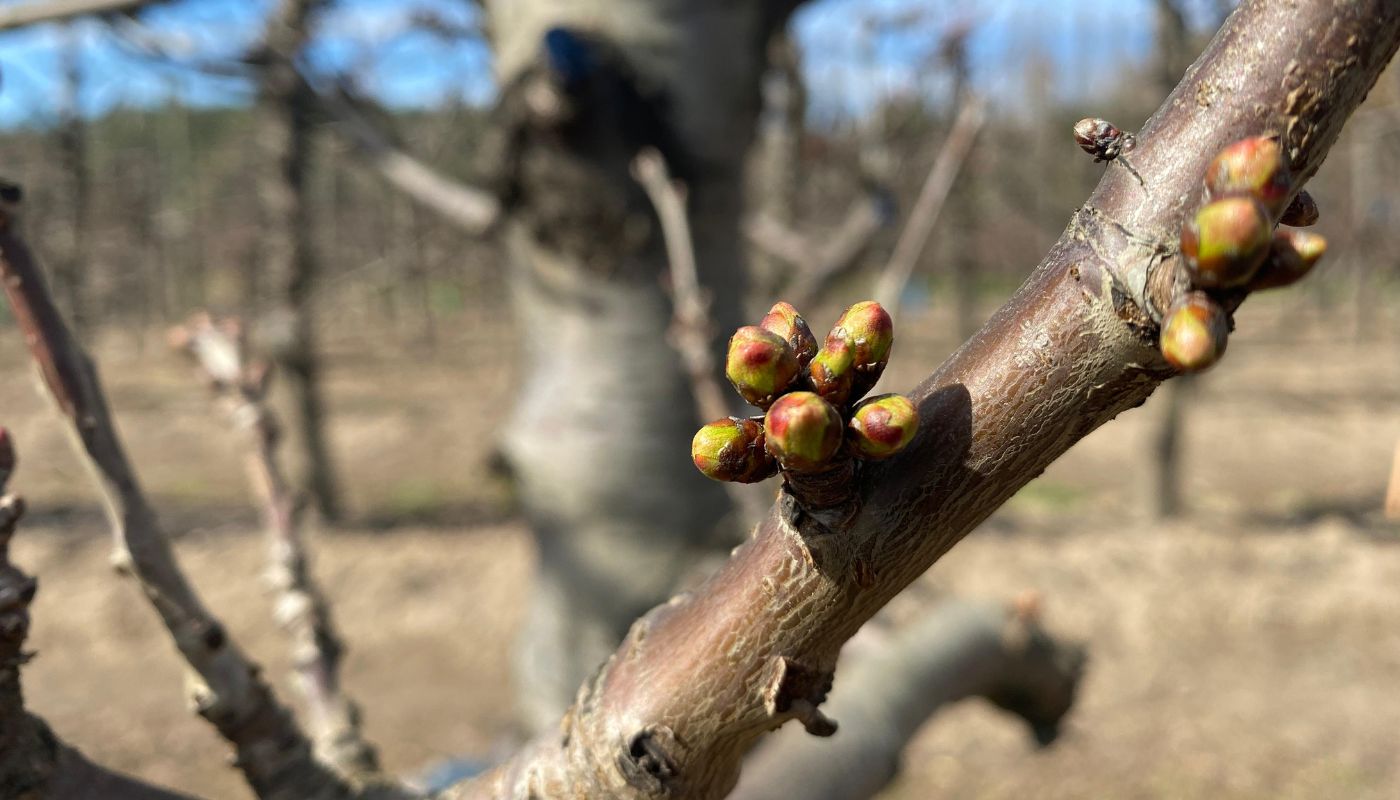
Dormancy in cherry trees corresponds to a physiological state in which buds reduce their metabolic activity and do not resume growth even under favorable environmental conditions. This process begins in autumn with the shortening of days (photoperiod) and the decrease in ambient temperatures, sending the correct signals to the plant through its leaves, detecting morphological and physiological changes as a mechanism for adapting to winter.
In practice, this process overlaps with leaf senescence, the remobilization of reserves (mainly carbon and nitrogen), and cold acclimatization (biochemical and structural changes that increase tolerance to low temperatures).
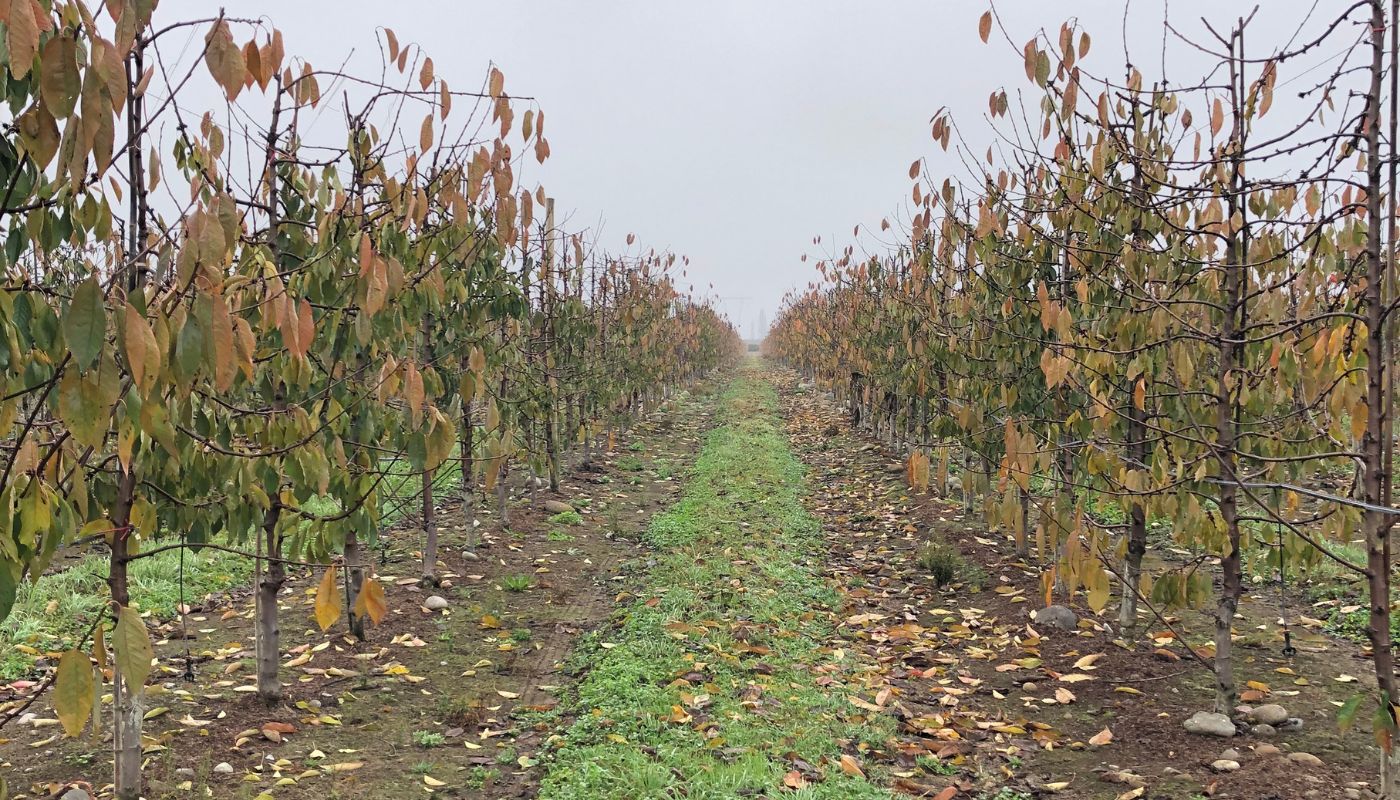
From an operational standpoint, a “correct entry” into dormancy is usually evaluated using field indicators, one of the most common being the progression of leaf senescence/abscission. As a management guideline, the orchard can be considered to enter a condition compatible with physiological dormancy when it reaches ≥50% leaf fall (Figure 1), using a consistent evaluation criterion across dates and blocks.
In some technical protocols, for field standardization purposes, completely yellow leaves with no photosynthetic function are recorded as the operational equivalent of leaf fall (always clarifying that this is a counting criterion, not a strict physiological equivalence).
Agronomic objective: To reach this operational condition by May 1st, in order to inform subsequent decisions (e.g., formal start of chilling hour monitoring in an internal program). It is important to clarify that the start of chilling hour counting depends on the model and the technical team’s criteria, and that the key is to maintain methodological consistency between seasons.
Figure 1. Representation of 50% leaf fall in a cherry orchard in production.
Agronomic Signals Prior to Dormancy to Promote Leaf Fall
The transition to dormancy doesn’t occur “according to the calendar,” but rather as an integrated response to photoperiod, temperature, water status, and orchard condition. However, management practices can facilitate an orderly end to the season.
a) Closing Nutritional Programs
January and February are important months for post-harvest maintenance and replenishment of reserves; March is usually a transition period toward dormancy. As a practical guideline, it is recommended to avoid extending fertilization (soil and/or foliar) beyond the first half of March, especially nitrogen (N), to prevent prolonged vegetative growth that delays senescence and lignification. The exact date should be adjusted according to the region, vigor, crop load, and soil/foliar analysis.
b) Adjusting Irrigation Towards the End of the Season
Irrigation should respond to actual demand (ET0, Kc, phenological stage, root exploration, and effective soil moisture) and not to perceived temperature. In March, it is common practice to reduce irrigation frequency (and potentially net water application) compared to the summer, avoiding both severe stress (risk to water reserves/roots) and excesses that prolong vegetative activity.
As a general guideline, under normal conditions, a significant reduction in irrigation frequency can be considered for the second week of March, particularly in vigorous orchards and/or soils with generally high water retention. However, this reduction could extend to February in areas with climatic limitations that reduce productive potential. In light soils (sandy/stony) and those with lower water retention capacity, the reduction should be more cautious, and the end of irrigation can be postponed to the end of March or the first week of April, ideally based on soil pit analysis.
These decisions should be supported by objective tools: soil pits, soil moisture probes/sensors, and evaluation of root dynamics, focusing on water distribution and timing rather than simply performing volumetric replenishment “out of habit.”
c) Targeted monitoring of senescence/leaf fall from mid-April, with the operational goal of reaching ≥50% by May 1st.
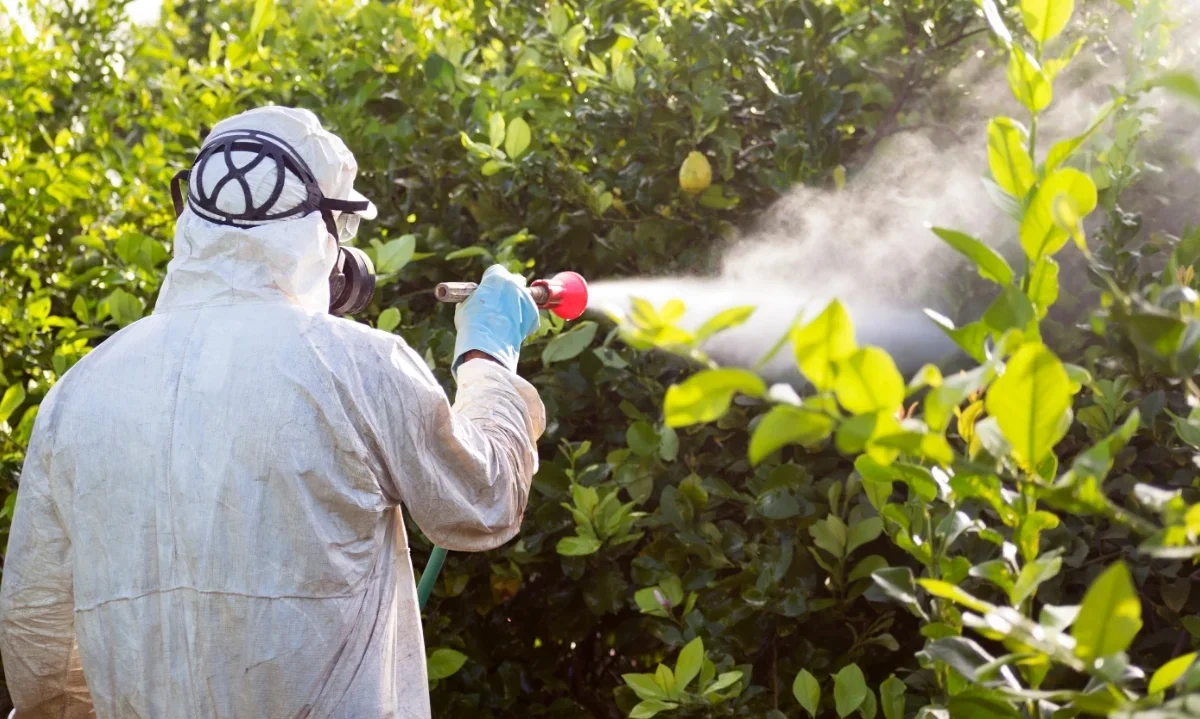
Evaluate around April 10-15th. If senescence/leaf fall is low and the orchard remains excessively active (high vigor, leaves still functional and without growth), a chemical intervention to accelerate defoliation may be considered only if the diagnosis justifies it and within a window that maintains operational safety and consistency with the orchard’s program.
- Urea 2 kg/100 L + Zinc sulfate 2 kg/100 L, with wetting equivalent to the entire canopy volume, prioritizing reaching the last shoot at height. Subject to repetition within the next 7-10 days.
Operational Checklist for Validating Proper Dormancy Entry
- Nutritional Closure: End soil/foliar fertilization according to condition; reference date: end of February/beginning of March (adjustable based on diagnosis).
- Irrigation Adjustment/Closure: Reduce frequency from mid-February to March and end according to soil/vigor/available water (with monitoring). Avoid resuming irrigation unless there is an agronomic justification and while keeping a close eye on root dynamics.
- Verification of Fall/Senescence: Evaluate around April 15th and aim for ≥50% of operational condition by May 1st (define and document the counting criteria).
- Correction if Fall is Insufficient: Consider a chemical strategy based on diagnosis and within the operational window; example: Urea 2 kg/100 L + ZnSO₄ 2 kg/100 L, with complete coverage; reassess in 7–10 days.