
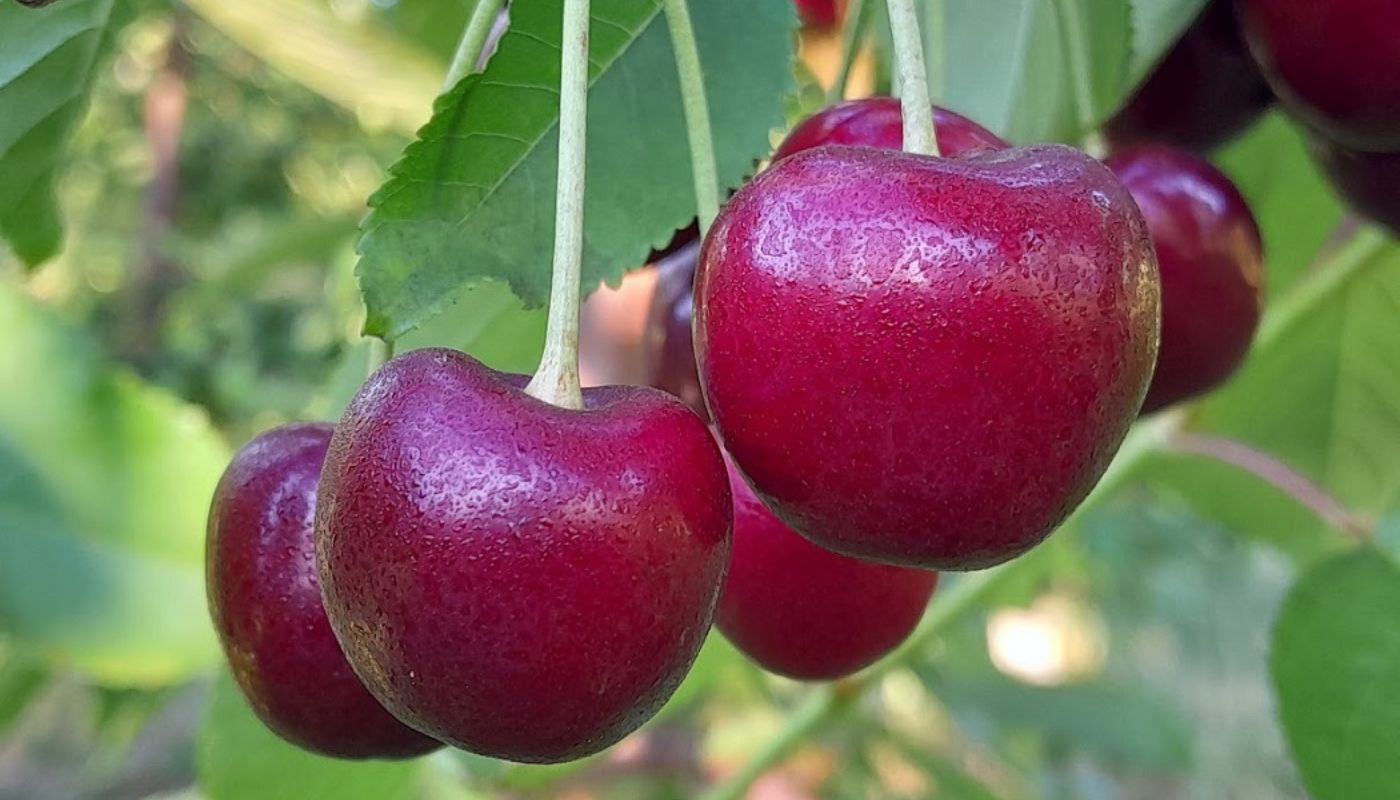
San Jose scale (Quadraspidiotus perniciosus) is a pest that affects several fruit species in Chile, including cherry trees. According to reports from the Agricultural and Livestock Service (SAG), this pest is widely distributed from the Arica and Parinacota Region to the Los Lagos Region.
Morphological description
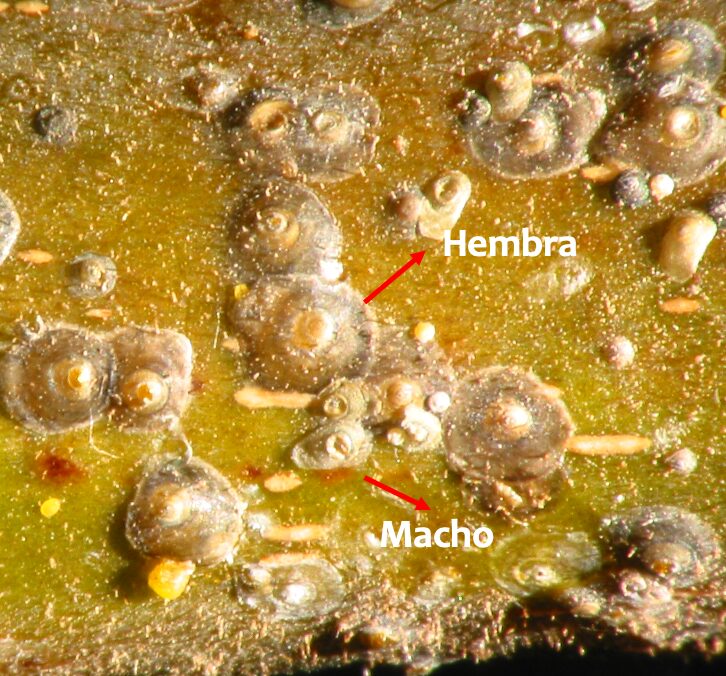
Females: have a circular gray shield approximately 1.5 mm in diameter (Photo 1). Beneath this cover, the body is globose, pear-shaped, and yellow.
Male: have a smaller, elongated shield, from which a yellowish winged individual emerges.
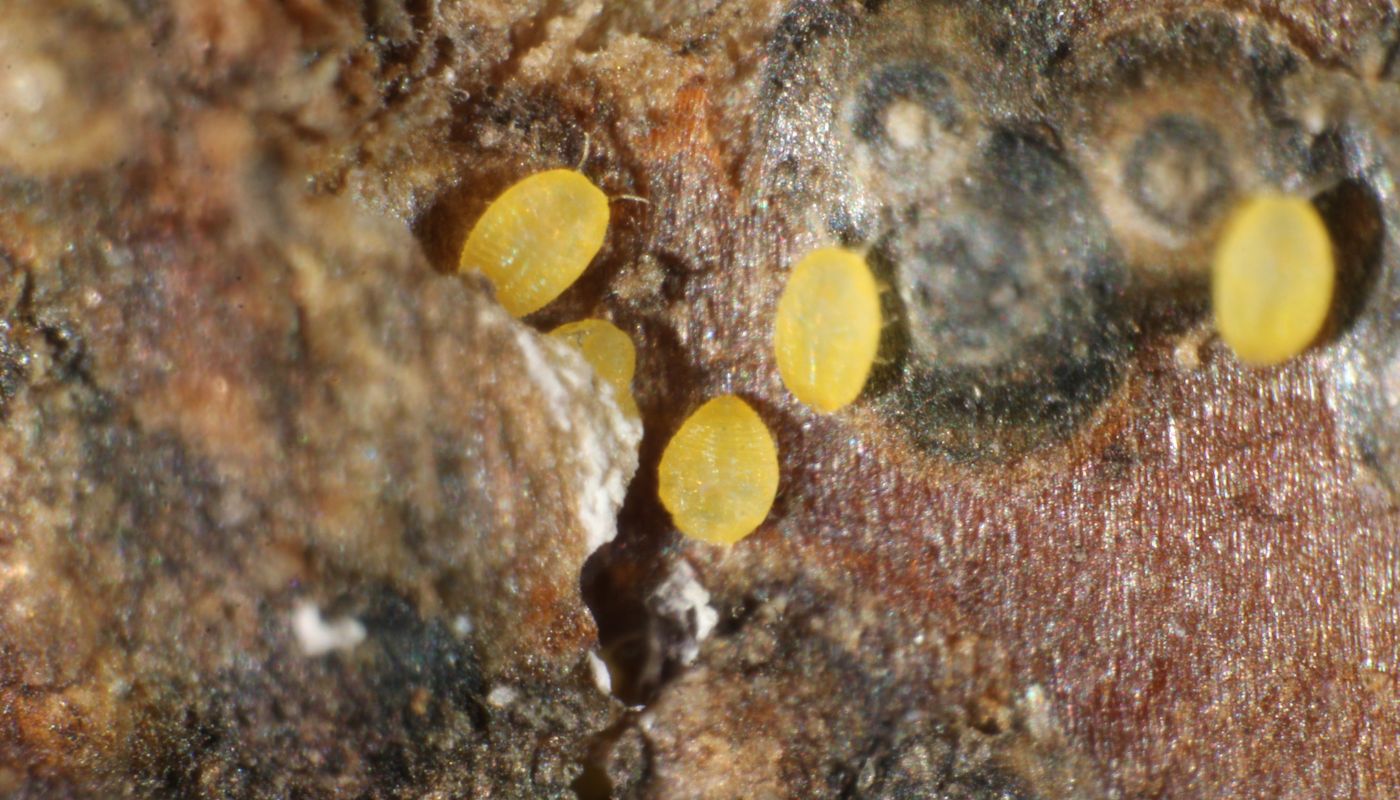
Migratory nymphs: are yellow (Photo 2); After attaching to plant tissue, they secrete a white covering, known as the white cap and later the black cap.
Life Cycle
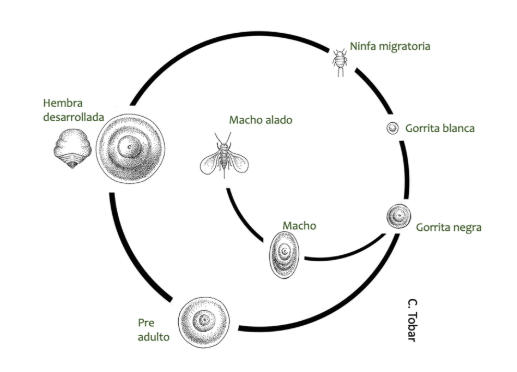
The adult female lays eggs that quickly give rise to migratory nymphs. The pest can complete three generations per season, with successive emergences between October and May.
Dispersal occurs primarily during the migratory nymph stage. Once attached to plant tissue, the insect feeds and begins to form a waxy shield, going through different stages: white cap → black cap → pre-adult → adult (Figure 1).
Damage and Symptoms in Cherry Trees
The scale insect inserts its stylet into the plant tissue to feed, injecting toxic saliva that affects the plant’s physiology. The main symptoms are:
– Premature leaf drop
– Wilting of infested twigs and branches
– Death of branches and twigs with severe attacks.
Factors that promote proliferation
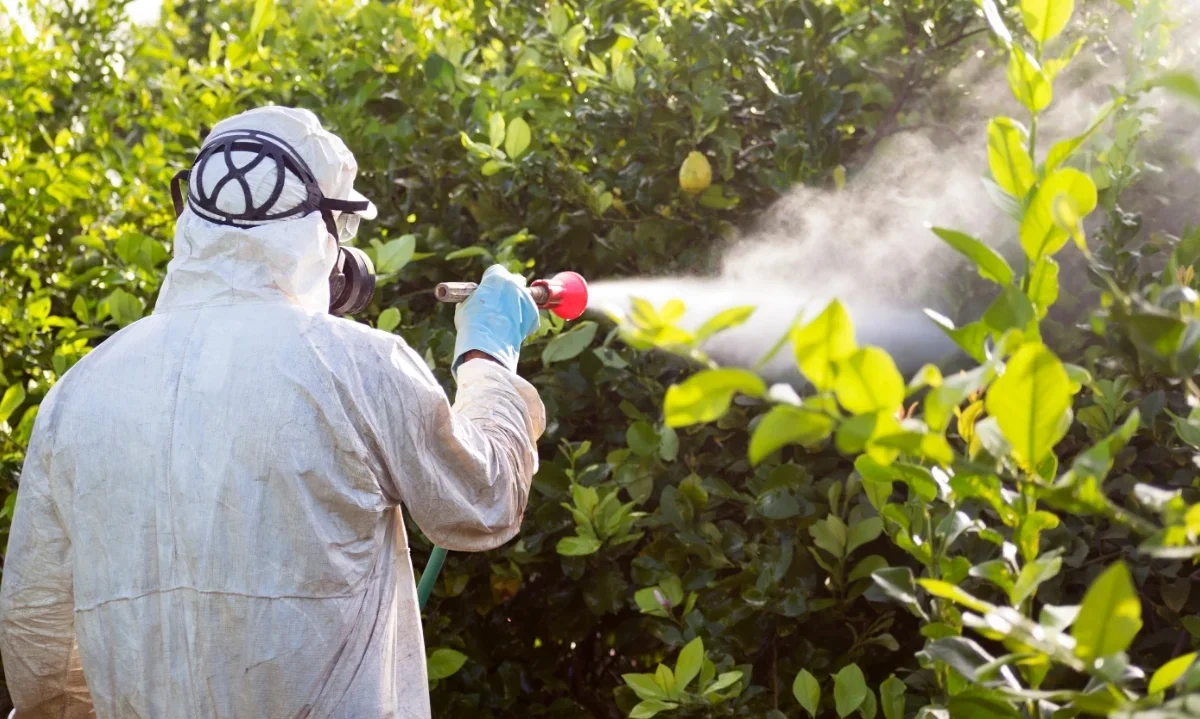
– Inappropriate or poorly targeted insecticide applications.
– Repeated use of the same active ingredients, generating resistance.
– Applications at inappropriate times.
– Permanence of infested material in the field.
– Presence of alternative hosts in the orchard environment.
Monitoring
Systematic monitoring is key to decision-making:
– Pheromone traps: allow detection of male flights (commercially available).
– Visual inspection: check twigs for migratory nymphs and other stages (adults, white caps, black caps).
The first generation of migratory nymphs usually occurs between October and November, the second in January–February, and a third in April, depending on the production area. This stage (migratory nymph) is the most susceptible to chemical control.
Control Strategies
1. Cultural Control
Pruning and removal of infested branches.
Removal of orchard material to reduce inoculum.
2. Biological Control
Predators: ladybugs Coccidophilus citricola and Rhizobius lophanthae.
Parasitoids: wasps such as Aphytis sp. and Encarsia sp. that lay eggs in the body of the scale.
3. Chemical Control
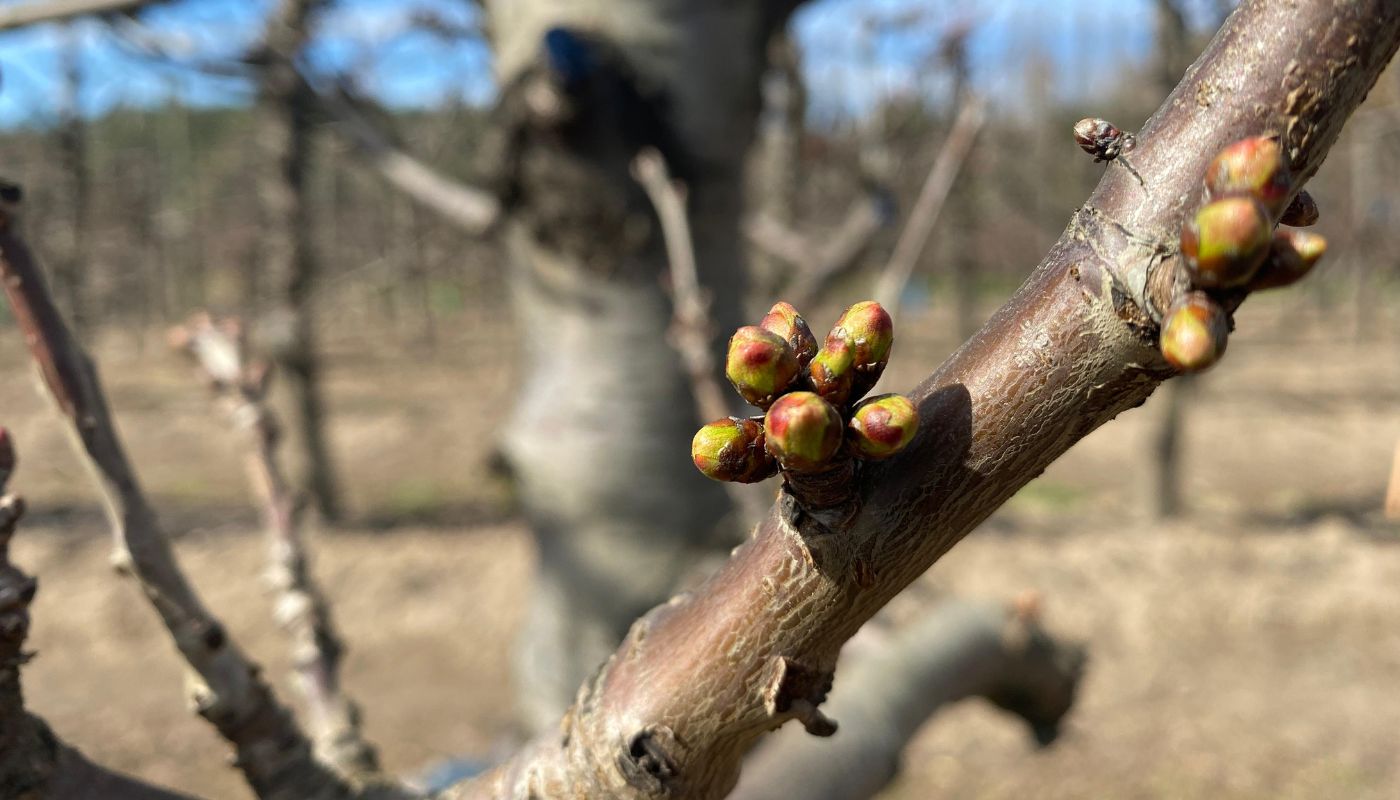
During the winter break: apply 1% mineral oil, repeating 35–45 days before bud break. This second application also helps control red spider mites.
Various insecticides, such as growth regulators, lipid synthesis regulators, and neurotoxins (systemic, contact, or ingestion), have demonstrated good efficacy and are a good control alternative.
Conclusions
San Jose scale continues to be a pest that can occur in cherry trees due to the direct damage to the tree’s structure and the potential impact on exports. Successful management depends on constant monitoring, the integration of control techniques (cultural, biological, and chemical), and the correct timing of application. The implementation of integrated management programs can reduce the pressure of this pest and protect the crop’s sustainability.
Literature consulted
– Foundation for Fruit Development (2004). Monitoring Guide for Pome and Stone Fruit Pests.
– González, R. (1989). Insects and Mites of Agricultural and Quarantine Importance in Chile. University of Chile, BASF, S.A. 310 p.
– Ripa, R., Luppichini, P. (2010). Walnut Pest Management. INIA Book Collection No. 25. Ministry of Agriculture. 116 p.
Website: