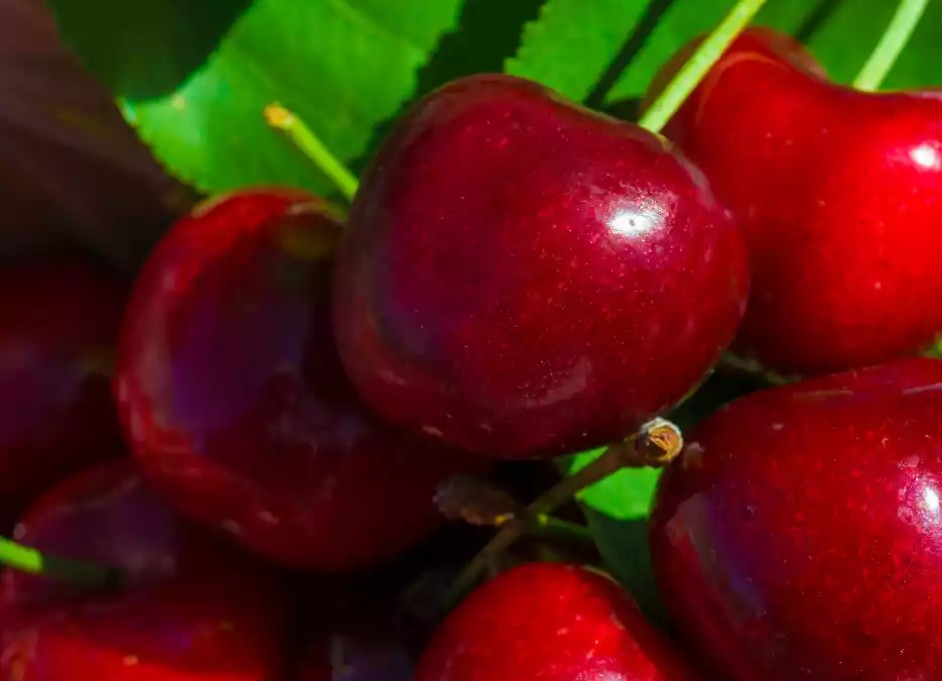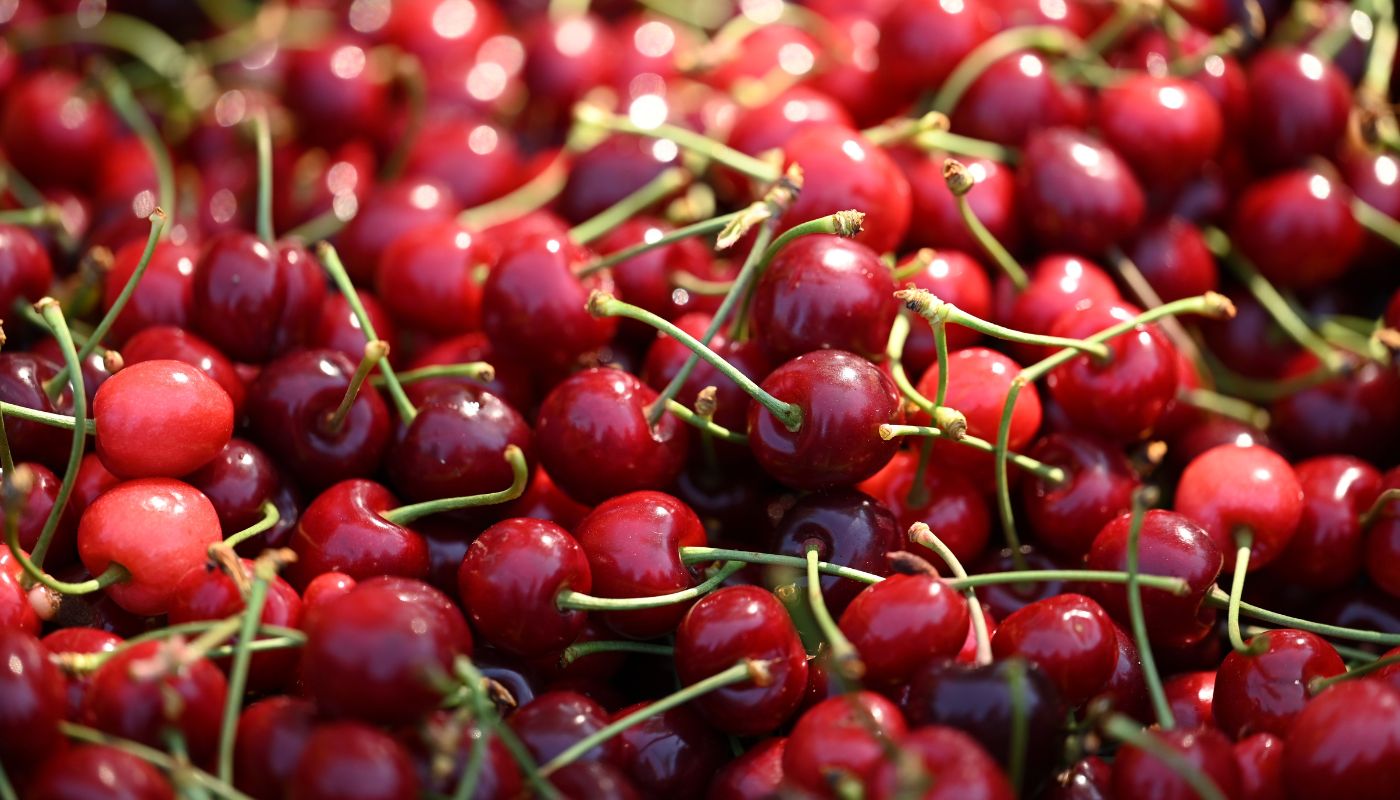


Cherry cultivars showing promise as growers learn more with each season.
Sweet cherries are a relatively new crop in South Africa, but thanks to emerging lower-chill cultivars, interest is growing.
Most of the cherry orchards planted in the past decade can be found in the Koue Bokkeveld, a mountainous region near Ceres that experiences more chill than other growing regions in the fruit-producing Western Cape. In December, the International Fruit Tree Association visited Dutoit Agri’s estate in the region and toured a fourth-leaf orchard of Lapins and Royal Helen.
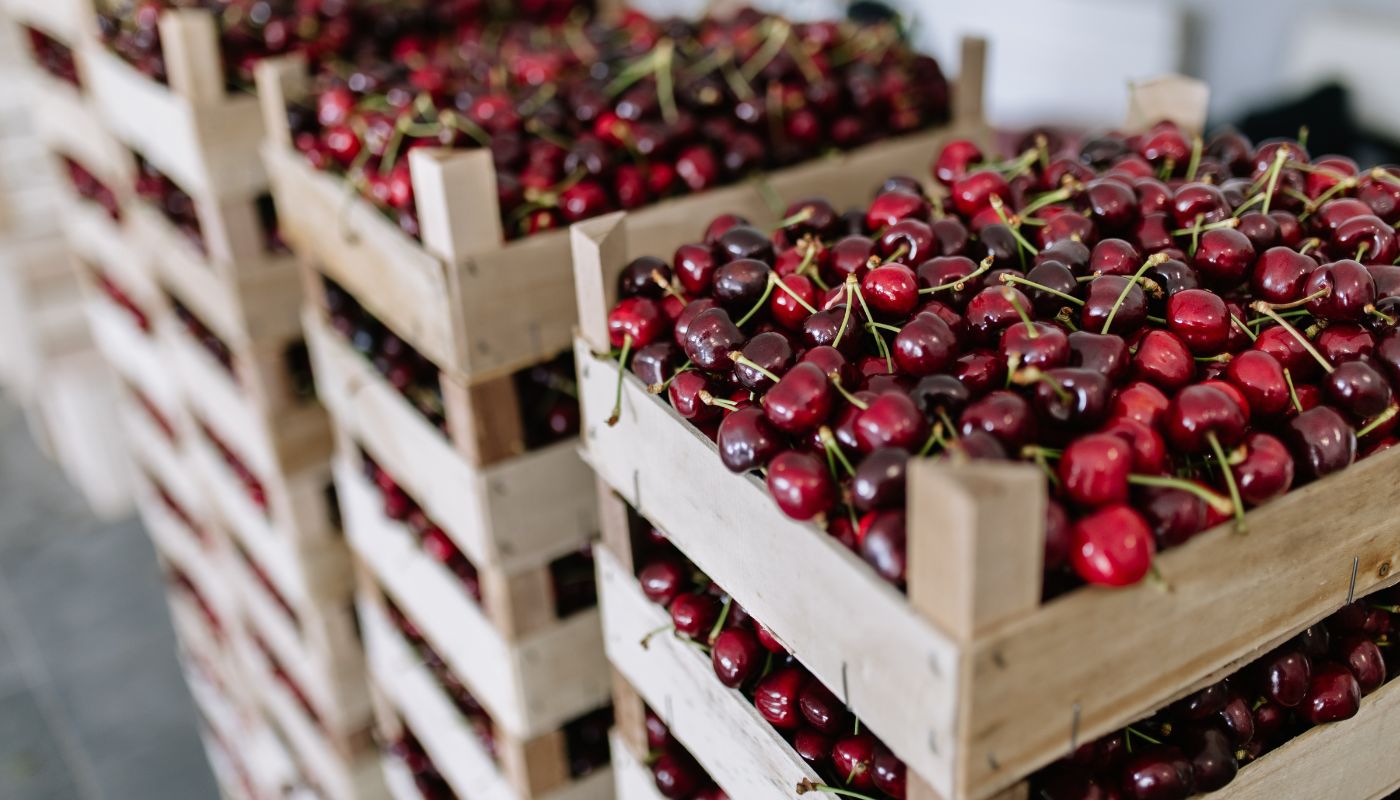
Fruit quality is the top priority, said Piet Bosman, Dutoit’s technical advisor for cherries. South Africa’s cherries need to be firm enough to spend four to six weeks on the water to reach their target export markets in Europe and the Middle East, though some of the crop moves by air. About half the country’s production — 2,600 metric tons in the 2023–24 crop — is exported, a drop in the bucket compared to Chile, which dominates the Southern Hemisphere market.
“We paid some school fees in the past, being too greedy and putting too many cherries on the trees,” which led to declines in firmness, Bosman said. “We’re learning that less is more to keep the trees in balance.”
The orchard was planted on MaxMa 16 rootstock in 2020 at 1,667 trees per hectare, equivalent to 700 trees per acre, and trained in a new system for Dutoit: Bosman called it a “tabletop” central leader that features a central stem and two tiers of fruit-bearing branches. The trees are freestanding, but crossarms on the posts, which hold the nets, carry wires that support each tier of branches. Bosman said he decided to try the system to get into production earlier and to make harvest more efficient.
On the production side, it appears to be working.
In the fourth leaf, the trees were producing a respectable 8 metric tons per hectare — or about 3.6 tons per acre — Bosman said. Once in full production, he expects 16 to 18 metric tons for late cultivars such as Lapins and Royal Helen, and a little less for the earlier-ripening varieties.
The system has also proven to be labor efficient, he said. The lower tabletop of branches can be picked from the ground, while the higher tier can be picked efficiently from a platform. He also likes the simplicity of the training system. At each tier, the 1-year-old shoots can quickly be broken back to the base, prompting the formation of fruiting spurs along the branch, which will crop in the second year, and inducing a new shoot to push from behind the break.
“For every bearing branch you have, you will need a replacement,” said Gys du Toit, director of production for the company’s northern Western Cape region, as he showed Good Fruit Grower the breaking technique for creating that renewal growth and how the broken branches are supported by the cross-arm-supported wires.
Dutoit also breaks the leaders back once the trees have filled their space.
Michigan State University professor Greg Lang, a sweet cherry expert and IFTA’s education director, said the innovative system incorporates constant renewal. Each tier should have a mix of fruiting branches, replacement branches developing spurs and new shoots.
This results in a more three-dimensional system than the planar approaches U.S. cherry growers have adopted in recent years, but setting spurs on 2-year-old wood rather than 1-year-old shoots improves yield potential, Lang said. It also offers good light distribution to each tier.
The industry doesn’t yet have a statutory assessment, so cherries aren’t formally represented by Hortgro, the growers’ association for other temperate tree fruit. An informal growers’ association has provided funding to support research led by Hortgro, Stellenbosch University and Provar, an independent cultivar evaluation company, to study the different cherry cultivars in different growing climates around the country and uncover promising commercial candidates.
Ten cultivars selected to represent a range of chill requirements were planted in 2019 at the Dutoit farm in the Koue Bokkeveld and at two other sites with less winter chill and more growing degree-days. The research did not recommend a top cultivar but found that growing climate remains a market constraint: All of the cultivars showed higher yields at the cooler site.
Most of Dutoit’s cherry plantings are low- or medium-chill cultivars from the Royal series from Zaiger Genetics of California, Bosman said.
Article from: https://goodfruit.com/sweet-cherries-in-south-africa/