

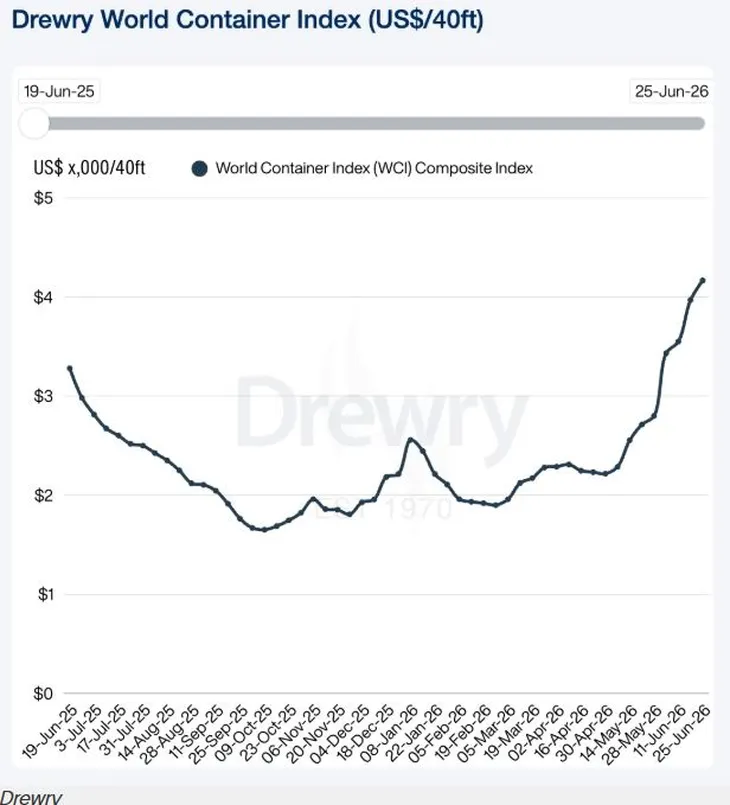
International shipping is experiencing a new period of intense pressure. The Global Container Index, compiled by the consultancy Drewry, registered a weekly increase of 5%, reaching $4,166 per 40-foot container, the highest level since September 2014. The increase reflects an increasingly complex scenario for importers and exporters, marked by a shortage of vessel space, port congestion, and the expectation of further tariff increases.
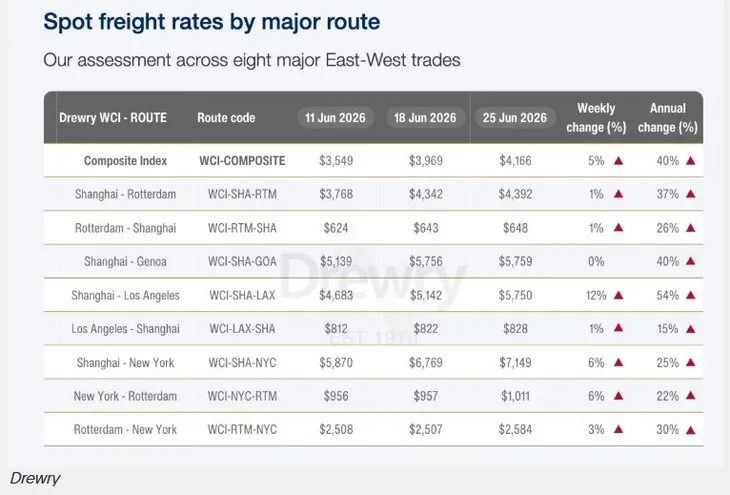
The surge in costs is mainly due to the intense pressure on transpacific routes, currently considered the most strained in the global market. According to Drewry’s report, shipping costs from Shanghai to New York increased by 6% last week, reaching $7,149 per container. The increase was even more pronounced for shipments to Los Angeles, where rates rose by 12%, reaching $5,750.
Behind this surge lies a combination of economic and strategic factors. Numerous importing companies decided to bring forward their purchases and shipments due to concerns about future changes in trade tariffs and potential increases in marine fuel costs. This anticipation of demand is putting greater pressure on shipping lines’ available capacity, reducing free space on vessels and driving up freight rates.
In contrast, routes between Asia and Europe showed relative stability in recent days. Shipping costs from Shanghai to Rotterdam saw a slight increase of 1%, settling at $4,392 per container, while services to Genoa remained unchanged at an average of $5,759.
However, experts warn that this apparent calm could be temporary. Major shipping companies are maintaining a firm commercial policy and are already anticipating further adjustments to their rates. The implementation of fuel price surcharges and peak season surcharges starting in July could trigger a new wave of increases.
Some of the largest operators in the sector, including the French company CMA CGM, have already announced new base rates and additional charges for the coming months. These measures respond both to increased operating costs and the need to compensate for the logistical difficulties that continue to affect the global supply chain.
Port congestion and new surcharges put pressure on the market
Beyond tariff variations, the maritime market continues to be conditioned by structural and geopolitical factors. Although signs of some détente in the Middle East have emerged in recent weeks, temporarily reducing concerns about potential disruptions in strategic areas such as the Strait of Hormuz, the international logistics situation remains fragile.
Major ports in Asia and Europe are still facing significant levels of congestion. The accumulation of containers, delays in loading and unloading operations, and limitations in the availability of equipment and vessels are restricting the system’s effective capacity. As a result, the supply of maritime space remains tight in a context where demand continues to show strength.
This scenario creates uncertainty for companies that depend on foreign trade. Importers, distributors, and manufacturers will have to face not only higher logistics costs but also an environment characterized by high tariff volatility and difficulties in securing space on ships.
Short-term projections also do not anticipate immediate relief. Drewry estimates that spot rates will continue to rise in the coming weeks, driven by the implementation of new surcharges and the persistence of operational restrictions at various ports worldwide.
Consequently, companies needing to move goods during the second half of the year should plan their operations further in advance and prepare for a maritime market that will continue to navigate turbulent waters, with high costs and increasingly limited space availability.
Source: Más Producción