

Article prepared by the technical team of Avium SpA.
Each year, a natural astronomical process related to the length of day and night occurs, with the longest day and shortest night of the year, known as the summer solstice; this defines the start of summer and occurs every December 21st in the Southern Hemisphere.
This event leads plants to receive this signal of change in their perception of photoperiod, which indicates that the day will soon have fewer hours of light, thus approaching autumn. This triggers the cessation of active growth in branches and the beginning of lignification in branches and fruiting centers, the first physiological process of the season aimed at adapting to tolerate the upcoming period of low temperatures during the winter season.
Upon completing the previous stage related to post-harvest and initiating the next phase within their production process, it is called dormancy, a phase of the annual development of plants that allows them to survive the cold winter (Saure, M. 2011).
The foundations for the current understanding of dormancy were established in the mid-20th century (Perry, 1971 and Doorebos, 1953), but it was not until 1987 that the terminology we use today was coined to better describe the three distinct stages within this continuous phase, which are: para-dormancy or dormancy induction, referring to the cessation of vegetative growth imposed by other organs of each plant due to the production or inhibition of molecules such as apical dominance, and is primarily influenced by low nighttime temperatures, which accelerate leaf drop.
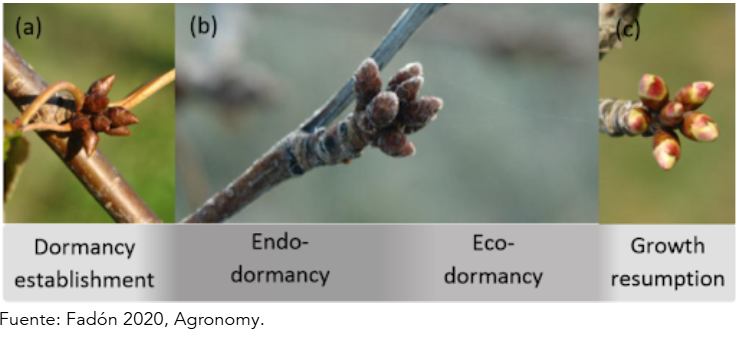
During the second phase, endo-dormancy or true dormancy, growth is not possible even under suitable temperatures until the buds have been exposed to sufficient cold, as it is controlled by internal factors of the plant. This is the most important stage for the cherry tree, as it is where the accumulation of chill hours (CH) occurs, closely associated with a good awakening of the plants. Meanwhile, eco-dormancy or climatic dormancy refers to the subsequent period in which the buds only need to be exposed to sufficient warm temperatures to resume their growth (Lang et al., 1987).
The significance of dormancy in cherry cultivation has been reported for decades by many authors, whose principal factor in its proper expression is the accumulation of cold during the winter period (Crabbé, 1994), currently expressed as the accumulation of chill hours (CH) between 0°C to 7.2°C (Weinberger, 1950), which translates into a uniform bud awakening and flowering, partly attributable to differences in starch accumulation in flower buds under different chill accumulation according to Fadón et al., 2019.
It is important at the orchard level to be aware that this key phenological milestone is to achieve at least 50% leaf drop by May 1st. Thus, it is considered crucial that prior management at the orchard level facilitates a gradual entry into dormancy.
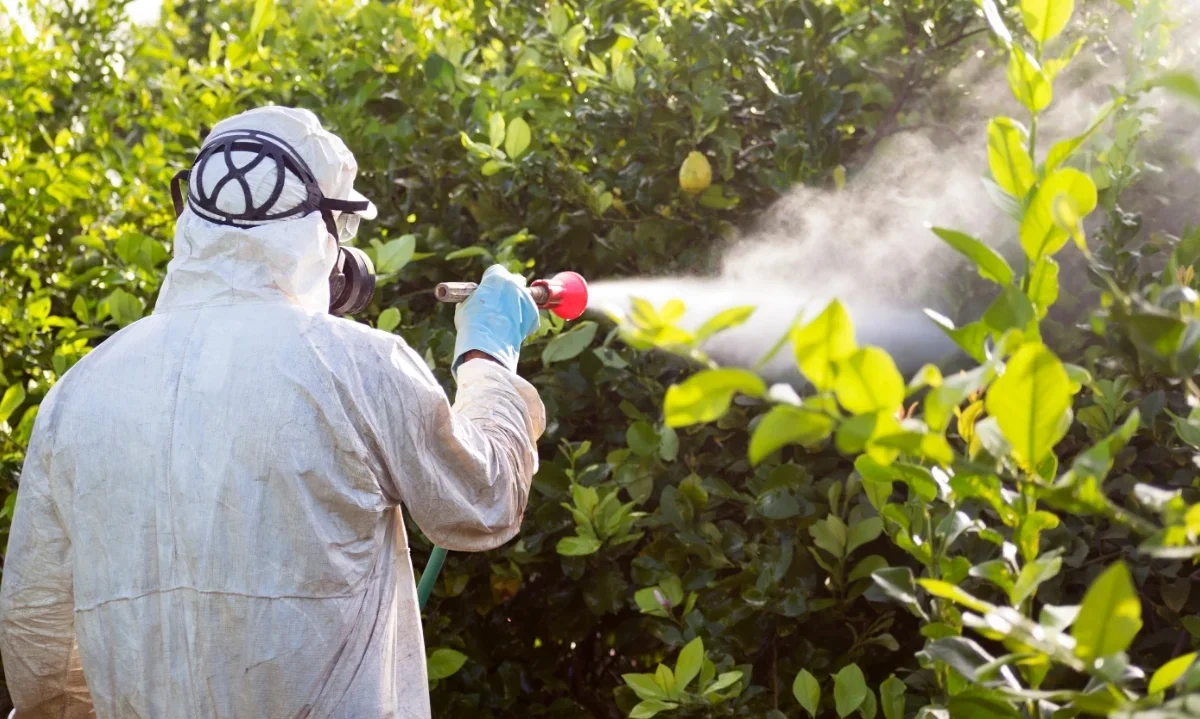
This, combined with adequate phytosanitary programs for the stage and cultural practices such as reducing irrigation frequency according to the particular needs of each area/soil, ensures that the minimum requirements for proper dormancy are met.
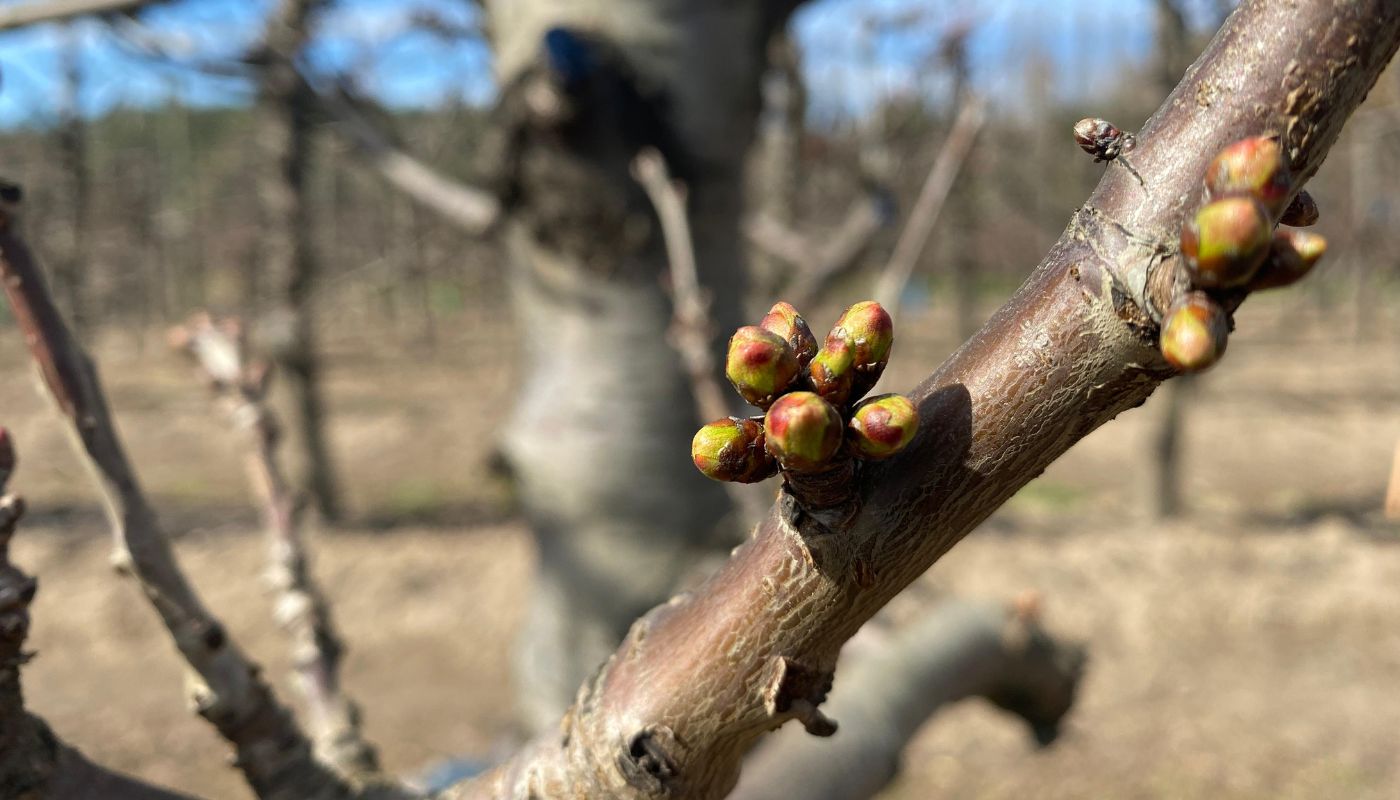
Figure 1. Phenological appearance of buds through winter dormancy in the cherry tree.
Bibliography – Saure, M. 2011. Dormancy Release in Deciduous Fruit Trees. Horticultural Reviews 239-300.
– Perry, T.O. Dormancy of trees in winter. Science 1971, 171, 29–36.
– Doorenbos, J. Review of the literature on dormancy in buds of woody plants. Meded. Landbouwhogesch. Wagening. Ned. 1953, 53, 1–24.
– Lang, G.A.; Early, J.D.; Martin, G.C.; Darnell, R.L. Endodormancy, paradormancy, and ecodormancy – Physiological terminology and classification for dormancy research. HortScience 1987, 22, 371–377.
– Fadón, E.; Fernández, E.; Behn, H. and Luedeling, E. Agronomy 2020, 10, 241.
– Fadón, E., Herrero, M. and Rodrigo, J. (2019). Flower bud development and winter dormancy in sweet cherry (Prunus avium L.). Acta Hortic. 1231, 1-6.
– Crabbé J. (1994). Dormancy. In Arntzen C. (ed.). Encyclopedia of Agricultural Science. Vol.1. New York: Academic Press, p. 597–611.
– Weinberger, J.H. (1950). Chilling requirements of peach varieties. Proc. Am. Soc. Hortic. Sci. 56, 122–128.