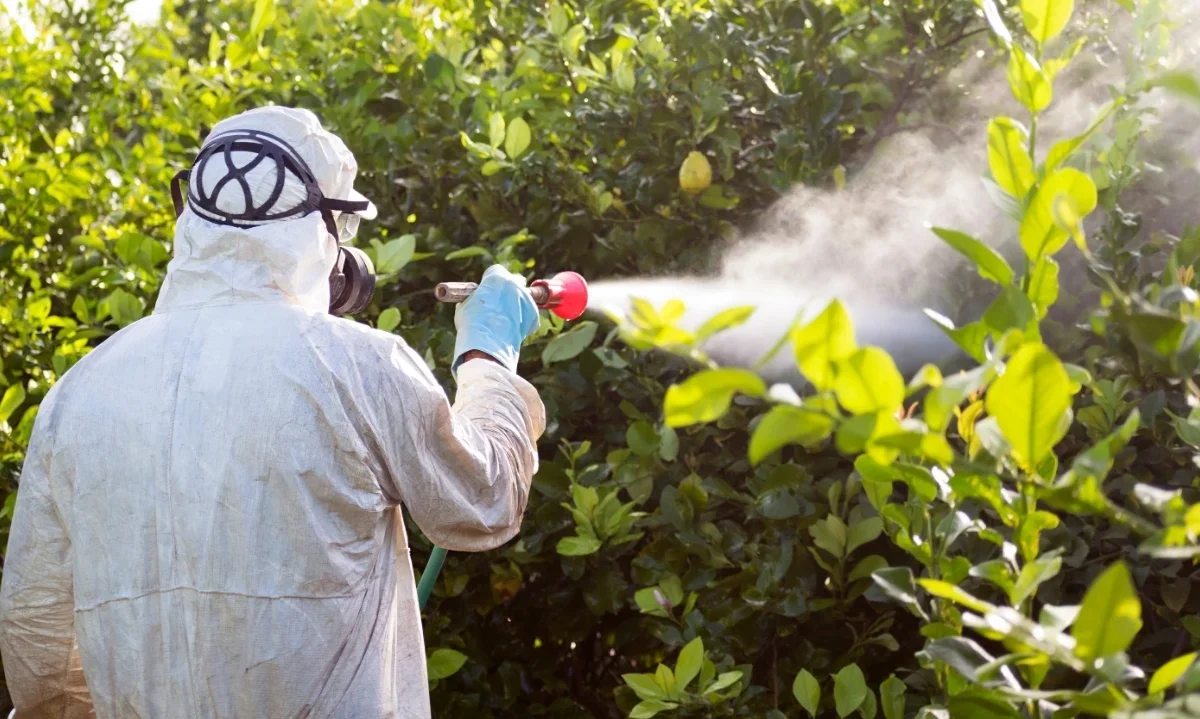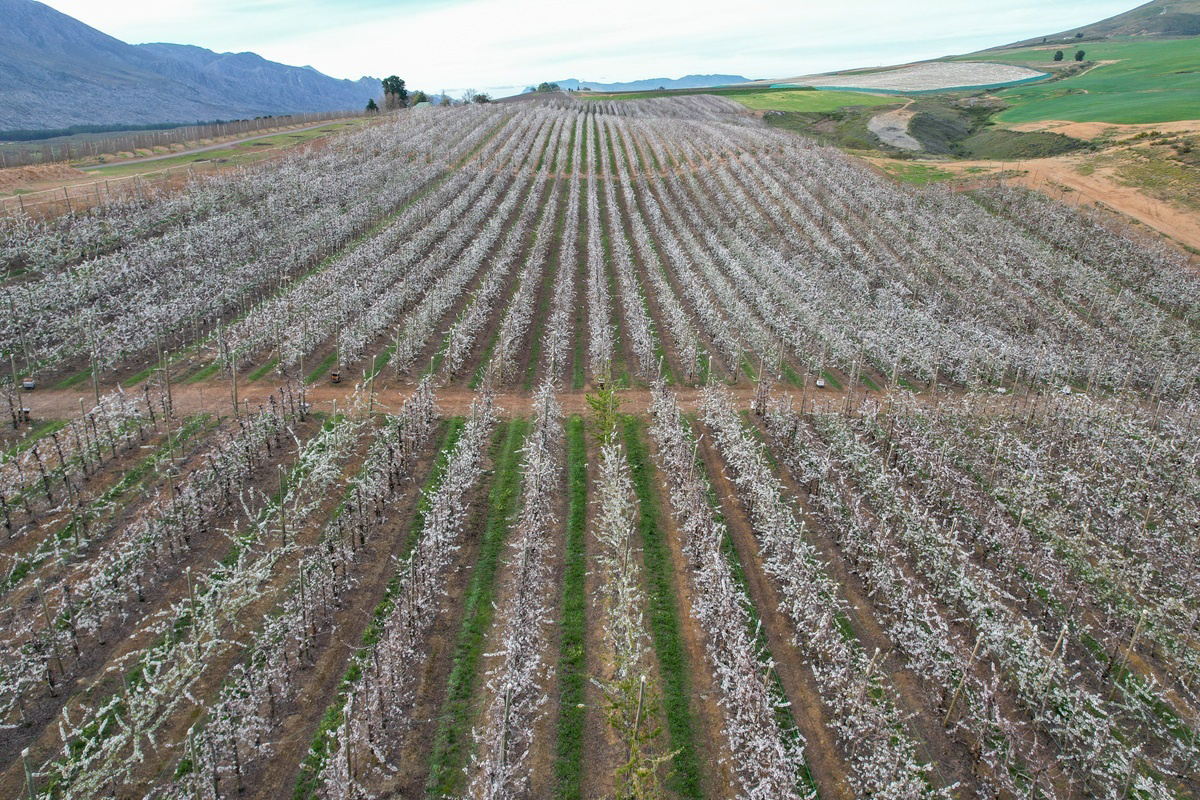

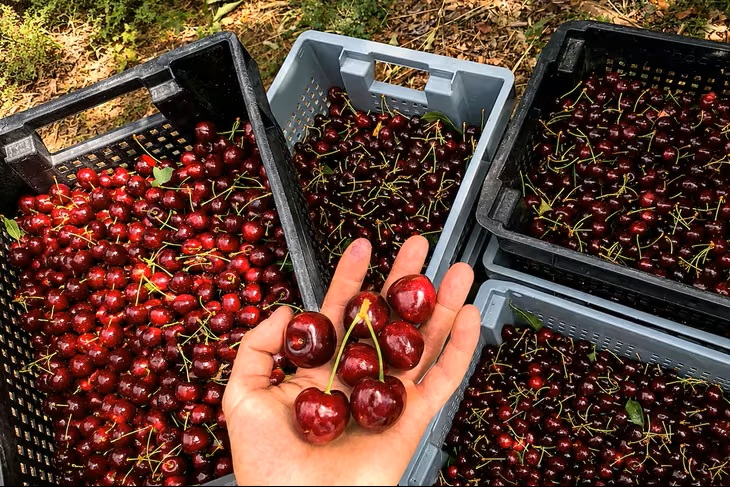
These seasonal conditions were anticipated in long-range forecasts, which predicted below-average temperatures and higher-than-normal precipitation. Consequently, frequent rain has narrowed the windows for orchard operations, making it difficult to adhere to scheduled phytosanitary treatment plans. Producers are proactively increasing fungicide applications to mitigate the risk of fungal diseases—and, later on, to prevent fruit cracking as the cherries enter the ripening and color-change stage.
Caminiti noted that, at the time of his interview with Agrovalle, the cherry varieties had not yet reached this sensitive stage; therefore, fruit cracking was not the primary challenge for the current season. To mitigate this risk, growers are employing helicopters, drones, and protective covers—though the effectiveness of these measures depends on the rain not being persistent.
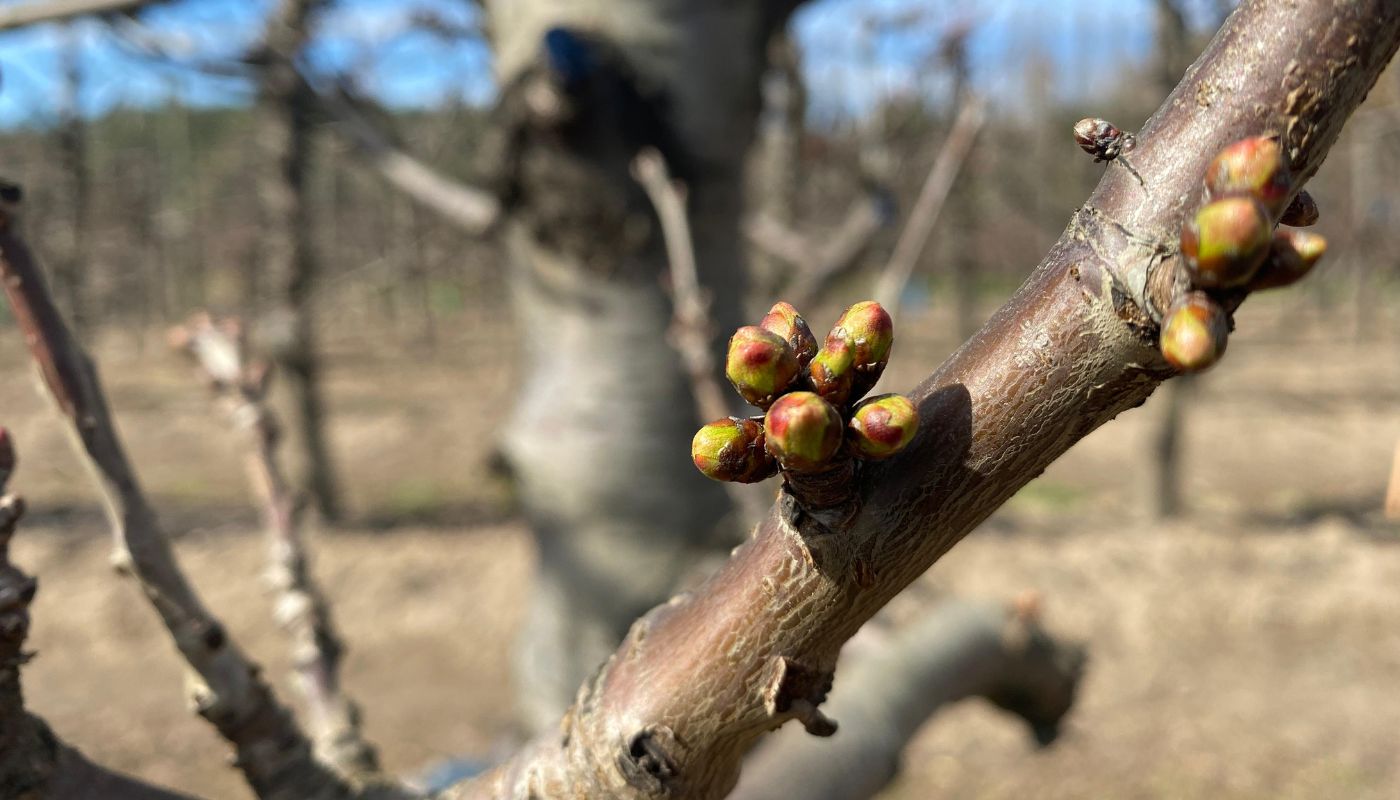
Flowering and fruit set were favorable, thanks to a sufficient accumulation of winter chill hours. In Chimpay, located in the Middle Valley, the initial harvests—which typically begin during the last week of October—may be pushed back to the first few days of November.
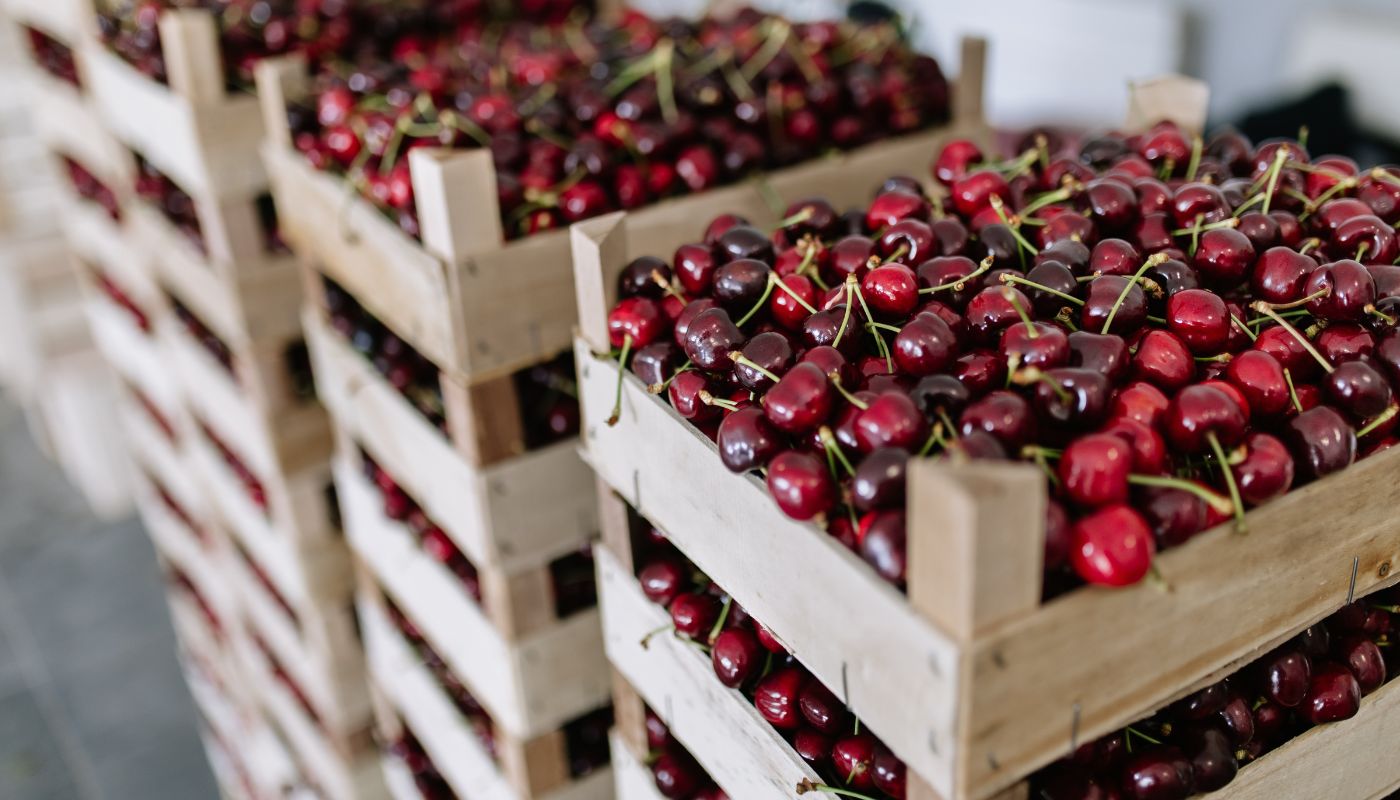
Regarding the commercial landscape, Caminiti anticipates that the abundant supply from Chile will continue to exert downward pressure on prices. He pointed out that the first air-freighted shipments of Chilean cherries to China raised concerns regarding the condition of the fruit upon arrival. In response, some companies affiliated with CAPCI have begun prioritizing direct agreements with commercial outlets at the destination—particularly in China—to avoid exposure to the volatility of auction-based markets.
Source: Fresh Plaza