
To this end, Smartcherry spoke with Héctor García, General Manager of Laboratorios Diagnofruit, about the impact that rainfall could have on the increase in bacterial and fungal infections and how knowledge of the orchard can help prevent cherry tree diseases that affect fruit quality.
Regarding the increase in pathogen populations, the agronomist and Master of Agricultural Sciences stated that bacteria such as Pseudomonas increase their populations during the period from late winter to early spring, which includes flowering, persisting until November, while fungi are more resistant and can even remain in the system for future infections in summer. Considering this, it is vital to protect the first blossoms, as they produce the best quality and caliber fruit.
The phytopathological effect: The spread of fungi and bacteria due to humidity
When it rains, infections are always more likely to develop, because humidity somehow creates conditions for fungi and bacteria, which thrive during this time. This season has been marked by temperature fluctuations, warm days following cold weather or precipitation, and that’s very good for fungi and bacteria. So, the fact that there is also water circulating in the system allows the pathogen cycle to accelerate, and we have a larger population in a shorter time.”
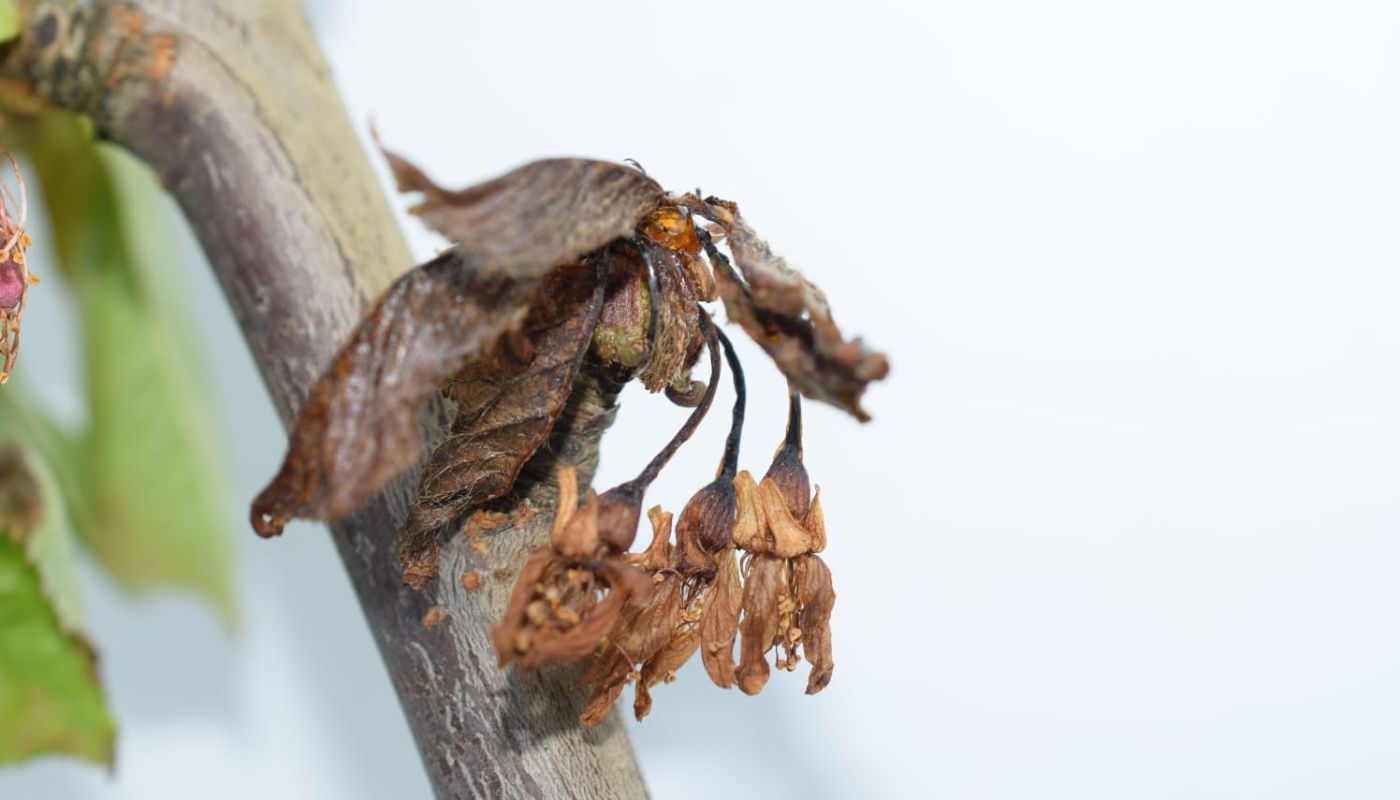
Among the most common problems we might see are blights caused by bacteria. In fact, it is much easier to see blights caused by bacteria in central Chile than by fungi. When we talk about fungi, we are essentially talking about Botrytis and, secondarily, Monilia, both causative agents of blossom blight in stone fruits.
In the case of bacteria, we are essentially talking about Pseudomona syringae pv. syringae (Pss) and pv. morsprunorum (Psm), where Pss is the dominant and most widespread species. Since there is water (not just rainfall, but also humid mornings) and peak temperatures, the perfect breeding ground is created for infections to develop, if the plant, management, and microbiota allow it. What we need to understand is that during this time of year, infections begin to develop. Populations are likely to increase, so a prevention strategy must be implemented to somehow maintain their numbers and reduce the chances of infection in the face of climate variability, which will inevitably occur.
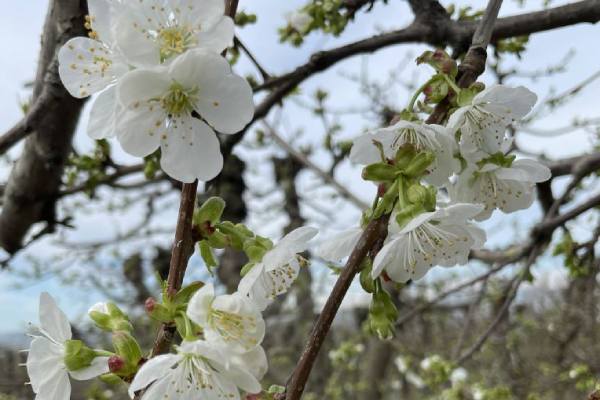
When deciduous plants flower in spring, it is clearly a critical time for them. Probably due to the coevolution of these pathogens with the plant, they also “know” that the plant is in a critical stage, as it is awakening and must produce flowers and buds after months of minimal activity. Also, consider that there is nectar in the systems, a free source of carbon available.
Therefore, there is a lot of stress, food, and variable weather, resulting in a tree at a time of susceptibility, worried about advancing on several fronts. This situation is a special time for pathogens. So, what do they do? They increase their populations and break down the plant’s defenses; therefore, it is a precise time to act and help our cherry trees.

So, what does this fungus or bacteria ultimately do when infecting the plant? It takes away the productive potential of the fruit. causing it to be lost?
“Exactly. It’s a lost flower. So, that’s why it’s important to protect from the first blooms; we must establish a strategy for the entire period. Because the first flowers are always the best, they produce better fruit and better size. We have observed that many of the flowers that bloom late are not viable; they have problems; they often don’t maintain the synchrony they need with another variety to be fertilized. So, from the beginning of flowering, it must be well covered until full bloom.
Another important point to mention is that when it rains during flowering, there are generally lower final yields because the pollination and subsequent fertilization process is affected, so we must protect the process even more. In certain seasons, this effect is not noticeable because we have many flowers, but the quality of the fruit is due to the type of flower that was fertilized”.
How can we first prevent the entry of these fungi or bacteria into the tree, and if they have entered, how can we eliminate them? What recommendations do you offer?
“There are always that we must act preventively because there are very short periods between the flower opening and its fertilization, so everything that happens at that stage is fast.
There are different plans, from the greenest, which are essentially strategies involving biological control and certain botanical extracts, to synthetic biocides alone or approaches that integrate both.
Briefly, biological control, essentially Bacillus, cuts off communication between pathogens and, through flooding, reduces the proportion of pathogens, preventing Pseudomonas from taking control. Therefore, if we apply products based on these bacteria (or others), it is important to make at least two applications during this period to reinforce their presence during the most critical stages.
Another control approach is to elicit the plant, giving it the defense signal, activating various cellular strategies that ultimately control the disease. Chitosan and other synthetic products are now available for use during this period; just keep in mind that the plant must have receptive organs capable of producing a signal when these types of products are applied.
Finally, the other alternative is to use direct control with biocides, fungicides, or antibiotics, which we apply and gradually reduce populations from an early stage. A well-known active ingredient is pyraclostrobin, which has the advantage of being both bactericidal and fungicidal, and has the valuable property of activating defenses. So, when we apply this product, we are telling the plant to defend itself and, at the same time, reducing populations through direct action.
If it rains, there is the possibility of applying antibiotics, with a view to controlling bacteria. I prefer to do so when flowering is advanced, at least 50% of the flower, taking advantage of that dose of antibiotic for control when the flowers are most exposed. Given the implications of applying antibiotics to agricultural systems, the recommendation is to use them only in situations that warrant it.
In the case of fungi, there are several botryticidal products, that is, they control Botrytis, and they generally also work for Monilia, which is the other fungus that doesn’t cause problems in the flower, which we should use. Among these, there are several carboxamides, a group that is very powerful against Botrytis and that have a label for use, such as boscalid, fluopyram, fluxapyroxad, or penthiopyrad, many of which are formulated in mixtures with other active ingredients. Fludioxonil, a phenylpyrrole, generates quite effective control, so we generally consider it at the time of full flower, as does the hydroxyanilide fenhexamid. The final choice should be based on what I will use later in terms of phenology, jacket fall, and the ripening and fruit growth process. We should always avoid repeating chemical groups to avoid generating resistant populations”.
What other types of management do you consider important to mention when considering proper disease prevention at this stage of flowering?
“With bacteria in mind, you should always diagnose your garden to determine whether or not there’s bacterial canker pressure. Bacteria can cause different diseases. One is canker, which is a wound on the branches or trunk, which is generally linked to what we call gummosis. So we could determine if we have a large presence of cankers, we could experience bacterial blight attacks. This way, we can establish the risk and define an ad-hoc program. For example, this could determine whether we use antibiotics or not”.
Always keep statistics on the garden, season after season
How many plants are infected? How much canker? How much is it evolving over time? How much blight do we observe? Are my populations high? Are they resistant to fungicides or antibiotics? With this information, we can take measures and establish my management plan.
In the task of generating records, we can also perform laboratory diagnostics; we can analyze buds, twigs, and flowers to see how infected the garden is, or simply determine how the season is going, in case we need to reinforce.
It’s important to keep track of orchards, monitor, and know the inoculum load of fungi and bacteria so you can be prepared. Seasons vary greatly. All this information helps us piece together the puzzle; putting the puzzle together without seeing the picture isn’t the same. We must try to keep track of the data, collect standardized data, and monitor cherry blossom phenology.