
BIOCEA researcher Maureen Muñoz discusses the growing threat of mites in this plant, emphasizing the importance of technical monitoring that considers both pests and natural enemies.
—Which acaricides are authorized for post-harvest use on cherry orchards?
According to the information on acaricide labels, some recommend application at the beginning of the season when the first mobile stages appear, others indicate only one application per season, and still others specify post-harvest application, as shown in the following table:

Why is it important to rotate modes of action when controlling spider mites?
It’s important because, firstly, it prevents pest resistance. When a pesticide with the same mode of action is used repeatedly:
– Susceptible individuals die.
– Individuals with natural tolerance survive and reproduce.
– Over time, the population becomes resistant, and the product ceases to be effective.
Furthermore, it improves control efficacy. By alternating products with different modes of action, the pest is controlled by affecting various physiological or biochemical processes, such as the nervous system, growth, and respiration, among others.

Furthermore, it extends the lifespan of pesticides, since if the modes of action are not rotated, the product can lose effectiveness after a few seasons. Therefore, rotating pesticides allows the products to remain effective for more years.
This point is relevant because developing new pesticides is not only costly but also requires considerable time and management.
How should rotation be done correctly?
– Rotate by mode of action, not just by trade name.
– Avoid consecutive applications of the same IRAC group.
– Respect the maximum number of applications per season.
– What natural enemies help control spider mites in cherry trees?
The most common are predatory mites known as Phytoseiids and also Stigmaeids, the latter being less frequent.
On the other hand, the beetle Oligota pygmaea has been observed preying on mites, both the larvae and the adults.
– Spider mite monitoring
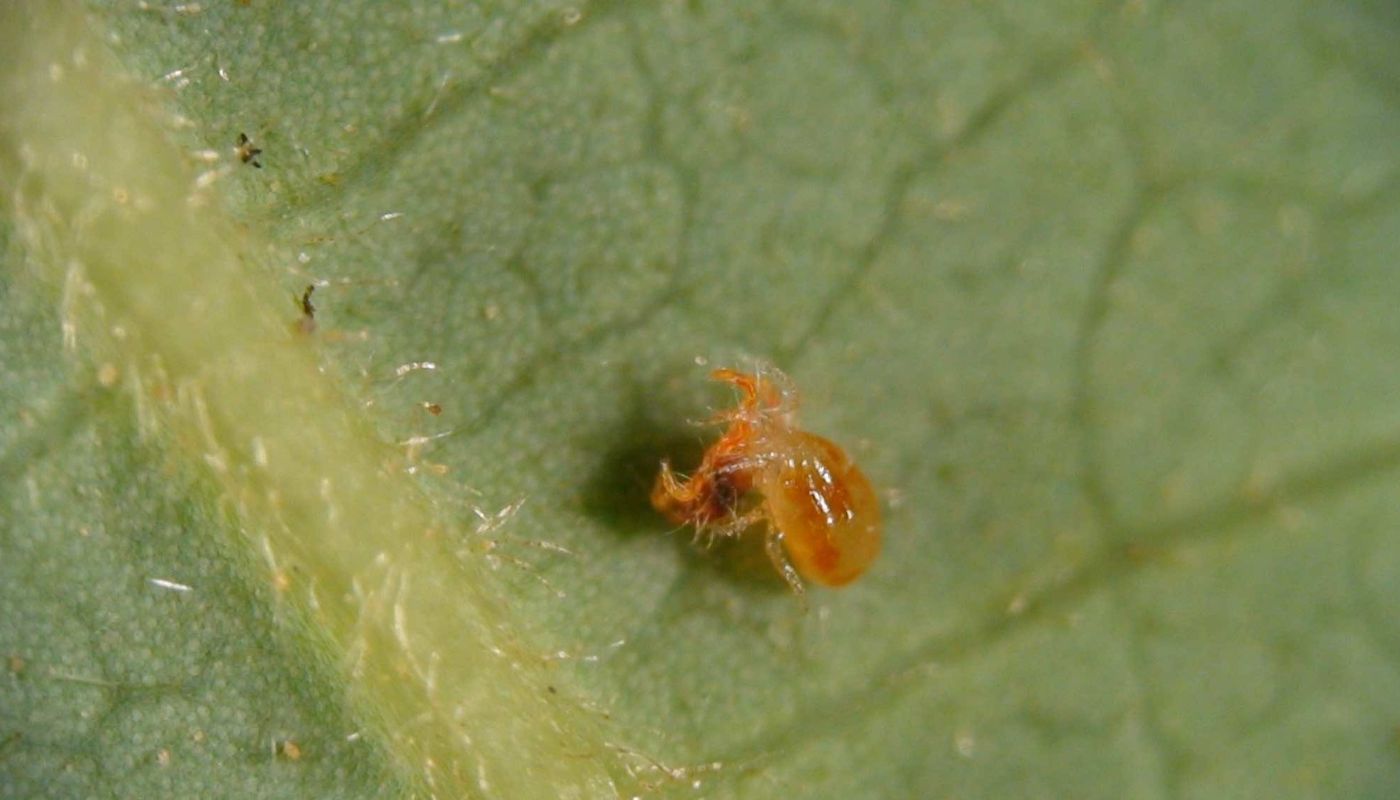
The European red mite should be monitored for eggs on twigs at the end of winter, and for mobile stages (nymphs and adults) on the upper surface of leaves, from spring onwards. It is during this same period (spring-summer) that the two-spotted spider mite should be monitored by observing eggs and mobile stages on the leaves.
At least 20 trees per plot should be sampled. Ten leaves should be taken from each tree and examined in the field with a 10x magnifying glass to determine the presence of phytophagous mites and natural enemies.
In the case of the false red mite of the grapevine, Brevipalpus chilensis, it is found on the plant year-round, overwintering as a fertilized female in wood crevices and buds. During spring, egg laying and hatching begin, leading to the dispersal of the pest and an increase in its population.
Monitoring this pest can be done in the field using a magnifying glass or by taking fruit samples for laboratory analysis. These samples are washed to remove the mites and then counted.