

Among these strategies is the use of dormancy breakers as an alternative. When chosen, it must be rigorous and, at the same time, must be aligned with a technical/commercial objective, determined by the variety, geographic area, forced management systems such as roofs or macrotunnels, frost control, among others.
Although producers evaluate the use of dormancy breakers from a productive and commercial perspective every season, deciding whether or not to use them and their objective must be made taking into account a prior evaluation of each season.
To achieve this, different factors that influence an orchard’s optimal productive potential must be combined, such as agroclimatic, logistical-operational, and commercial indicators that determine each producer’s specific objectives.
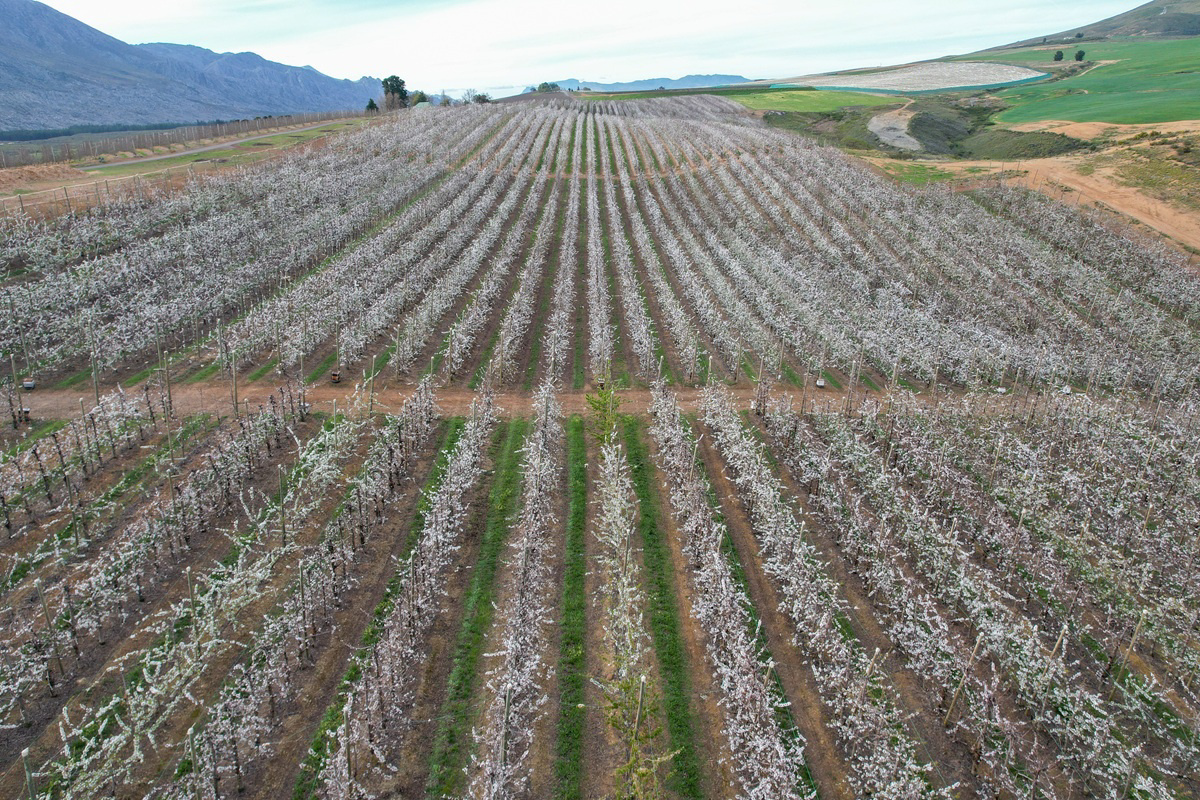
The appropriate use of dormancy breakers can allow for earlier and/or more uniform harvesting and flowering, which, combined with other seasonal factors, could eventually translate into improved orchard profitability.
It should be noted, for example, that to apply dormancy breakers, each variety must have reached at least 70% of the accumulated chilling hours, according to its specific requirements. Royal Dawn, for example, requires 400 to 500, while Kordia requires at least 800 chilling hours, based on the Weinberger model most commonly used in Chile, which counts a chilling hour when plants have been exposed to a temperature below 7.2°C for one hour.
But in addition to the requirements, there is undoubtedly another question: what type of dormancy breaker should be used, how do you know if the orchard is in suitable condition for this intervention in the cherry tree’s phenological stage, what risks does it entail, and how do you know if the results will be as expected?
“Many questions may arise regarding dormancy breakers and the commercial decision to use them. However, there are several aspects that must be taken into consideration. On the one hand, the decision to advance phenological stages, such as flowering, fruit set, and harvest, mainly for early varieties, and in early areas to advance or partially harvest part of an orchard’s surface area, if there is a large area. On the other hand, it is also possible to advance or synchronize varieties that need to be pollinated with another variety, or ‘simply’ based on a commercial decision depending on the current year, such as the personal vision of each producer and their strategy”, explains Carlos Tapia, technical director of Avium.
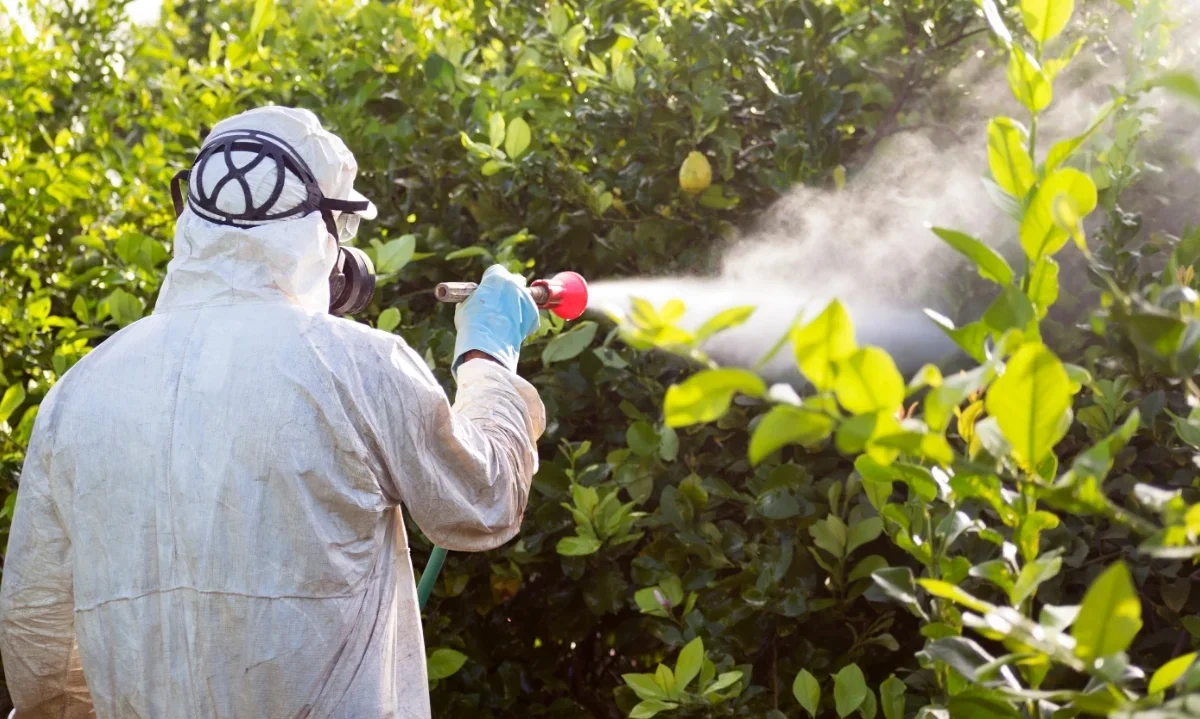
Chile and its growers have always been familiar with the use of hydrogen cyanamide, a product that accelerates plant awakening and thus the onset of phenological stages and harvest. It continues to be used regularly and successfully in Chile, despite the European Community’s suspension of its use more than a decade ago.
This regulation led many companies, mainly Italian, to quickly search for an option to replace cyanamide, giving rise to the alternative dormancy breakers we know today.
While in many countries these products are used as substitutes for cyanamide, in our orchards they are used either as a replacement or as a complement, depending on the objective and the demands of each grower, both at the production and commercial levels.
On the other hand, alternative dormancy breakers (DR) (harmless to both the plant and the operator) have been used in parallel for more than a decade, which are not necessarily characterized by advancing initial phenological stages.
“These dormancy breakers have the ability to achieve homogenization or synchronization in the initial phenological stages, even having a great power of action on vegetative buds, generating significantly more flowering accompanied by leaves”, clarified the Technical Director of Avium.
They are currently used separately or together, considering that Cyanamide has a great effect on the advancement of phenological stages and harvest, while RDs play a more participatory role in the synchrony or homogenization of these stages.
Dormancy Breakers: Hydrogenated Cyanamide or Homogenizers?
The application strategies for hydrogenated cyanamide or homogenizers will depend exclusively on the objectives for each orchard, taking into account, of course, the area in which it is located, the climate, proper application of the products, and the calibration of the machines used, among other factors.
Hydrogenated cyanamide is, without a doubt, the best tool to accelerate flowering. However, homogenizers have a characteristic that hydrogenated cyanamide lacks: they homogenize and synchronize flowering, which generates significant benefits from a productive perspective, since it makes nutritional, phytosanitary, or growth regulator programs more efficient.
The key is that the decision on the strategy to be used, whether with cyanamide, homogenizers, or tandem, is based on as much consistent and timely information as possible.
“Today, with abundant information on the subject, we can conclude that hydrogen cyanamide alone has a significant effect on the lifting of phenological stages, and alternative RDs play a significant role in synchrony, rather than in advancement. However, the final decision to use it must be accompanied by a clear strategy that truly benefits production and not puts it at risk. It is often mistakenly believed that direct application will be effective and allow for greater profits during the season. However, multiple factors influence and determine the success or failure of an orchard’s production. It is essential to make this decision with as much information as possible and establish a coherent strategy. The doubt will always remain on our side with a decision that was made early and with an answer that we will only see in three or four more months, and which we hope will be the right one”, Tapia indicated.
It should also be noted that applications of Dormancy Breakers can generate a greater risk of spring frost damage to flower primordia, and in the case of darters, they can cause the death of the vegetative bud, which would impair the renewal of this reproductive organ.
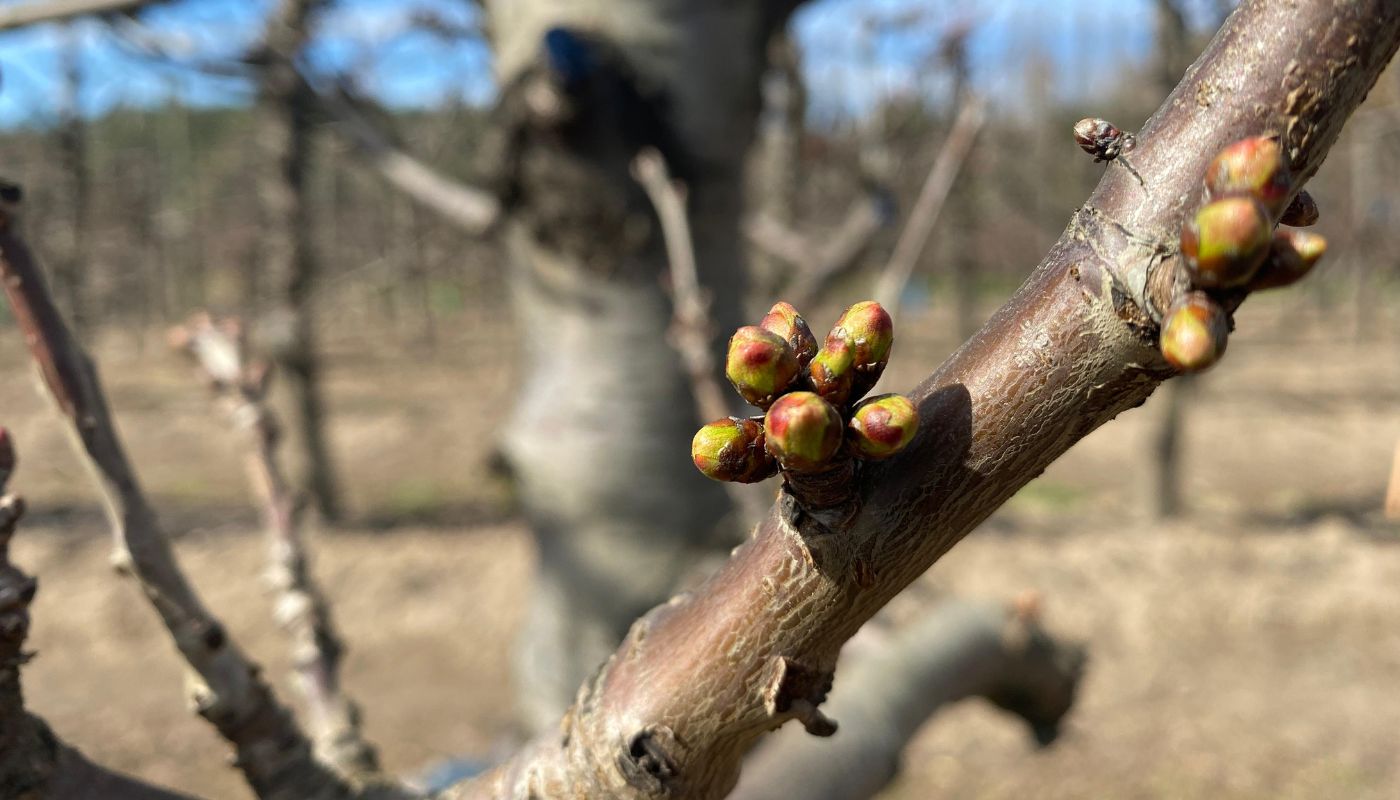
The phenological stage requiring the greatest attention is the swollen bud stage, where plants are most sensitive to cold damage. This makes it necessary to use frost protection systems in the event of low temperatures (<-0.5°C for more than an hour). According to data provided by Avium, there are reports of significant damage between the swollen bud and exposed truss stages, compared to more advanced stages, such as white bud or full flower.
Another aspect to consider is that while the use of these strategies allows for earlier flowering, this does not necessarily mean earlier harvest times. For example, a 10-day advance in full bloom doesn’t translate into 10 days less harvest, but rather 5-6 days. Meanwhile, in a season with very good cold accumulation, a 20-day advance in full bloom could translate into about 10-12 days less harvest.
This was corroborated in a study conducted by the Avium team regarding the impact of dormancy breakers on harvest advancement and flowering concentration. For this purpose, they used hydrogen cyanamide (HCN) and alternative dormancy breakers (DR) in the Santina variety.
The objective of the trial was to evaluate the different strategies to determine whether it is possible to achieve homogenization and synchronization of the initial phenological stages of the cherry and, eventually, achieve a significant advance in harvest, which would result in improved production profitability.
Finally, it should be noted that the decision to use RDs must be accompanied by a clear strategy that contributes to production and ideally does not involve risks that could affect the initial objective. Therefore, how and when to use them, whether hydrogen cyanamide or a dormancy breaker, becomes a fundamental decision that depends on several requirements that will determine the success or failure of this commercial strategy and, consequently, the orchard’s productive potential.