
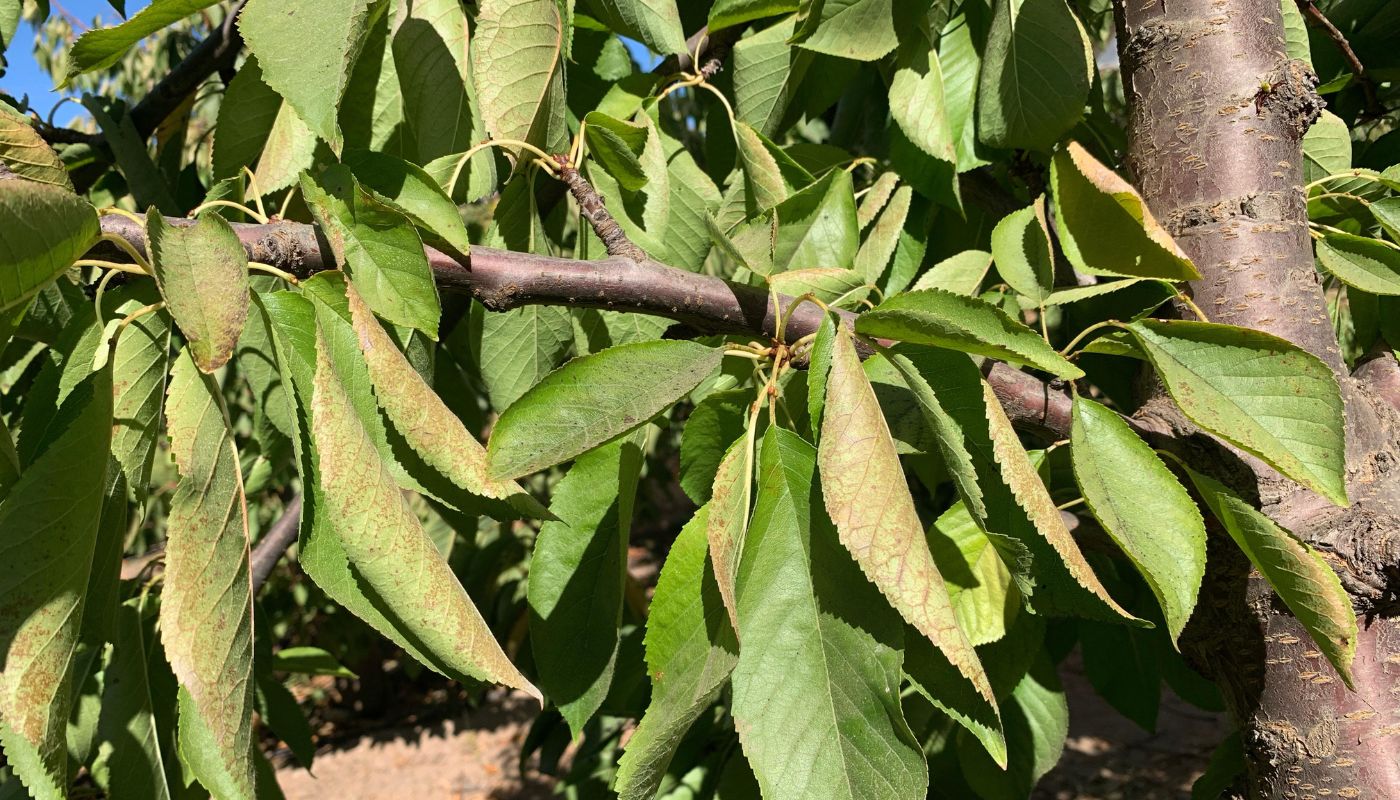
Currently, foliar nutritional analysis remains one of the most widely used tools for evaluating the nutritional status of plants. This analysis provides key information about the orchard’s nutritional status, allowing for the definition of corrective strategies tailored to the specific needs of each case.
The leaf constitutes an active pool of nutrients and allows for the detection of any deficiencies. Even in orchards that appear visually healthy, nutritional imbalances are frequently detected that are not visually apparent but do impact crucial processes, such as differentiation and reserve accumulation, among others.
Key time: Postharvest
Postharvest is often mistakenly associated with the moment the plant loses its fruit. However, it refers more to the period in which nutrients stabilize in the plant, which is fundamental for making nutritional decisions.
This stabilization occurs when the plant experiences a change in its reserve flow, an important physiological phenomenon that occurs with the change of season, from spring to summer. During this time, a process of photoperiod reduction begins, signaling pre-dormancy in deciduous plants.
Theoretically, it can be stated that from December 21st onwards in Chile, nutrients in the plant reach a “stable” state. This is the optimal time to perform a foliar analysis, as it accurately reflects the plant’s nutritional status at that specific period. If an analysis is performed before this date, the results may not be representative of the plant’s actual nutritional status.
In practice, the optimal sampling period is concentrated between the end of December and, at the latest, January, regardless of the geographic area, variety, rootstock, or harvest date. This range allows for more stable foliar concentrations and timely nutritional adjustments.
How to perform the sampling?
One of the main factors determining the usefulness of foliar analysis is the quality of the sampling. A poor procedure generates unrepresentative results and, consequently, misguided management decisions.
Samples should be taken randomly and representatively, ensuring coverage of different points in the orchard or plot. A proper sample should include between 100 and 150 leaves, and it is important that these leaves include both the blade and the petiole, as the latter can provide additional information about nutrients. The leaves should be collected from the two-year-old wood section, corresponding to the developing spur, as this tissue best reflects the nutritional status associated with the future productive structure of the tree.

Each sample must correspond to a specific combination of variety and rootstock, considering that the physiological differences between these components have a direct effect on the tree’s absorption, distribution, and nutritional requirements.
What type of foliar analysis should be requested?
To obtain a complete overview of the plant’s nutritional status, it is recommended to request a comprehensive foliar nutritional analysis. This analysis should include all key nutrients, such as nitrogen (N), potassium (K), magnesium (Mg), zinc (Zn), and in some cases, boron (B). In Chile, several laboratories offer this type of analysis, and it is essential to request a comprehensive nutritional analysis to obtain all relevant nutrient ranges.
From information to management decisions
Foliar analysis, by itself, does not correct any condition. Its value lies in its ability to transform analytical information into concrete agronomic decisions, allowing for timely adjustments during the season.
Foliar analysis remains a fully valid tool in cherry production, provided it is used with sound technical judgment and a clear purpose. It’s not about measuring for the sake of measuring, but about measuring to make decisions.
In nutrition, as in most agronomic decisions, context and timing are just as important as the analytical result.