

The European red mite, Panonychus ulmi, and the two-spotted spider mite, Tetranychus urticae, are two species of phytophagous mites associated with various crops and plant species, including cherry trees.
These mites are widely distributed in Chile. The European red mite is found from the Coquimbo Region to the Los Lagos Region, while the two-spotted spider mite is distributed from the Tarapacá Region to the Magallanes Region and Chilean Antarctica.
Morphological Description of the European Red Mite
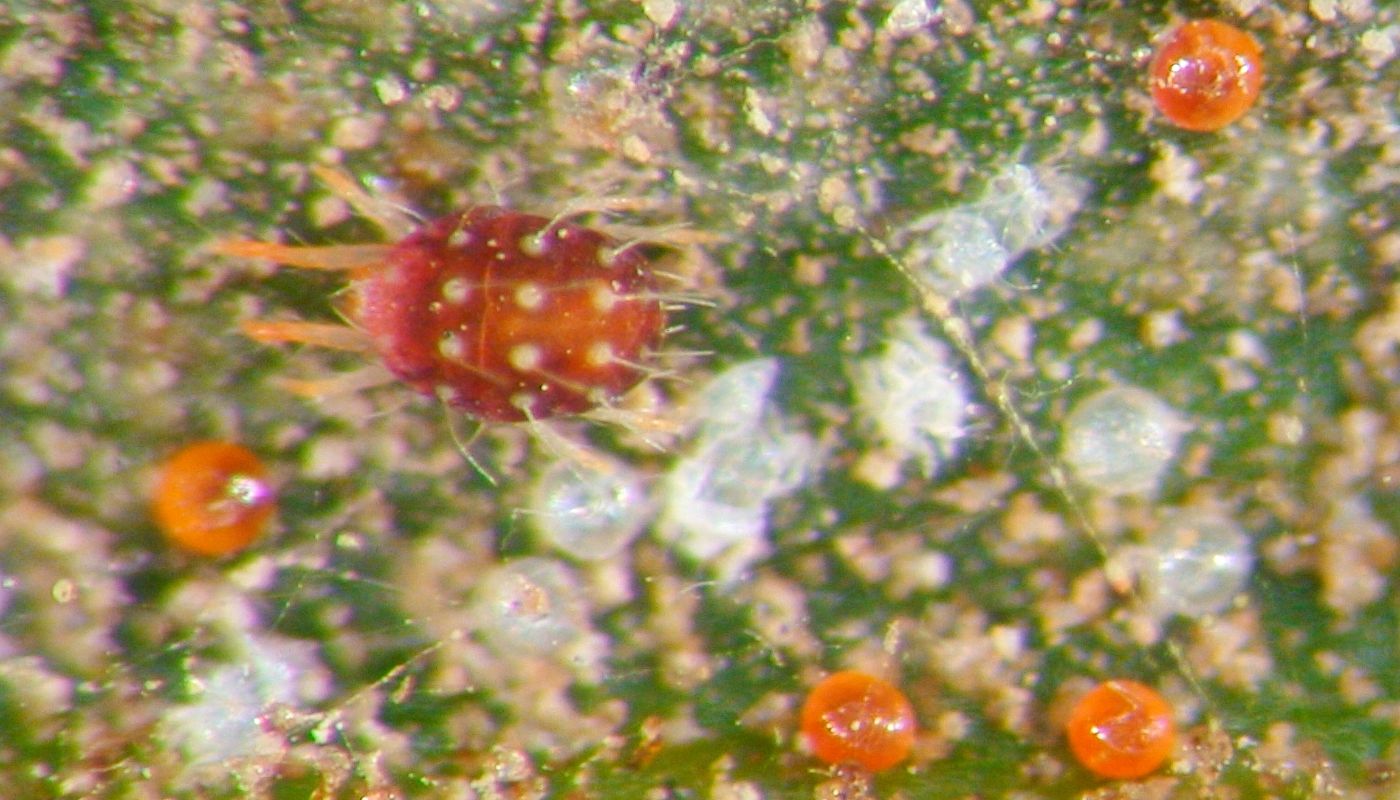
The mobile individuals (nymphs and adults) are bright red with darker spots on the sides. On their dorsal surface, they have white spots at the base of the setae (6 to 8), and their bodies are rather spherical.
The males are smaller, more slender, and have a more pointed abdomen. The eggs are red, slightly flattened, and have a stalk at the upper end. (Photo 1).
Biology
The European red mite overwinters as eggs on twigs and branches. With the onset of spring, the nymphs hatch and feed on the upper surface of the leaves. However, the largest populations can be detected after harvest, from mid-December to March. This mite species has at least six to seven generations per season.
Morphological Description of the Two-Spotted Spider Mite
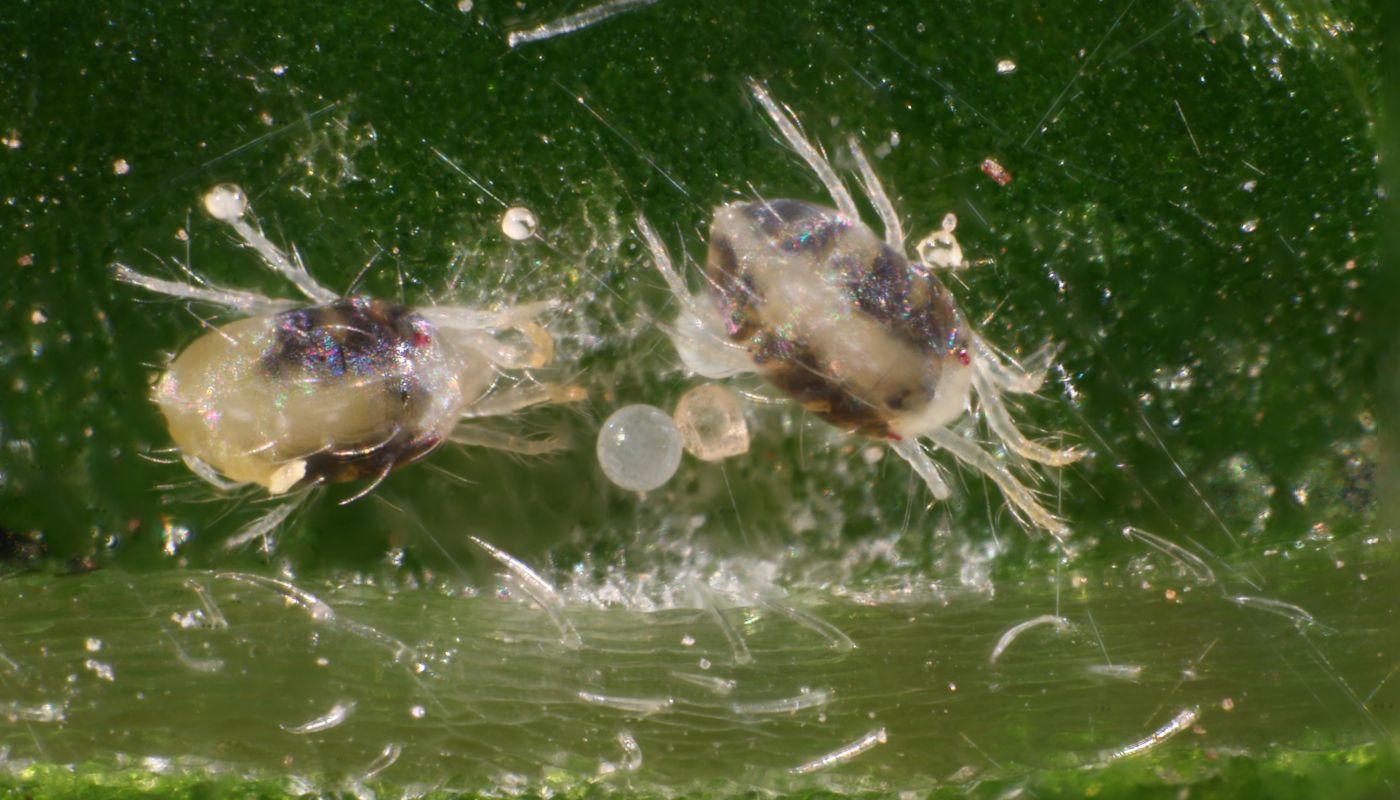
Adults are spherical in shape, with a color ranging from off-white to yellowish-green or even reddish. Two dark green to black spots are visible on the dorsal-lateral region (Photo 2). They are approximately 0.5 mm in size. The eggs are spherical and translucent white. The male is smaller and yellowish-green.
Biology
The two-spotted spider mite overwinters as an adult in weeds or among soil clumps. In spring, they climb onto the trees and colonize the central leaves, near the trunk. Generally, this mite lives in colonies on the underside of the leaves. They spin a thin web under which they find protection from predators.
Damage
Damage caused by these phytophagous mites is produced by the mobile stages, which puncture the leaf tissue, feeding on the cell contents. Moderate infestations of spider mites cause leaf discoloration, which, as the damage increases, turns the leaves brown or bronze. In extreme cases, defoliation may occur.
In general, these phytophagous spider mites are not a major problem in cherry orchards, since the highest populations usually occur after harvest. However, since the damage occurs on the leaves, a severe infestation can affect the accumulation of nutrient reserves in the tree, which could eventually affect the following season’s yield. This is even more relevant in young orchards.
Monitoring
Monitoring for the European red mite should be done by checking for eggs on twigs at the beginning of spring, and for mobile stages (nymphs and adults) on the upper surface of the leaves, starting in spring. During this same period (spring-summer), monitoring for the two-spotted spider mite should be done by observing eggs and mobile stages on the leaves.
At least 20 trees per block should be sampled; 10 leaves and/or twigs should be examined from each tree (depending on the season and pest). Using a 10x magnifying glass, the presence of phytophagous mites and natural enemies should be observed and recorded.
Proper monitoring will allow you to: anticipate potential damage, such as leaf bronzing or defoliation, and save on acaricides by eliminating unnecessary applications.
Natural Enemies of the European Red Mite and Two-Spotted Spider Mite
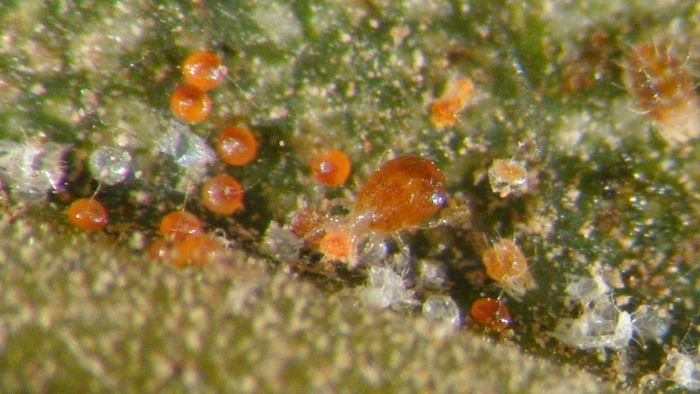
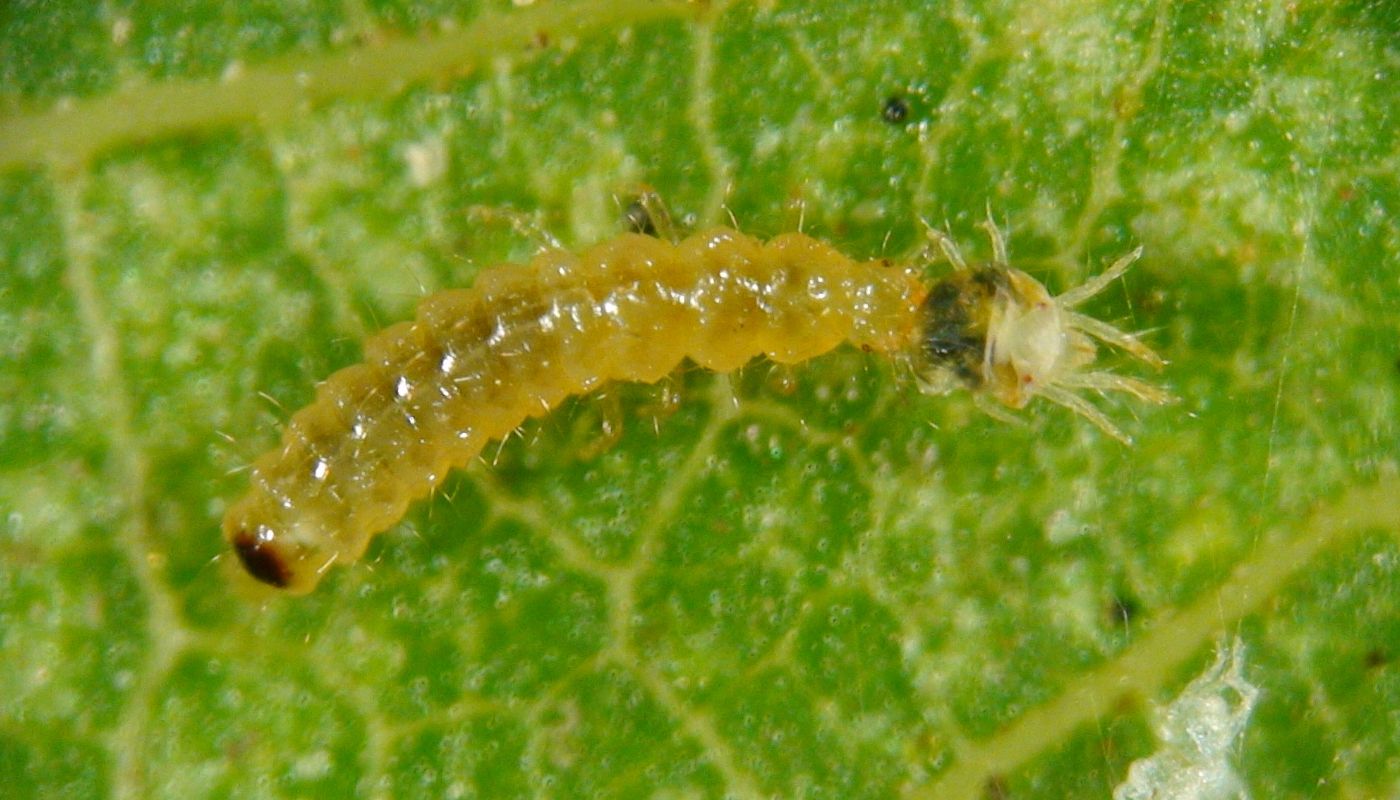
The most common and abundant natural enemies are predatory mites known as phytoseids. These are shiny, pear-shaped mites with slightly long setae. They move faster than phytophagous mites, and their color varies from almost translucent to red, depending on their diet (photo 3). In cherry trees, the predatory beetle Oligota pygmaea has been observed, both in its larval and adult stages, feeding on spider mites (photo 4).
Mite Control
When high densities of European red mite eggs are observed in winter, they should be controlled with 1% mineral oil, before the plant buds and at the beginning of nymph hatching, the period when the eggs are most susceptible to the oil. This application also controls the San Jose scale.
Low to moderate mite populations per leaf can be managed with applications of agricultural detergent washes. Higher populations require the application of acaricides registered with SAG (Chilean Agricultural Service) for cherry trees, and tolerance levels in the target countries should be verified.
Some cultural management strategies for phytophagous mite infestations:
– Avoid dust accumulation on the leaves, as this hinders the effectiveness of natural predators; tree washing is recommended, especially for trees along roads or in high-traffic areas.
– Proper pruning allows for better air circulation within the canopy, creating less favorable conditions for pest development and better pesticide coverage.
– Water stress management: stressed trees are generally more susceptible to mite infestations.
References:
– González, R. (1989). Insects and mites of agricultural and quarantine importance in Chile. University of Chile, BASF, S.A. 310 p.
– PDT Cherry Trees. (2010). Guide to pests and diseases of cherry trees. Available at: http://www.fdf.cl/biblioteca/publicaciones/2010/archivos/Guia_Plagas_Enf_Cerezos.pdf
– Prado E. (1990) Pests of cherry trees. https://biblioteca.inia.cl/server/api/core/bitstreams/1dd20970-a335-4645-8ffb-234a5f11bad9/content
– Ripa, R., Luppichini, P. (2010). Walnut Pest Management. INIA Book Series No. 25. Ministry of Agriculture. 116 p.
– Ripa, R. (1987). Control of spider mites in stone fruit trees. Article in the La Platina Agricultural Research and Development Series. Document No. 39, pp. 13-17.