
The current cherry season in Chile has unfolded under a climatic and production scenario with high heterogeneity between zones and management units. In early stages, the estimation of production potential based on bud fertility and quality analysis (AdYC) and fruit center counts generally indicated potentials compatible with the reality of each orchard, without predominant signs of prior structural overload or deficit.
Subsequently, the occurrence of impactful weather events, such as early frosts and heavy rainfall during the flowering period in the central region, coupled with accelerated heat accumulation during spring and summer, significantly altered the initial projection, forcing a reinterpretation of the production scenario at both the farm and industry levels.
Additionally, the season is conditioned by the dynamics of chilling accumulation, particularly the low accumulation during the first stage of dormancy, a critical variable when analyzing the performance of warmer regions and early-maturing varieties.
Technical Diagnosis of the Season
- Initial Productive Potential: Objective Basis for Estimation
Bud fertility and quality analyses (AdYC) and fruit center counts carried out during the winter period by Avium’s research and development department allowed us to establish, in most cases, an objective basis for flowering potential. In general, these indicators showed:
- Adequate floral differentiation.
- Functional fruit centers.
- Productive potential consistent with age, training system, and variety/rootstock combination.
This point is relevant, since it reduces the likelihood that the lower observed productivity is mainly due to previous structural limitations related to pruning, crop load management, or the construction of structures.
- Winter Chill: Relevance of Accumulation Dynamics
In terms of chill accumulation, the season presents a distinctive feature associated with early accumulation. May was reported to have a chilling accumulation deficit, followed by June within normal ranges (compared to the average of the last 10 years), closing the winter with favorable total accumulations.
Beyond the total accumulated chilling, the dynamics (temporal distribution of chilling) constitute an agronomically relevant element for interpreting dormancy break-up and the expression of potential in warmer areas and/or early-maturing varieties, where insufficient early accumulation can increase sensitivity to subsequent events (rain and frost) and to phenological irregularities.
- Late August Frosts: Early Reduction of Yield Potential
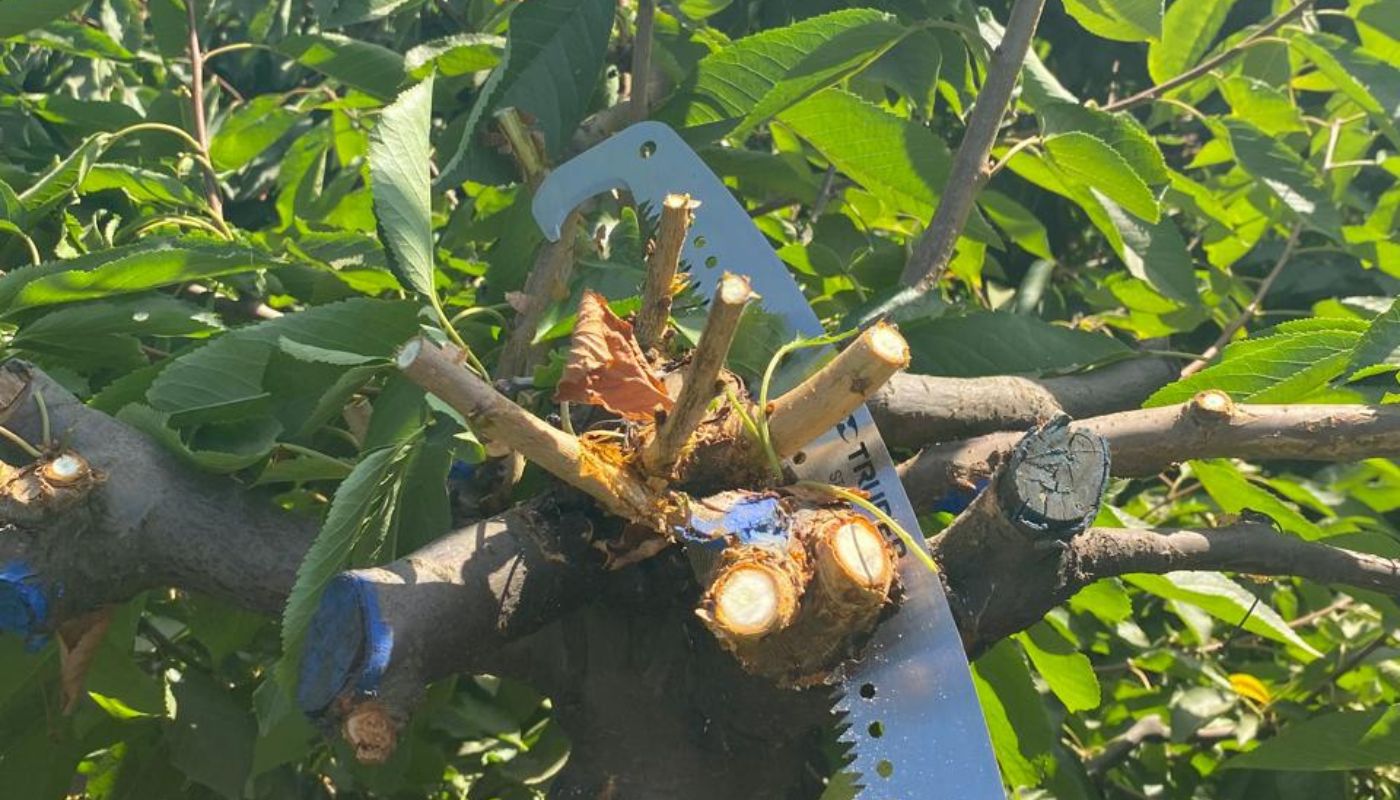
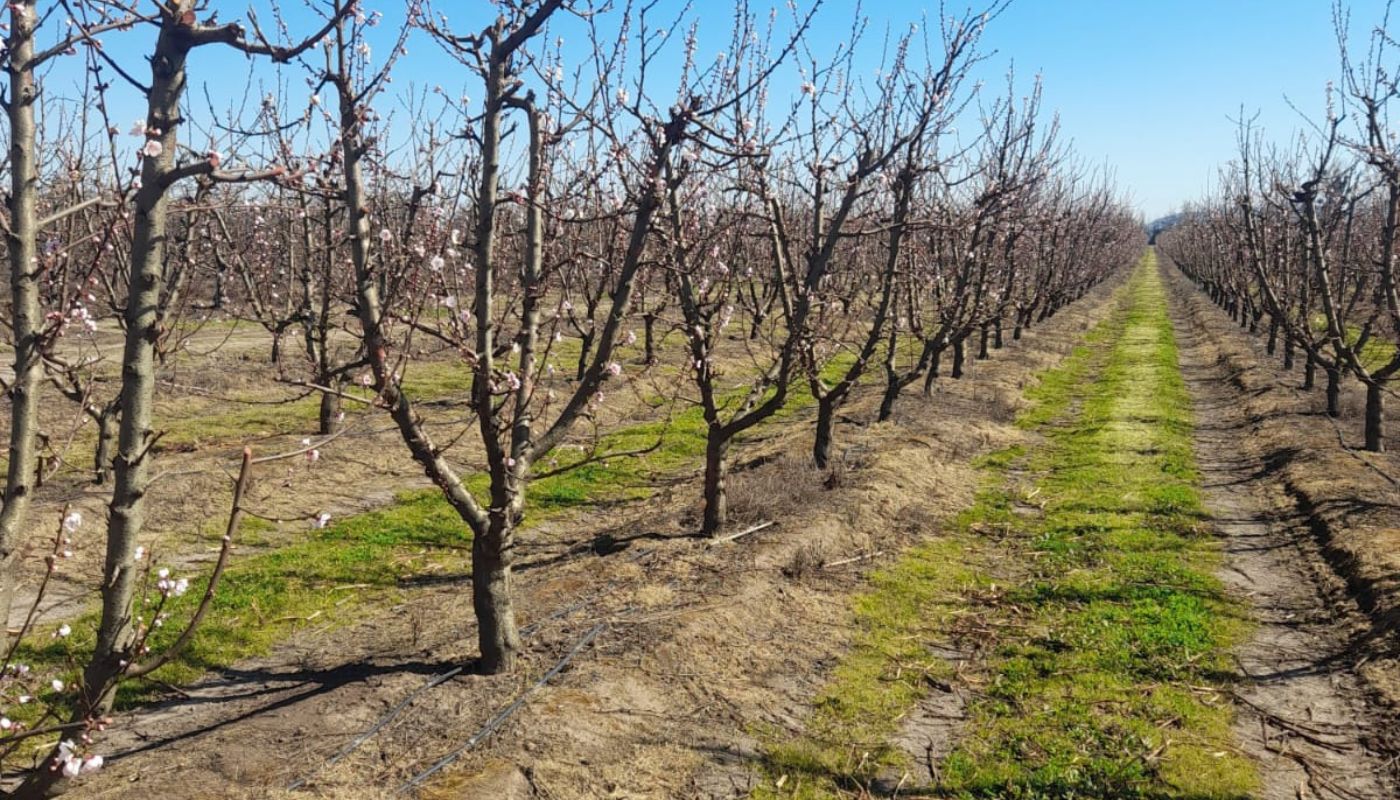
During late August, frost events with localized but significant impacts were recorded in different production areas. Subsequent assessments revealed estimated losses of between 10 and 40% of flowering potential, with the magnitude depending on the area, phenological stage, and orchard condition, in addition to high intra-orchard variability, which complicated the making of uniform management decisions.
One event around August 22nd and 23rd stands out, which would have coincided with areas and combinations exhibiting advanced phenology. Under these conditions, it is proposed as a technical hypothesis that this event may have contributed to reductions in yield potential in some areas, particularly in combinations with advanced phenology.
In this context, the possibility that this frost contributed to the performance observed in Kordia cannot be ruled out, considering that the event appears as a common factor reported in several areas where low yields are observed. (This remains a hypothesis due to the lack of specific quantification by area/stage).
This early damage reduced the productive capacity prior to the full flowering period, impacting subsequent development throughout the season.
- Spring Rains: Interference with Flowering and Pollination
In certain areas, rainfall occurred during spring, coinciding with critical flowering periods. These rains increased the risk of reduced pollination efficiency, favored floral asynchronies in some orchards, and required more precise management of nutrition, plant health, and the use of fruit set support tools.
The most important aspect of these rain events was their intensity, with gusts reaching up to 6 mm/hour. Events exceeding 2 mm/hour can be detrimental, disabling flowers and washing away pollen.
- Thermal Dynamics: Phenological Advancement and Compression of Harvesting Windows
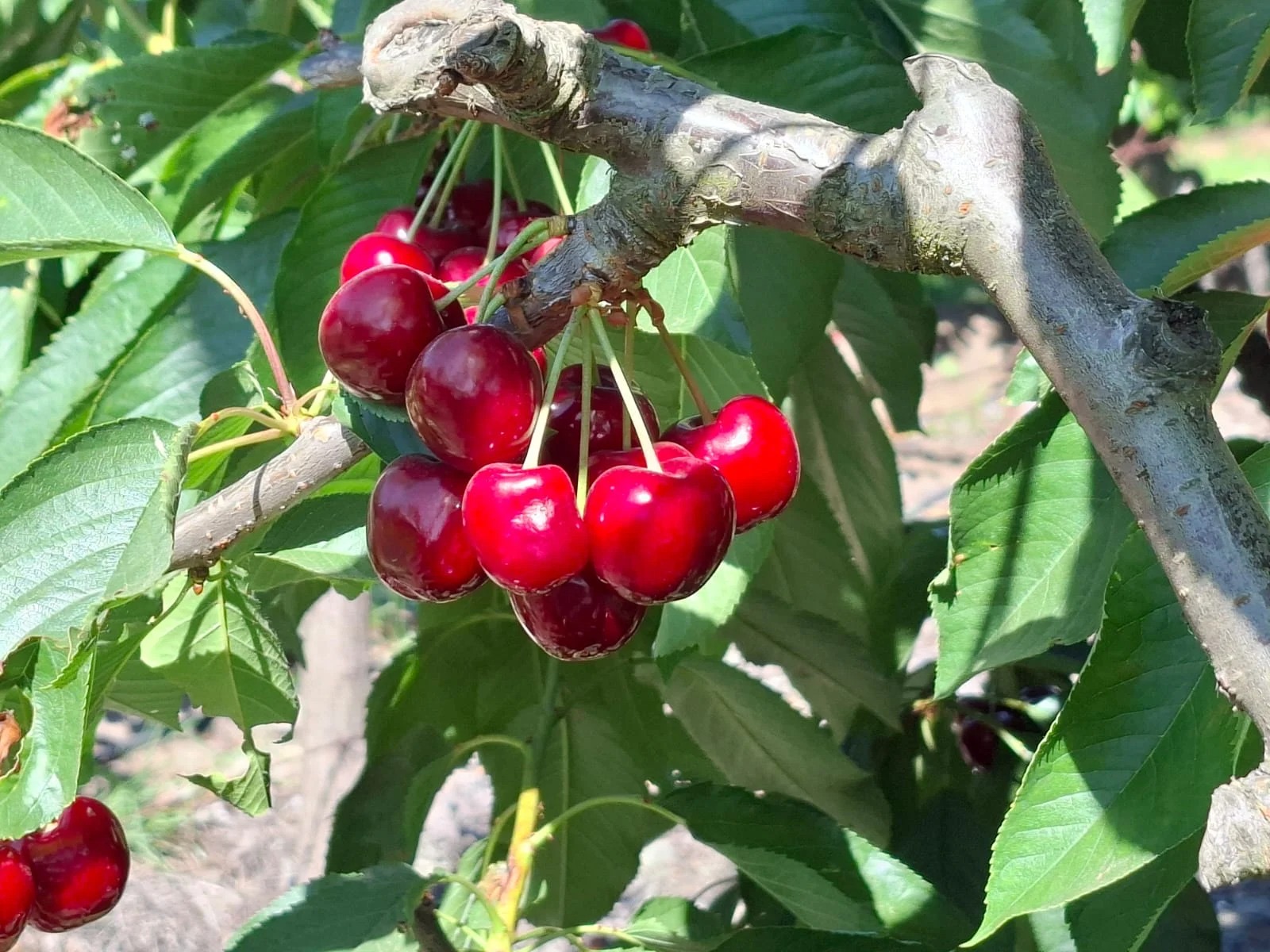
One of the most relevant elements of the season has been the high rate of thermal accumulation (degree days) during spring and its effect on the phenological rhythm. This behavior manifested as an earlier harvest, even in late-maturing varieties (e.g., Kordia, Regina, Sweetheart), with advances of approximately 7–8 days compared to what is considered normal in several areas.
As a consequence, a compression of the period between full bloom and harvest was observed in various combinations, reducing operational windows and increasing the pressure on decision-making (start of harvest, labor scheduling, fine-tuning of irrigation and nutrition, and monitoring of maturity).
It is important to consider that a sustained increase in the rate of thermal accumulation reduces the number of days from full bloom to harvest, affecting the fruit size potential in some variety/rootstock combinations.
- Associated Effects on Maturity, Sugars, and Harvest Criteria
The higher rate of heat accumulation also had implications for maturity attributes:
- A favorable effect on sugar gain (°Brix) was reported in some situations, particularly in varieties where accumulation can typically be adjusted. In this context, Santina showed adequate early sugar accumulation, influencing the decision to begin harvesting.
- Given the advanced phenological development and the rapid heat accumulation, in some cases it was necessary to begin harvesting with lighter colors compared to usual criteria. This should be monitored as a possible operational trend if seasons with similar temperature dynamics are repeated.
In Regina, it is suggested that the advanced temperature may have influenced maturity behavior (harvests with relatively lighter colors) and, in some areas/rootstocks, a tighter fruit size curve, establishing a focus of analysis for future seasons in relation to yield potential and fruit size potential. (Keep as a relationship to be verified, unless there is backup by zone/rootstock).
- Fruit Set and Pox: Mixed Production Signals
Overall, the season has shown fruit set levels consistent with the remaining potential after frost, along with pox levels lower than in previous seasons, which is a favorable sign from a reproductive efficiency standpoint. However, this condition does not fully compensate for the initial reduction in potential in the most affected areas.
The season reinforces the idea that potential is built from the post-harvest period, ensuring the best conditions from 70 days after planting (DAPP) to 120 DAPP, from the beginning of floral induction, floral differentiation, and the period of reserve accumulation. Furthermore, during winter and spring, its final expression depends on the interaction between climate and the timing/quality of management. Units with objective information, systematic monitoring, and the capacity for timely adjustment are better positioned to maintain productivity and quality in the face of scenarios with greater climate variability.