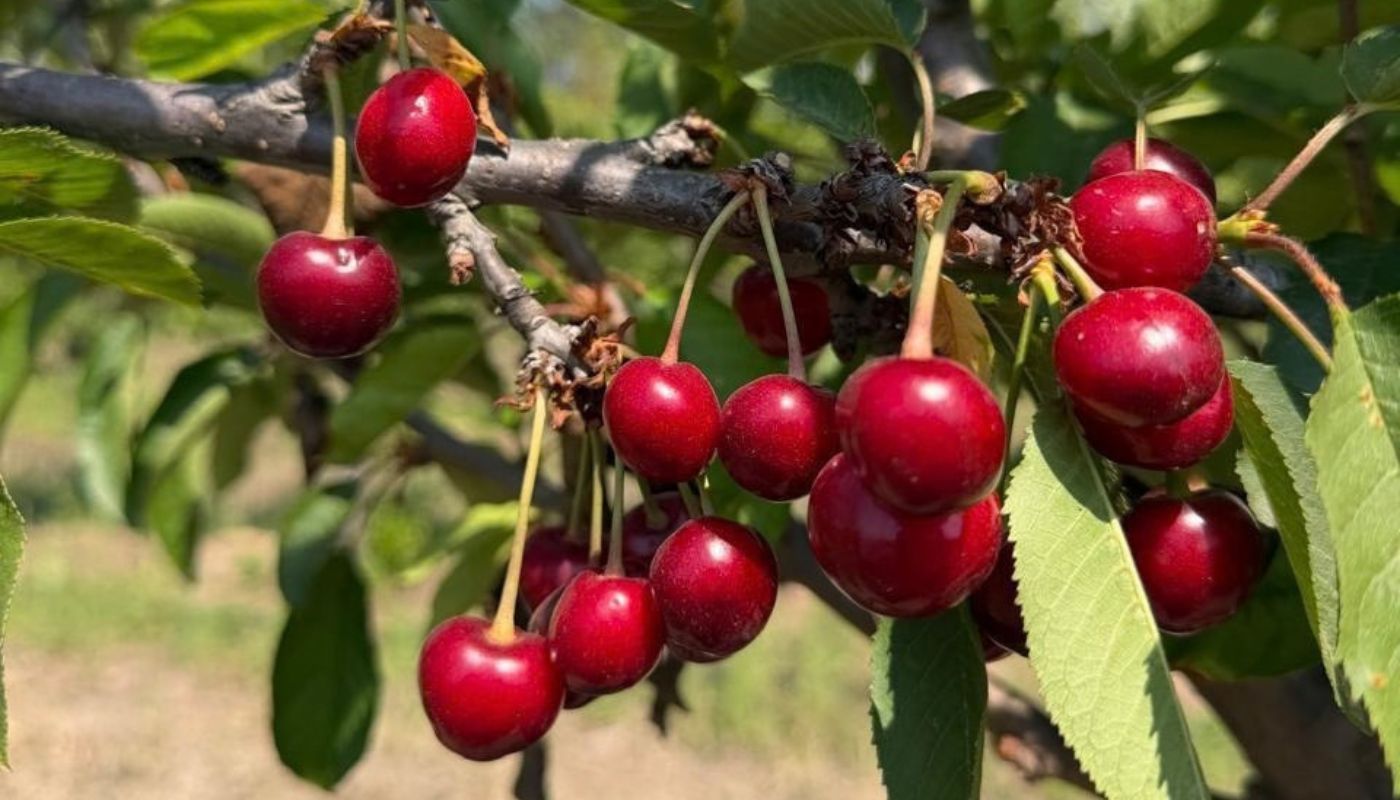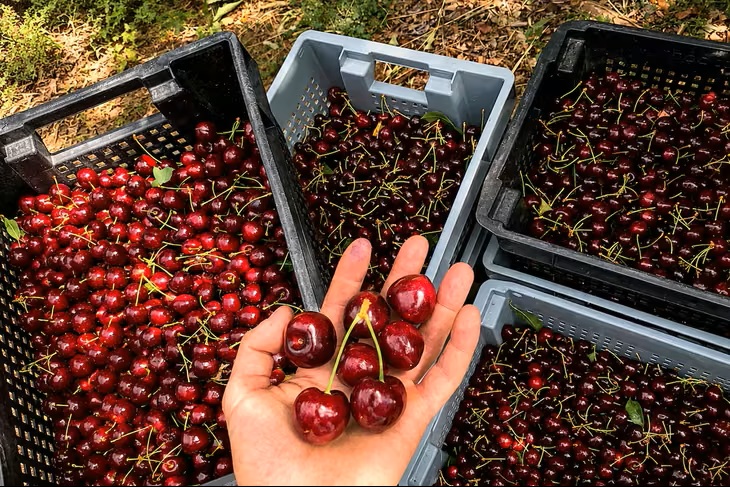


The report indicates that the global market entered a clear adjustment phase during the 2025/26 season. In the Northern Hemisphere, severe weather events significantly impacted production in Turkey and parts of Europe, substantially reducing supply during the summer. Simultaneously, exports from the Southern Hemisphere declined for the first time in eight seasons, primarily due to lower shipments from Chile.
Rabobank stated that these developments reflect the growing impact of climate volatility on production and reinforce the need to build greater resilience in producing regions.
Chile enters a new stage
The report highlights that the South American country, the world’s leading cherry exporter, is transitioning from a period of rapid expansion to one of slower growth and operational optimization.
During the 2025/26 season, returns for growers failed to recover for the second consecutive year, despite lower fruit availability, increasing concerns about the profitability of the business.
Furthermore, Rabobank maintains that the planted area in Chile likely peaked in 2025 and that an increase in the removal of less productive orchards is expected in the coming years.
While production and exports are expected to continue growing in the short term thanks to new orchards coming into production, the pace of expansion will be more moderate and will focus primarily on early and mid-season varieties such as Santina and Lapins.
The bank also anticipates a reconfiguration of the Chilean industry, with a focus on improving productivity, quality, logistical efficiency, and cost control. According to data cited in the report, up to 334 exporting companies operated during the 2025/26 season, although a third of them exported less than 100 metric tons.
China is changing the rules of the game
One of the main changes identified by Rabobank concerns the Chinese market, historically the engine of growth for the Chilean industry.
The report indicates that China has become a more mature market, with consumers much more price-sensitive and focused on value for money.
Rabobank maintains that the low-price environment for cherries has become structural, making it difficult to maintain the historically high prices for imported fruit.
Likewise, Chinese consumer behavior is gradually shifting from purchases associated with gifts to more personal consumption, especially among younger consumers. Although premium niches still exist, these are concentrated solely on top-quality fruit, large sizes, and timely arrivals.
The report also warns that the 2025/26 season was one of the earliest on record in China, a situation that weakened the traditional exclusivity factor prior to the Chinese New Year and put pressure on prices due to an early oversupply.
Market civersification gains importance
Given the narrowing price differential historically offered by China, Rabobank believes that market diversification will become increasingly strategic for the Chilean cherry industry.
The report highlights that several markets in Asia, Europe, and Latin America already offer returns similar to or even higher than those obtained in China. Furthermore, Asian countries such as Taiwan, South Korea, Vietnam, Thailand, and India are showing sustained growth in their cherry imports.
In fact, Taiwan became the second-largest importer of sweet cherries after China in 2025, surpassing South Korea.
Rabobank concludes that expansion into new markets should be gradual and controlled, with a strong emphasis on quality, logistics, transit times, and cold chain performance.
To access the Rabobank report, click here.
Source: Portal Frutícola