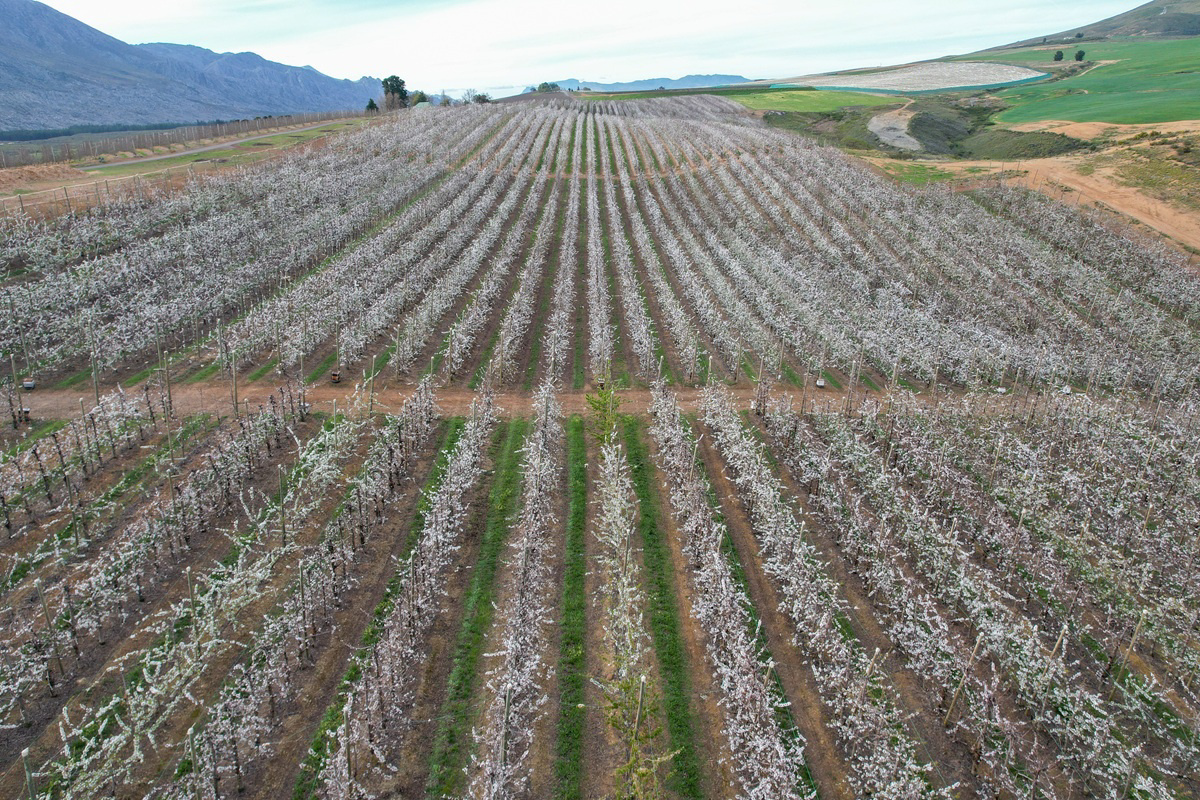

Thus, it becomes a fundamental practice in cherry tree production management, the objective of which is to generate profitable, balanced, and sustained production over time, resulting in high-quality fruit (good size, firmness, color, and soluble solids content).
Controlling cherry tree fruit load to renew its reproductive structures is essential to avoid excessive fruit production and thus the gradual weakening of the trees, which leads to a decrease in fruit quality.
The period of greatest fruit cell division, where the growth potential of the cherry fruit is established, occurs 30 to 35 days after full bloom. This is when the roots are just “awakening,” so this process relies on the reserves accumulated during the spring and summer of the previous season.
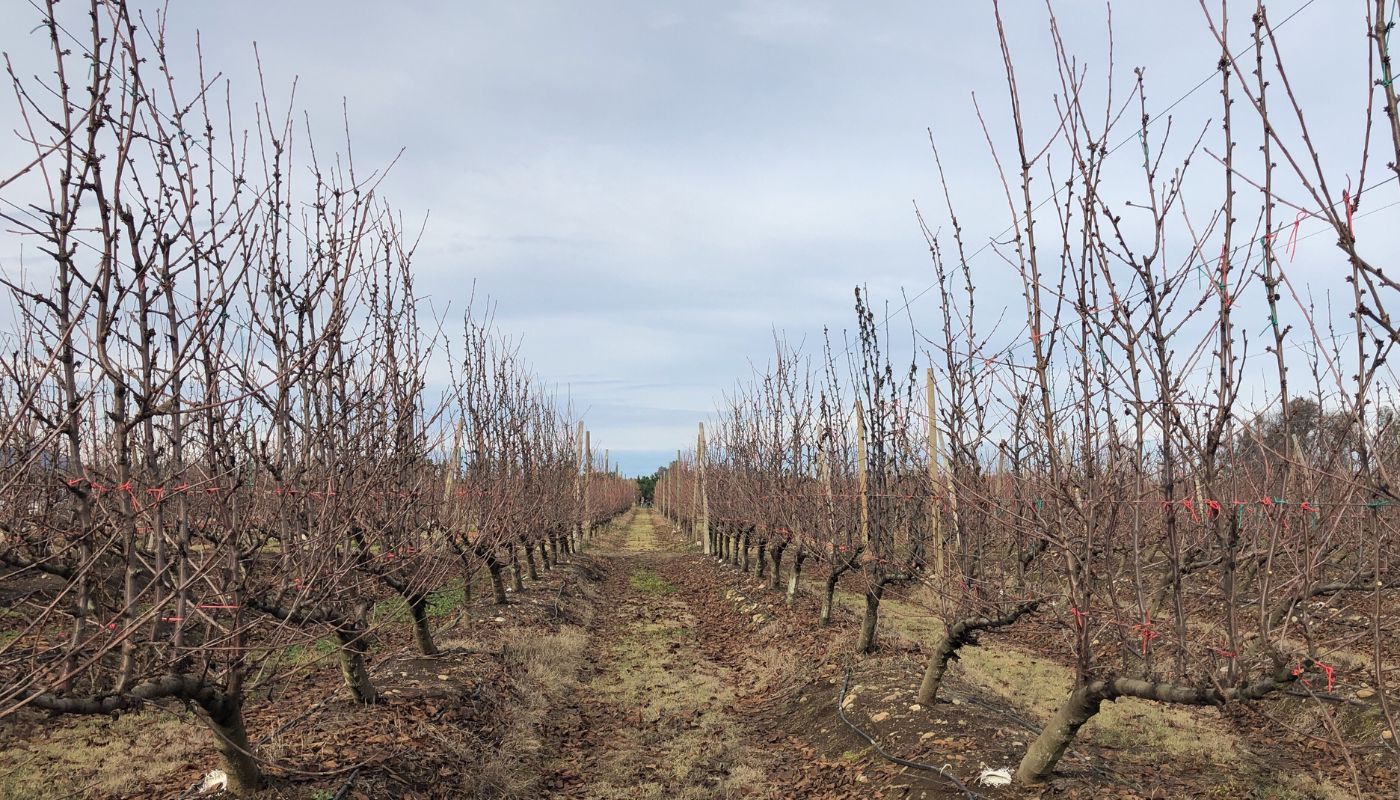
To obtain good-sized fruit, load regulation is essential, and pruning is the best alternative for this purpose. It is an efficient and inexpensive method, thus constituting a fundamental task for the maintenance, renewal, and optimal management of the orchard.
It is also a strategy that, when used correctly, allows an orchard to reach its productive potential, depending on the season, conditions, and objectives under which it is carried out. Pruning that maintains self-supporting wood serves to unify the criteria for size and sugar distribution.
Before pruning and determining its intensity, along with the number of fruit-bearing shoots to be left on the tree, it is important to consider the variety/rootstock combination, the quality of the tree’s shoots, the fruit load of the previous season, the climatic conditions, and the cold weather accumulation during the period.
“Pruning is an effective method of regulating crop yield based on the recognition of productive potential, in terms of the number of fruit-bearing centers per hectare or the number of fruit-bearing centers per plant. This number can be regulated to somehow manage or align the desired production potential each year. What does it mean? What are the procedures for this crop yield regulation pruning? Removing dangling and weak material, reducing very long branches so the branch can support its fruit, among others”, said Carlos Tapia, a specialist advisor in cherry production and technical director of Avium.
Bud Thinning
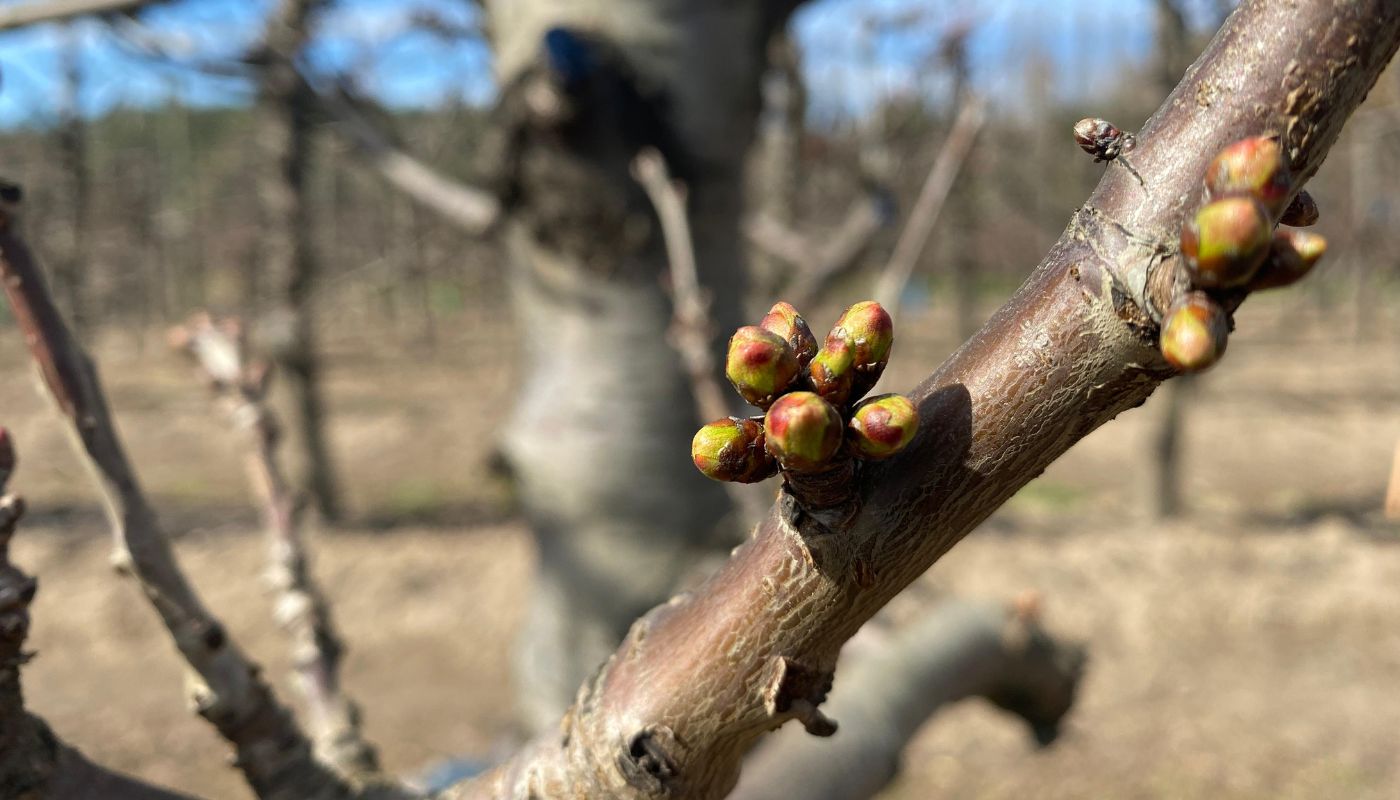
The second most appropriate method for regulating crop yield is bud thinning, which is a complement to pruning and depends on the fertility and health of each case. It increases the leaf-to-fruit ratio before competition with the shoot occurs.
Also known as “Chinese thinning,” it is by far the most effective when compared to thinning flowers and already-set fruit.
Regarding the management of the operation, bud thinning is a much more objective task than flower thinning. Especially if a bud fertility analysis determines its potential intensity beforehand.
“If the result of a bud fertility analysis with respect to potential fruit set shows, for example, that the technical recommendation is ‘leave three buds per stem,’ the supervision and quality control of this task is very objective. However, with flowers and fruits, it’s not so simple. For example, it’s difficult to define what and how many units correspond to 45% of the flowers or fruits. However, removing excess fruit late is always better than leaving it on the tree, even if harvest is just a few weeks away”, added Carlos Tapia.
Flower bud removal is a strategy that not only aims to reduce fruit load, but is also the best strategy to ensure the plant’s vegetative balance and even the safest way to recover stressed plants caught in a vicious cycle of permanent weakness.
The intensity of bud thinning in terms of bud removal will depend on the results of the bud fertility analysis, which is the objective tool that allows for an accurate decision. This is also associated with the fertility of the variety, rootstock, training system, and the vigor or weakness of the combination.
References.
– Carlos Tapia – Personal communication.
– Importance of regulating fruit load – Agronomy and Forestry, UC – Marlenne Araya – Paula Wedeles.
– Regulation of fruit load in cherry trees: a practice that allows for increased export volumes – Fruiting and diversification – Dolores Raffo – Tadeo Ballivian.