
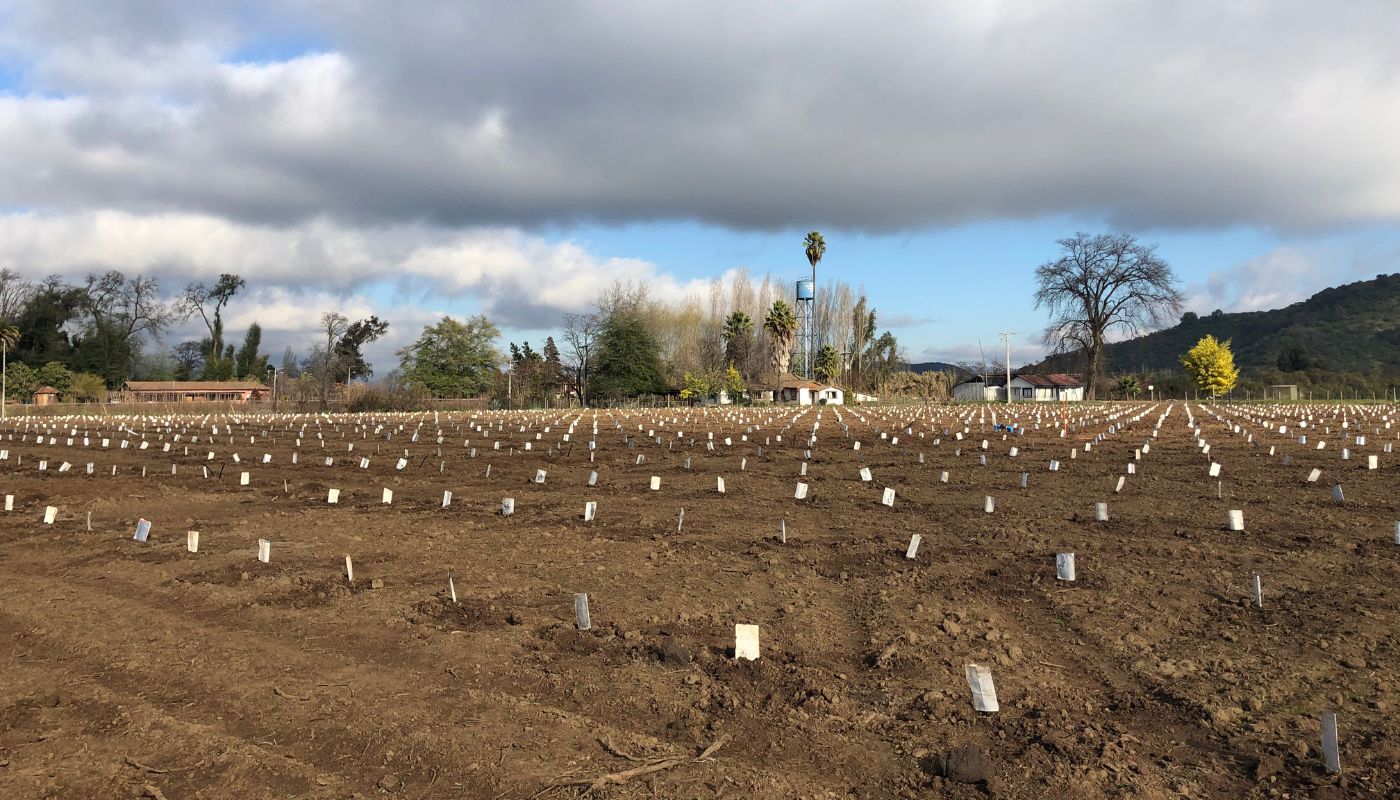
When starting an agricultural project, optimism about the expected results often prevails. However, reality often presents signs that anticipate more complex scenarios for fruit growing, making it difficult to meet initial projections and extending the payback period depending on the flows of each season.
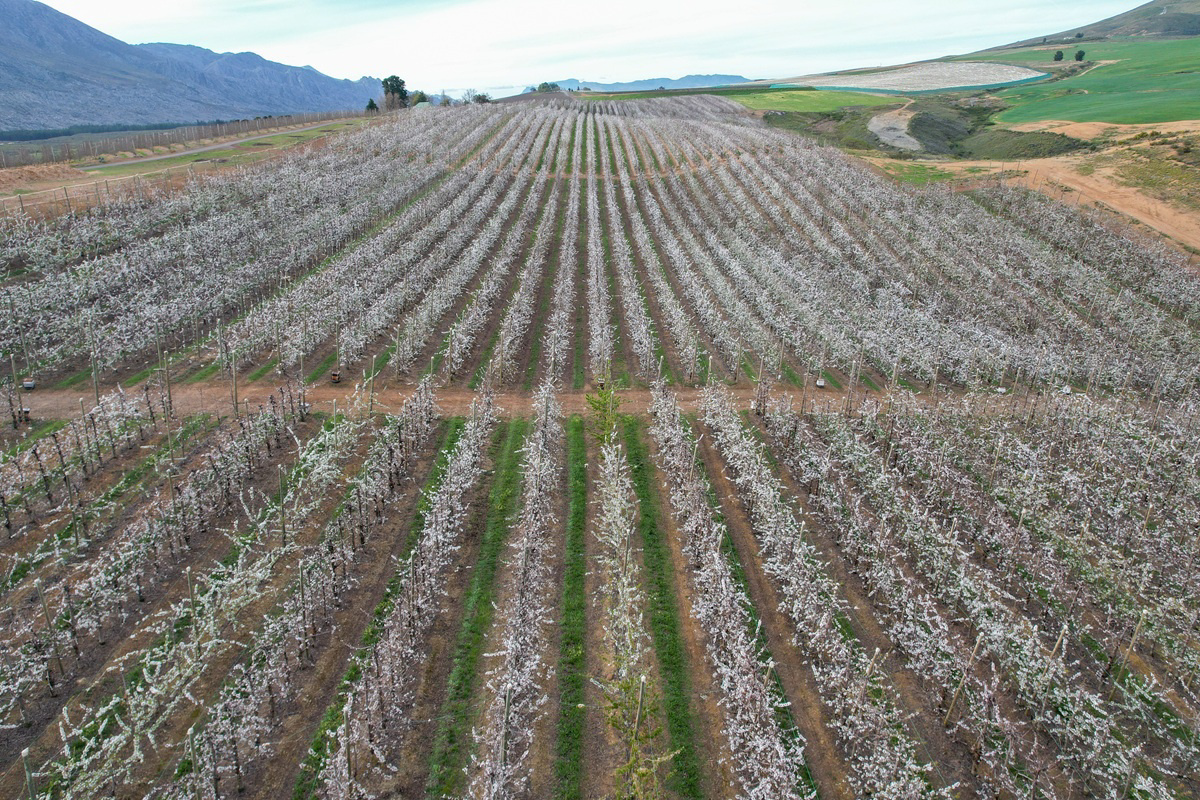
In this context, the tree formation stage during the first years of the orchard takes on fundamental importance, as future production efficiency and, consequently, the economic viability of the project depend on it. A well-formed orchard allows for early entry into production, facilitates management tasks, and ensures sustainable productive potential over time.
Therefore, it is essential to have the greatest amount of technical information available on the crop, considering both production and export and marketing aspects, in order to make strategic decisions from the outset and ensure long-term profitability.
Cherry trees have an acrotonic growth habit, that is, they concentrate their development in the upper part of the axis, with a tendency to extend their branches mainly in the aerial zone. In this sense, the application of techniques that promote lateral branching is key to achieving proper formation and, subsequently, greater orchard productivity.
The emission of lateral branches is regulated by a complex hormonal balance, determined primarily by the apical dominance exerted by auxins and their interaction with cytokinins and gibberellins (Cline, 1997). Auxins, produced at the shoot apex, inhibit lateral budding, while cytokinins promote cell division and the formation of lateral shoots.
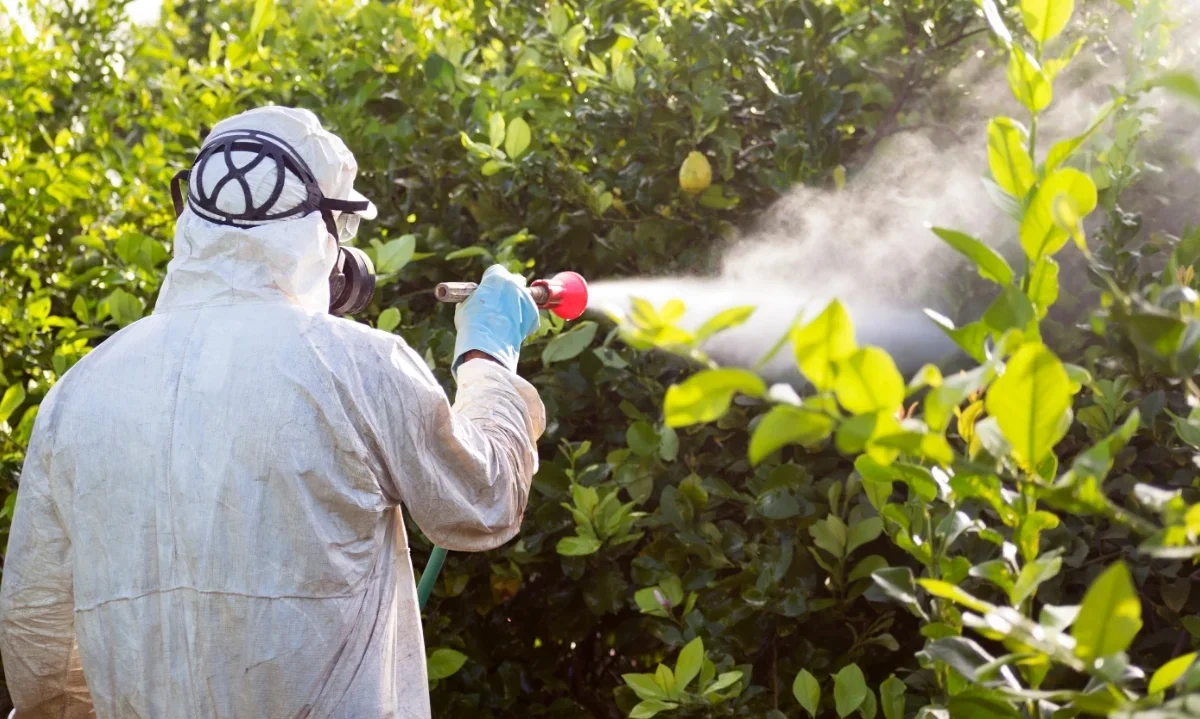
One of the most widely used strategies to promote branching is the use of growth regulators, primarily 6-BA in combination with gibberellins (GA4 and GA7).
During the 2018–2019 season, different branching promotion techniques were evaluated in developing orchards of various varieties, with four treatments: a control without branching (T0), T1 with GA4 and GA7 combined with 6-BA, and T2 and T3 with synthetic cytokinins (TDZ) applied to the tree using different methodologies (Table 1).

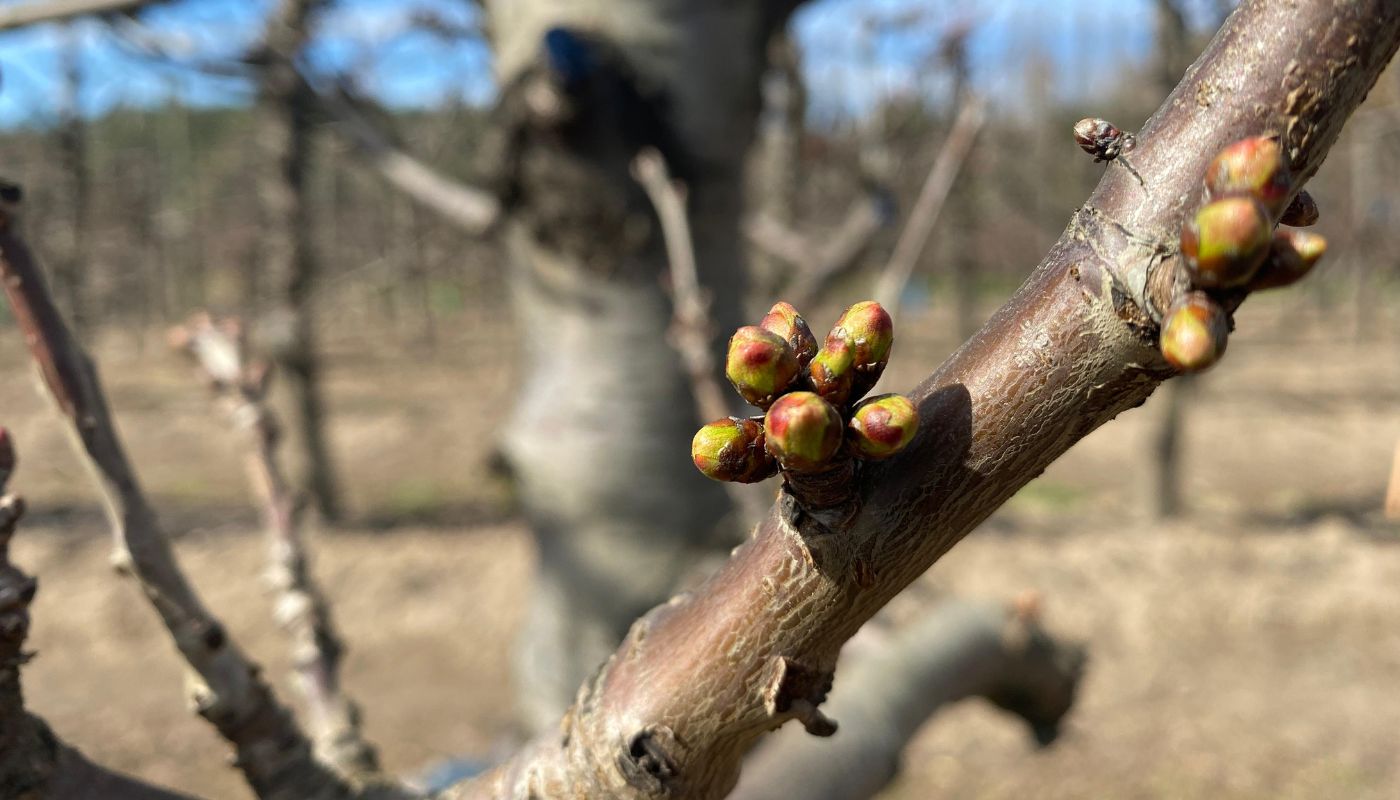
The evaluations were carried out on plants of the cultivars Santina, Lapins, and Regina grafted onto Colt and Gisela®6 rootstocks, starting from the phenological stage of “green tips” on vegetative buds (Fig. 1). In treatment T1, incisions were made on floors every 25 cm, leaving the last 30 cm of the axis uncut.

The evaluations considered the final sprouting percentage, counting shoots that exceeded 50 cm at 90 days after application. In the Santina cultivar, treatment T1 had the highest sprouting percentage, while in the Lapins and Regina cultivars, treatments T1 and T2 stood out compared to the control (T0) and T3, showing statistically significant differences.
Since not only the number of branches is important, but also their length, the total length of branches longer than 50 cm was considered 90 days after application (Table 2).

According to these measurements, the following results were obtained per cultivar:
– Santina: T1 showed the best results in branch number and length, followed by T2, both statistically different from the control and T3.
– Lapins: T2 stood out in shoot number, while both T1 and T2 achieved greater branch length compared to T0 and T3.
– Regina: T1 and T2 showed statistically favorable differences in both indicators, with more effective branches and greater length compared to T0 and T3.
These results allow us to conclude that early branching induction using growth regulators, either the combination of GA4 + GA7 + 6BA or Cytokinins + AG3, allows for a greater number of lateral branches of adequate length (>0.5 m), an essential condition for a balanced productive structure.
Currently, various studies have concluded that treatment T1 offers the best results in commercial varieties from central Chile, provided it is applied at the optimal phenological stage and under adequate supervision.
Source:
Cline, M. G. (1997). Concepts and terminology of apical dominance. American Journal of Botany, 84(8), 1064–1069.