
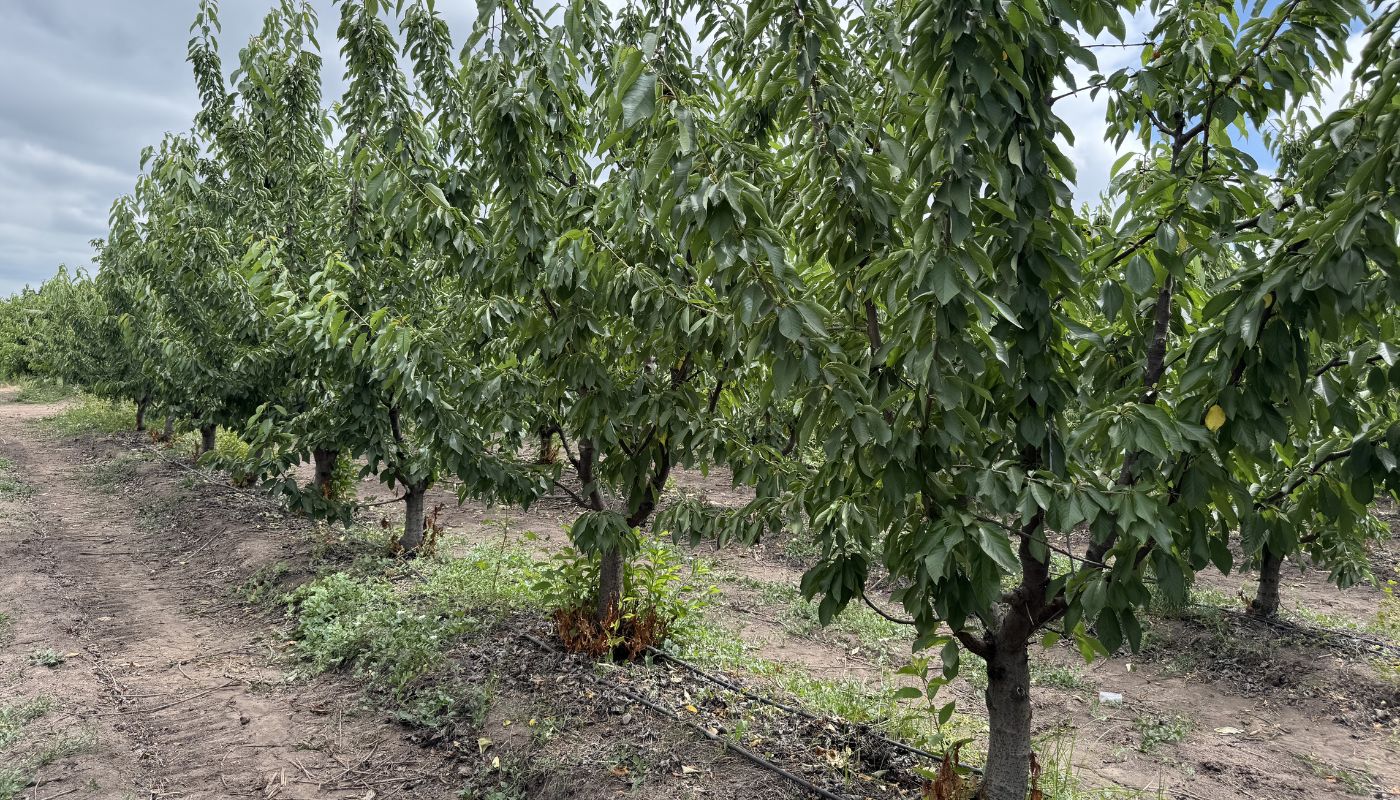
Cherry cultivation has experienced significant growth in recent decades, coinciding with the intensification of production systems. This scenario has led to a greater emphasis on management practices that maximize productivity and fruit quality, often prioritizing vegetative growth and immediate yield.
However, in deciduous species like the cherry, the productive success of a season is strongly influenced by the physiological events that occur during post-harvest and the autumn-winter period.
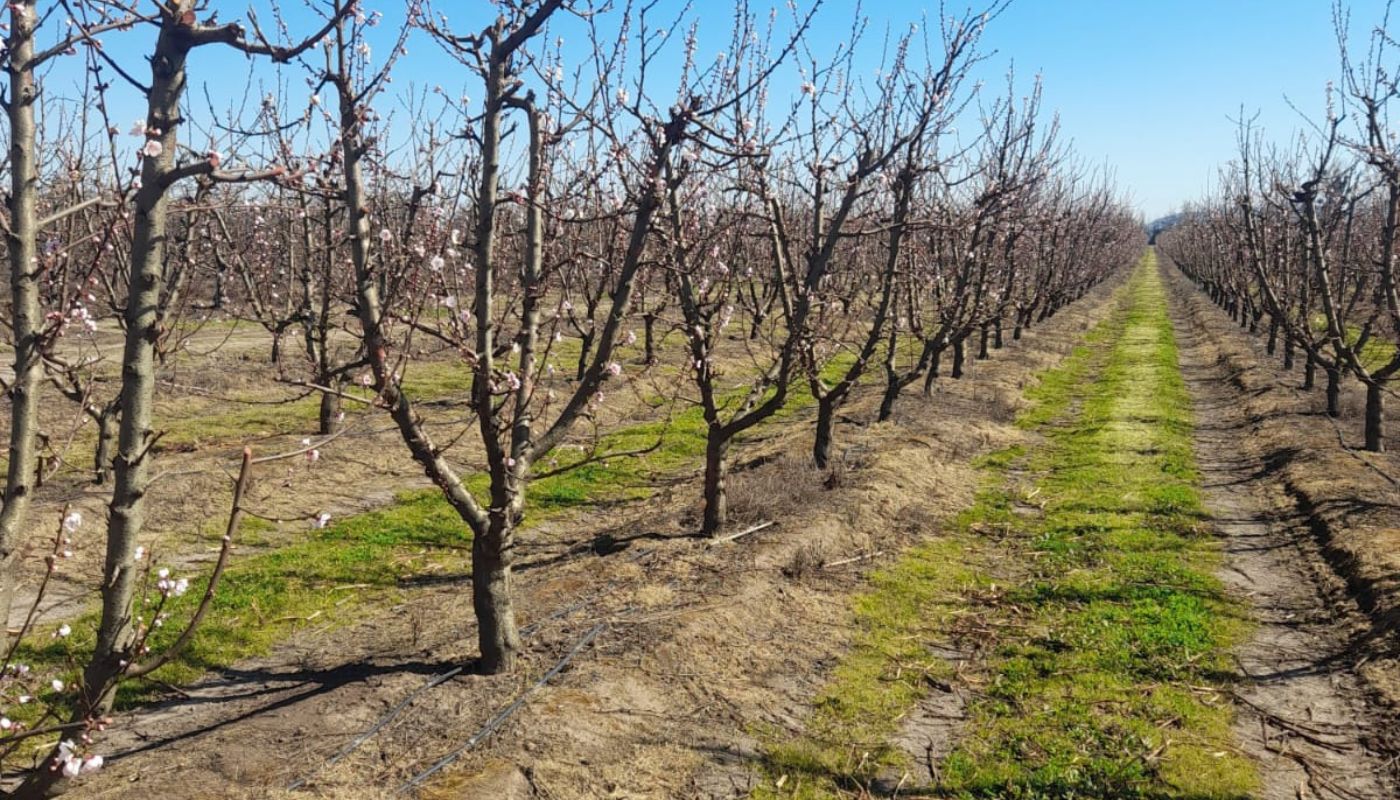
Dormancy is an adaptive state that allows the tree to survive unfavorable environmental conditions and restart its phenological cycle in a synchronized manner in spring (Lang et al., 1987). In this context, irrigation management acquires strategic importance, as it directly influences the balance between vegetative growth, lignification, and reserve accumulation.
An inadequate post-harvest irrigation strategy can interfere with the proper induction of dormancy, prolonging the tree’s metabolic activity beyond what is physiologically desirable.
Dormancy has been defined as the temporary inability of a plant organ to grow, even under favorable environmental conditions (Lang et al., 1987). In deciduous fruit trees, three types of dormancy are distinguished:
- Paradormancy: regulated by internal signals within the plant (apical dominance).
- Endodormancy: controlled by internal factors of the organ, mainly the buds.
- Ecodormancy: determined by unfavorable external environmental conditions.
In cherry trees, the proper induction and deepening of endodormancy is essential to ensure adequate accumulation of chilling hours and uniform budbreak in spring (Faust et al., 1997).
Water is the main factor regulating cell turgor and tissue expansion. In cherry trees, high water availability after harvest stimulates:
- Continuous shoot elongation.
- Maintenance of physiologically active leaves.
- Apical meristem activity.
- A high rate of transpiration and photosynthesis.
This prolonged state of vegetative growth can significantly delay the lignification of the current year’s shoots, resulting in tissues that are more susceptible to damage from low temperatures and less physiologically efficient (Atkinson et al., 2013).
Shoot lignification is a key process in preparing the cherry tree for winter. This process involves the deposition of lignin in the cell walls, which confers mechanical rigidity, resistance to cold, and reduced vulnerability to pathogens.
Several studies have shown that excessive post-harvest irrigation delays lignification, as the tree prioritizes primary growth over the structural strengthening of tissues (Keller, 2015). A gradual reduction in irrigation, on the other hand, promotes the cessation of vegetative growth and encourages shoot maturation.
From a physiological standpoint, a gradual reduction in irrigation acts as a signal of mild to moderate water stress, sufficient to induce metabolic changes without compromising the tree’s functionality. This controlled stress:
- Reduces gibberellin synthesis.
- Increases abscisic acid concentration.
- Limits cell elongation.
- Stimulates the redistribution of carbohydrates to storage organs.
This approach is consistent with the principles of controlled deficit irrigation, widely studied in fruit trees (Fereres & Soriano, 2007).
Inadequate management, whether due to water deficit or excess, hinders proper dormancy entry. A water deficit could cause premature defoliation, leading to early autumn regrowth and the risk of losing fruiting centers. On the other hand, an excess could delay dormancy, increasing the risk of frost damage.
Risks associated with inadequate water management:
Excessive irrigation:
- Delayed dormancy onset
- Increased risk of early frost damage
- Uneven spring bud break (due to less chilling accumulation)
Severe water deficit
- Early leaf drop
- Reduced post-harvest photosynthesis
- Decreased nutrient reserves
These risks reinforce the need for a gradual, technically sound approach based on objective monitoring of soil moisture levels and plant condition.
Regarding practical considerations for adjusting irrigation in cherry trees, a gradual reduction in post-harvest irrigation frequency should be considered, avoiding abrupt cut-offs in soils with low moisture retention capacity. The reduction should be adjusted based on the rootstock, orchard age, and vigor.
Other key factors in deciding on the reduction are the climatic conditions of the area and the expected date of leaf fall. Naturally, the decrease in frequency will occur in conjunction with a decrease in ETo and Kc, according to each specific case.
Adjusting irrigation in cherry trees before dormancy is a key tool for acclimating the plants to winter and ensuring adequate bud break in the following season.
Strategic post-harvest water management allows the tree’s metabolism to be synchronized with autumn environmental signals, ensuring a deep, uniform, and functional dormancy (provided that the environmental conditions of each season and area allow it).
In a context of high technology and increasing climate variability, irrigation must be conceived not only as a production tool, but as a key factor in regulating the phenological cycle of the cherry tree.