

Meteorological frosts are those where the temperature closest to the ground is below 0°C, causing water to freeze, depending on the intensity and duration of the frost, in all areas that are in direct contact with the environment.
The main types of frost that occur in fruit growing are:
- Radiative frosts
These occur due to the loss of heat flow from the soil, mainly at night. These occur when there are clear skies, low relative humidity, and no wind. They cause low temperatures from the area closest to the ground, due to the cold air mass positioned in this area due to its density. - Advective or polar frosts
These occur when cold air masses enter from the poles. These do not respond to a pattern like radiative frosts. They can occur in different climatic circumstances. These have the unique characteristic of cooling a large volume of advancing air, which can last for several days.
When should we start protecting our orchards?
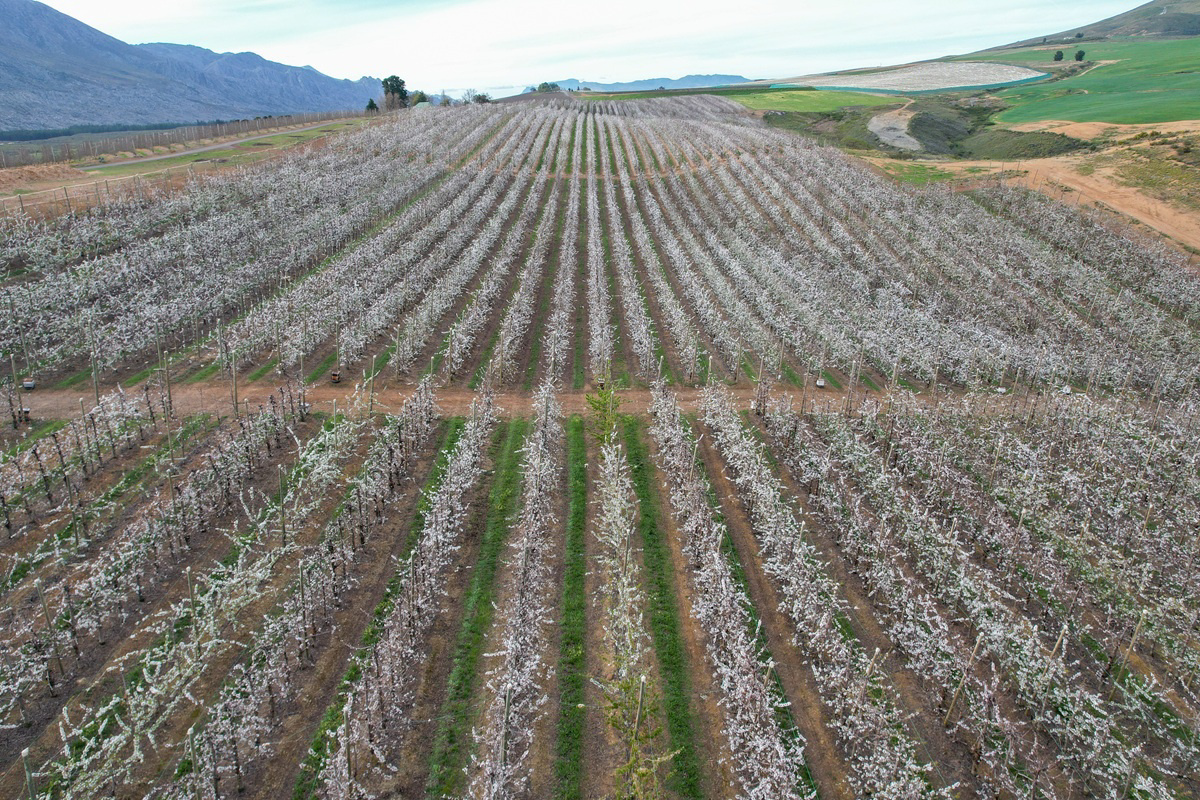
It’s key to know, at the beginning of a project, what factors we might be predisposed to, taking into account the area’s climate and determining whether it’s necessary to consider some type of active frost control (micro-sprinklers, propellers, and heaters); or passive controls, such as plastic mulches and perimeter fences, which generate a greenhouse effect.
From the moment we kick off the application of dormancy breakers, we must begin preemptively preparing for possible frost events.
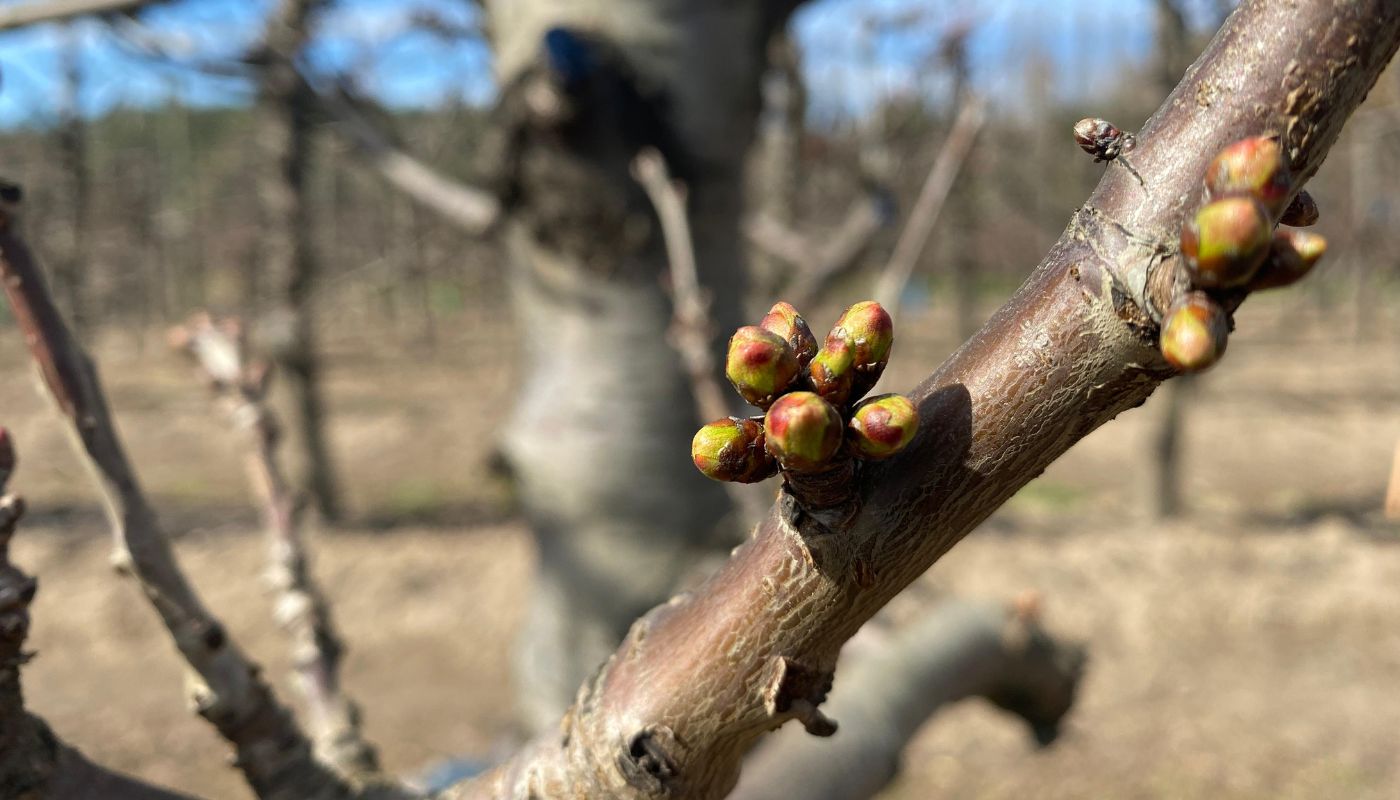
This is because in some cases, we seek early bud break, making them susceptible to damage from low temperatures, since dormancy breakers accelerate the end of winter dormancy, exposing reproductive structures to potential frost.
What are the most common frost controls?
- Micro-sprinkler
Applied to various species, it creates an “igloo” effect on the structures to be protected through the constant application of water until the tissue freezes. This is due to the physical property of water releasing heat upon freezing, keeping plant tissues at 0°C, preventing them from freezing.
This system requires available water throughout the duration of the frost event, which is limited by water availability and the soil’s infiltration capacity to prevent root anoxia.
Frost control must begin before the temperature reaches 0°C; it is necessary to start at 1°C to avoid the risk of the system freezing.
It is important that the system operate continuously throughout the duration of the event, until the protected structures thaw naturally again at ambient temperatures.
This system is capable of controlling both radiative and polar frosts.
- Propellers
Frost control using propeller systems, whether wind towers, helicopters, or forced wind, is primarily used to combat radiative frosts. Their main function is to mix the cold air that accumulates near the ground with the warmer air from higher altitudes, which is propelled by the propellers, generating a heat exchange.
They only control radiative frosts, as these cause more damage if used in polar frosts.