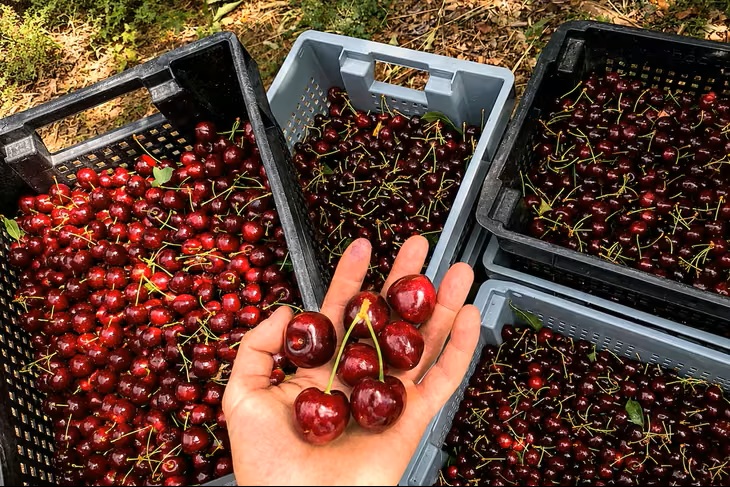

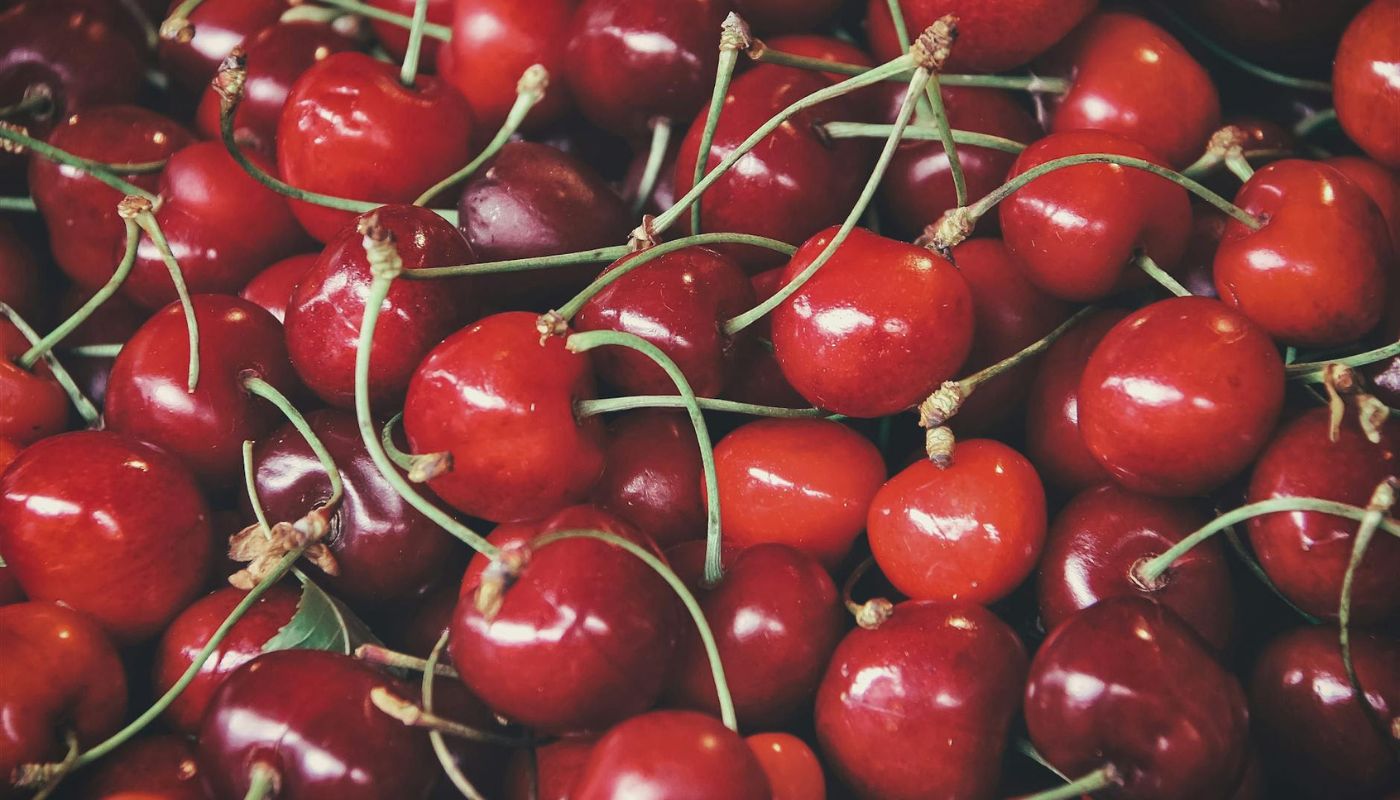
“Cherries are now dark-colored and crunchy. Harvesting is concentrated in the mountainous areas of the region. At the moment, harvesting is taking place at elevations of up to 500 meters, along the Edessa and Aridaia zone, where the trees are heavily loaded with cherries and are all in production. Earlier areas, even within the region, have already finished, with only 2-3% of their production remaining,” says Mr. Lefteris Anastasiadis, executive at the packing company Red Pearl.
Due to the absence of damage, Greek cherry exports from May 1 to June 12, 2026, show a remarkable increase compared to the same period last year. According to data from the Greek Ministry of Rural Development and Food, total exported volumes this year amount to 14.349.158 kg, compared to 5.172.966 kg last year.
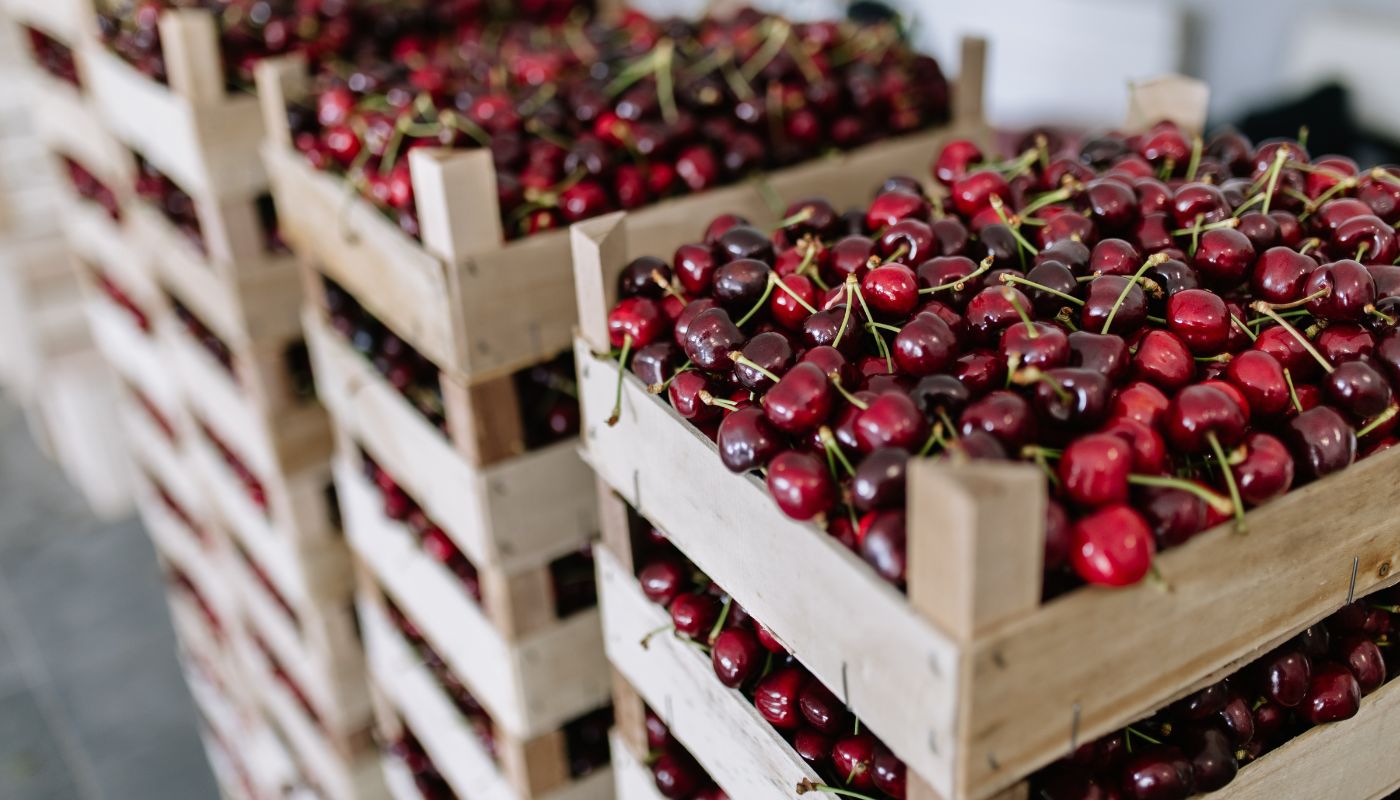
As Mr. Anastasiadis explains: “Many trucks are loaded every day from all over Greece. Exports are moving well. We fill two trucks per day. We pass the cherries through a hydrocooler and ship them to Germany, Poland, Ukraine, and Latvia. Prices have been very good, considering the volumes available so far. Now that the large volumes from Edessa have arrived, the producer price has settled at 1,50-1,60 euros per kilogram. Growers with very good cherries may receive up to two euros.”
“There is good demand. In general, things are moving because prices are low and we are competitive abroad. Spanish producers cannot compete with us when we are buying cherries at 1,60 euros. Turkey is not putting pressure on us this year either. I do not know exactly why, but when prices in Greece are low and not, let’s say, 3 euros for the grower, exports move smoothly. This year, competitive cherry prices drive market flow.”
“However, due to the large crop, cherries are smaller this year. You see sizes 24, 26, and 28 in 90% of the crates. Nevertheless, we are talking about dark, crunchy cherries that sell on their own, even when you see many 24s and 22s. As a company, we expect to handle 1.500 tons of cherries this year,” concludes Mr. Anastasiadis.
Source: Fresh Plaza