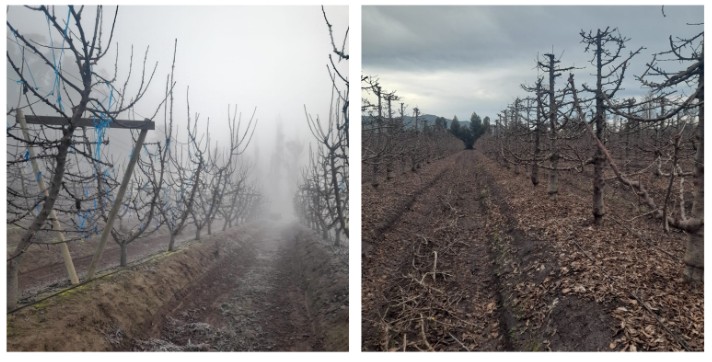

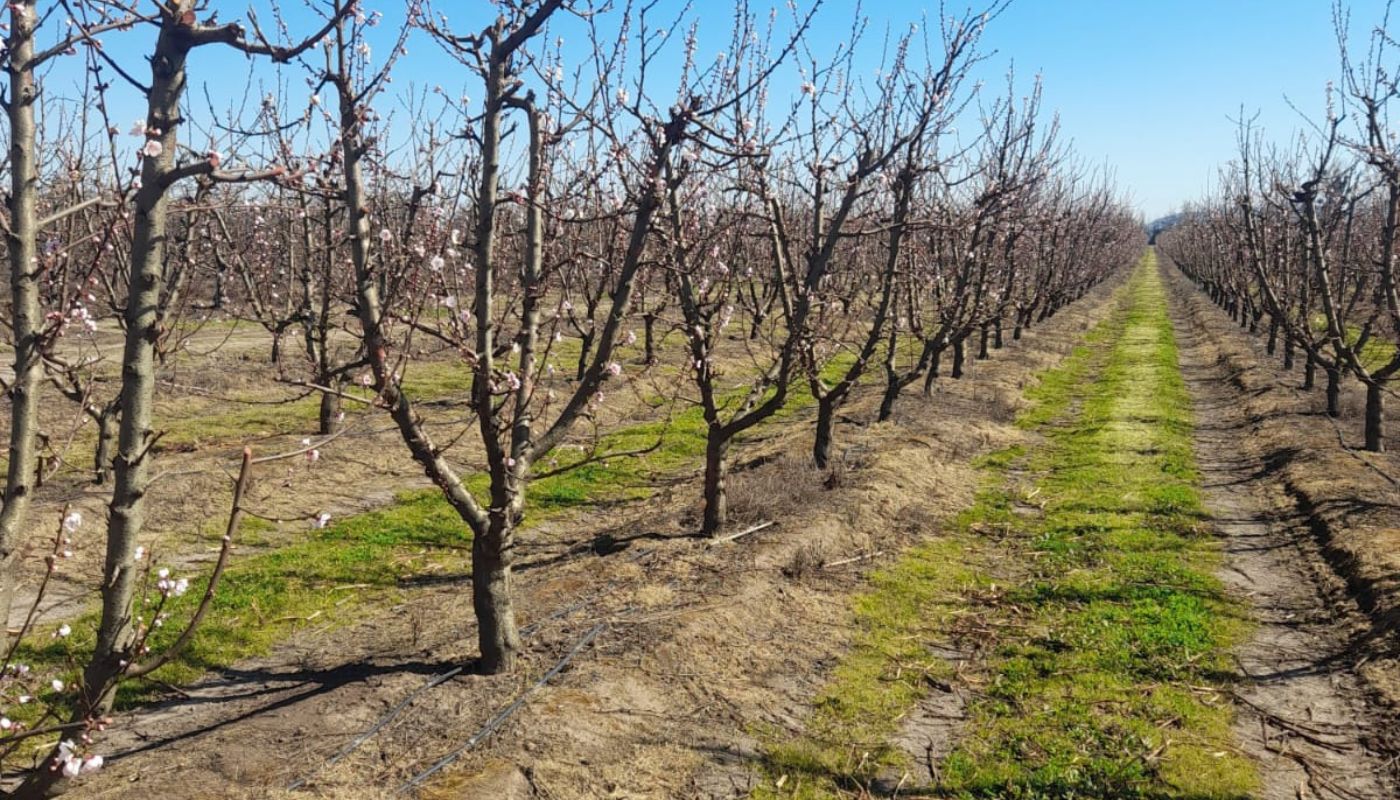
With the arrival of spring, soil preparation work began, which this season has been delayed in many parts of the country due to excessive moisture from late spring rains.
It is important to consider that preparing soil for planting must be done patiently, it requires time, and you must be rigorous in following the steps.
We often wonder why specialists in the field insist so much that good soil preparation is fundamental for the development, productivity, and future of a fruit orchard, and the answer is clear: when preparing soil, you must ensure that it is balanced in physical, chemical, and biological terms so that it can support the fruit tree for the next 30 years. We are talking about work that must last in the long term.
Solving chemical problems, for example, during the planting process, is very difficult and has a high economic cost. The same is true for poor soil preparation, where the initial development of the cherry trees will be deficient, significantly reducing the orchard’s future productive potential.
- Water Drainage
If agriculture has not been practiced at the planting site, it is important to identify the winter hydraulic behavior in order to diagnose groundwater levels, water runoff, and develop the necessary drainage strategies. In hilly areas, it is important to determine drainage and develop combined water removal strategies due to the heterogeneous geography. - Physical Soil Preparation
Soil preparation has a significant scope in terms of the level of detail achieved thanks to decades of research, different types of machinery and implements to use for each situation, appropriate moisture levels for each soil texture, and combined tillage strategies.
This work begins with soil pits to define the different soil layers, their textural and structural classes, the presence of caliche, and the soil’s moisture behavior. This will determine the necessary strategies, the most suitable machinery, the types of implements required, the number of passes, and the time between each operation.
Working on sandy soil is not the same as working on stony or clay soil; the work will differ for each, and the machinery and implements will also vary.
Photo No. 1: Soil preparation implements.
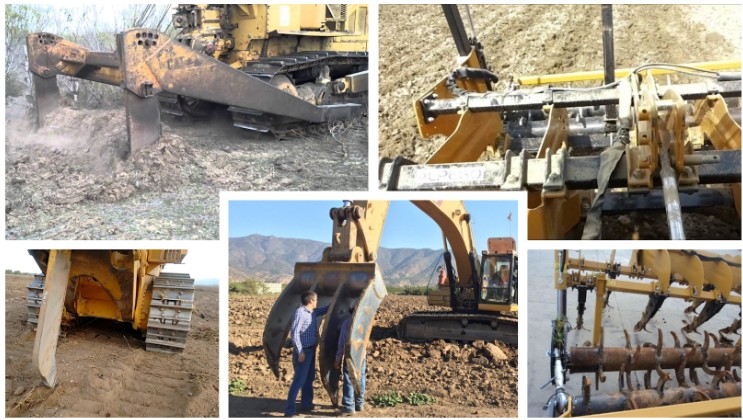
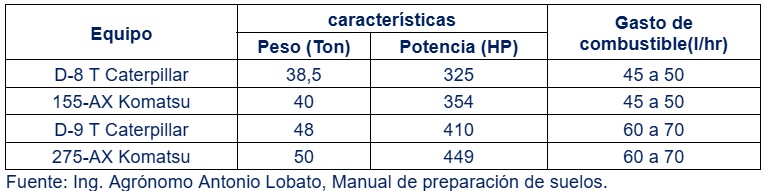
The capacity of a D8 bulldozer versus a D9 (or similar models from other brands) differs and depends on the conditions under which the work must be performed. Often, a poor choice may not achieve the desired breakage and depth.
Table 1: Characteristics of the most commonly used bulldozer brands
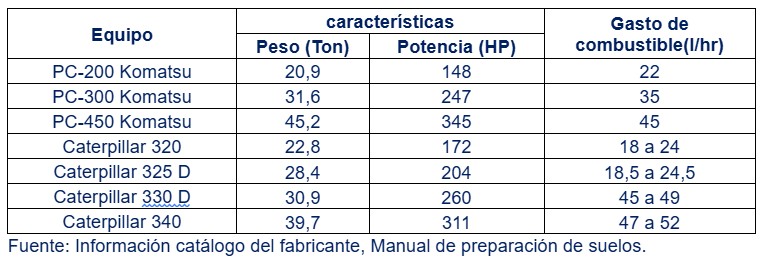
There are also differences when selecting an excavator. This type of machinery performs work according to the size of its hydraulic system, which is related to its weight.
A wide variety of excavators are available on the market, ranging from 21 to 45 tons and with power from 147 HP to 350 HP (Table 2). There are other brands and models that can be used.
Table 2: Characteristics of the most commonly used excavator brands for soil preparation in orchards.
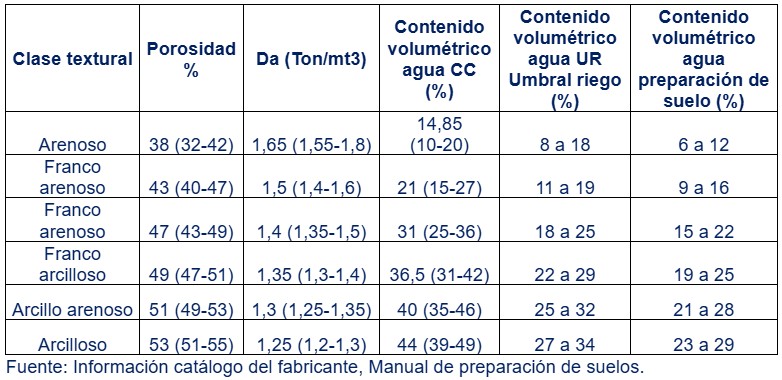
The moisture content of the soil system is of paramount importance. Ideal moisture levels exist for proper soil preparation, and these will vary according to the texture and structure of each soil type (Table 2).
There are significant differences in the results of various soil operations depending on the moisture content. Therefore, neglecting this often results in machinery failing to achieve the desired soil breakage and depth.
In cases of very high moisture content, techniques exist to accelerate the process, such as stubble cutting, chimney cutting, etc.
Considering the above, if we take the example of a clay soil with a moisture content of 40%, a subsoiler pass will not produce sufficient breakage, thus rendering the machinery pass ineffective.
Table 3: Reference moisture content for soil preparation.
3. Chemical Soil Conditioning
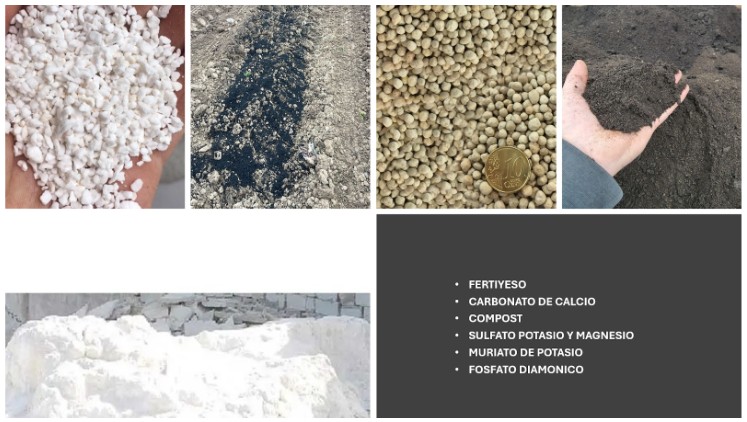
At this stage, it is necessary to add amendments to address any chemical deficiencies the soil may have, such as base saturation, low or high pH, and deficiencies in potassium, magnesium, calcium, phosphorus, and low levels of organic matter.
This stage presents an opportunity to make these adjustments with more economical amendments. Addressing these types of problems later is costly and often operationally difficult.
Laboratory analyses are fundamental at this stage. It is important to request comprehensive analyses, including physical and chemical analysis, total porosity, macro- and microporosity measurements, CEC (cation exchange capacity), and base sum. Without this data, it is very difficult to perform optimal work (this also applies to already planted orchards).
3.1. pH Level: To correct low pH levels through liming, it is important to send soil samples to the laboratory to create a liming curve. This result will determine the amount of lime that must be added to the soil to correct the pH.
3.2. Organic Matter: Depending on the levels of organic matter, the incorporation of guano or compost at this stage is fundamental. Organic matter is consumable and degradable, which is why it is ideal to incorporate a volume at this stage that ensures good levels for several years. This organic amendment, depending on which one is chosen, has the capacity to balance the soil’s microbiological and nutritional system.
3.3. Cation Exchange Capacity (CEC) and Base Sum: It is very common for soil analyses requested by different agricultural companies not to include this information. It is very important to have it because, based on the results, the levels of cations that must be incorporated into the soil system are calculated (cations = calcium, magnesium, potassium, and sodium). These cations must be in a specific ratio so that chemical synergies and antagonisms between them do not cause problems. The possibility of saturating the CEC, if it is not at 100%, is achieved during soil preparation. Performing this subsequent action with the planted garden is extremely difficult, costly, and requires strategies that take years to achieve results.
3.4 – Phosphorus Levels: In many soils that have been exploited for years, phosphorus levels are extremely low. Phosphorus, as a nutrient, is the most expensive and least mobile of all the elements. At this stage, it is important to incorporate it in a calculated manner, using more economical sources based on the results of soil analyses.
Photo No. 2 – Agricultural amendments for soil preparation.
4. Raised Bed Construction
Raised beds are necessary in certain situations, such as high water tables, hardpan, very uneven soils, or other problems that require working on raised beds. In deep, well-drained soils, raised beds are not necessary.
When constructing raised beds, it is important to consider the following:
4.1. Raised Bed Height: With the first winter rains, and depending on the soil texture, raised beds decrease in height by 15 to 20 cm, a phenomenon that can repeat for two to three consecutive years. Therefore, these reductions must be considered when determining the height of the raised beds.
4.2. Raised Bed Width: The width of the raised bed is important when considering the medium term. It is very common to see raised beds that end in points at their top. This indicates thin beds, which ultimately creates an operational problem, as the irrigation hoses terminate at the base of the bed.
Raised beds should be at least 1.5 to 2 meters wide, considering that this width will decrease over time. The narrowing of a raised bed technically corresponds to an increase in the soil’s bulk density, which will increase microporosity and decrease macroporosity.
This leads to adjustments in irrigation timing and frequency, as well as changes in hose placement over time. A wider raised bed will allow for hose relocation in the medium term. Additionally, wider raised beds should be considered for harvesting, as they facilitate this task and reduce the risk of accidents.
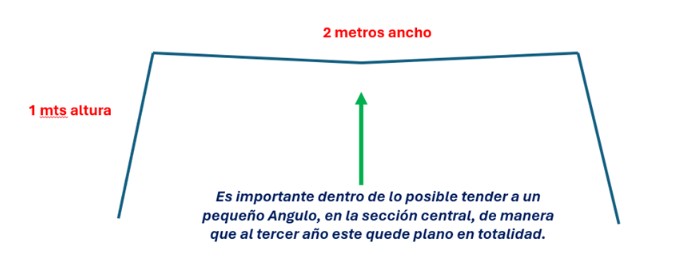
Photo No. 3 – Size differences in raised beds.
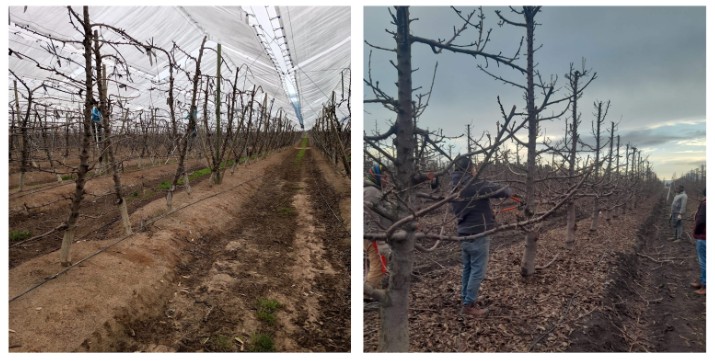
Photo No. 4 – Differences in the size of the raised bed.